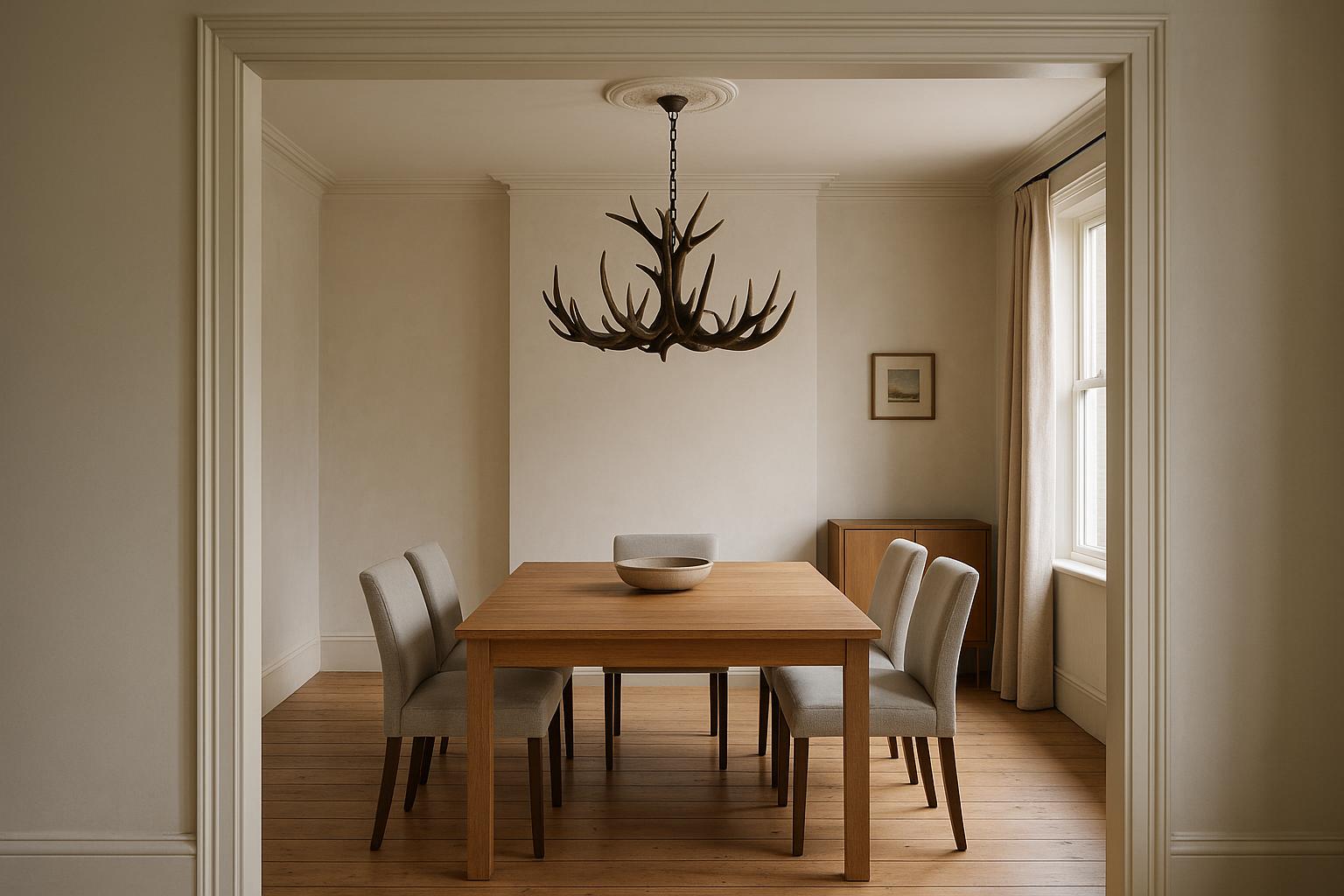
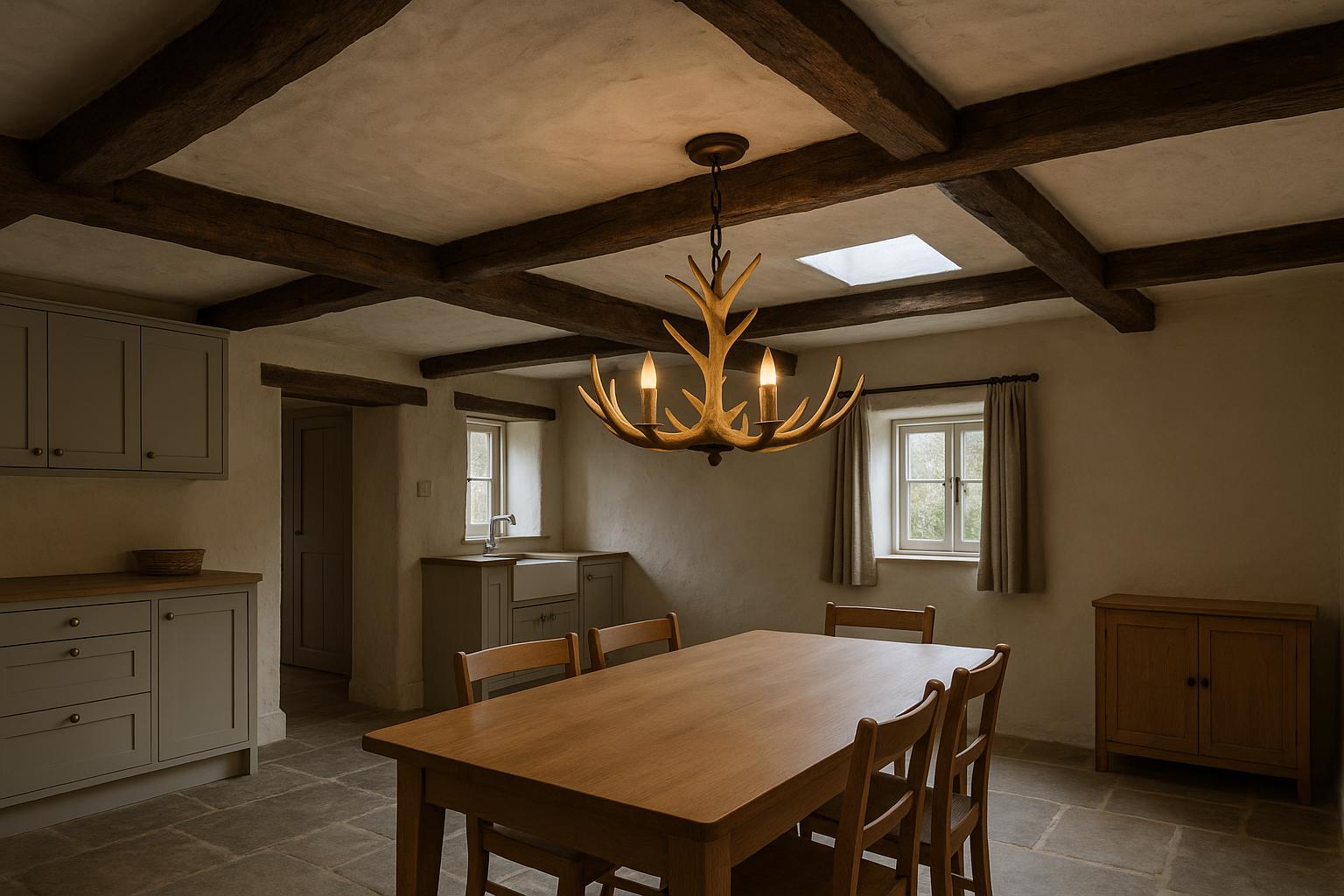
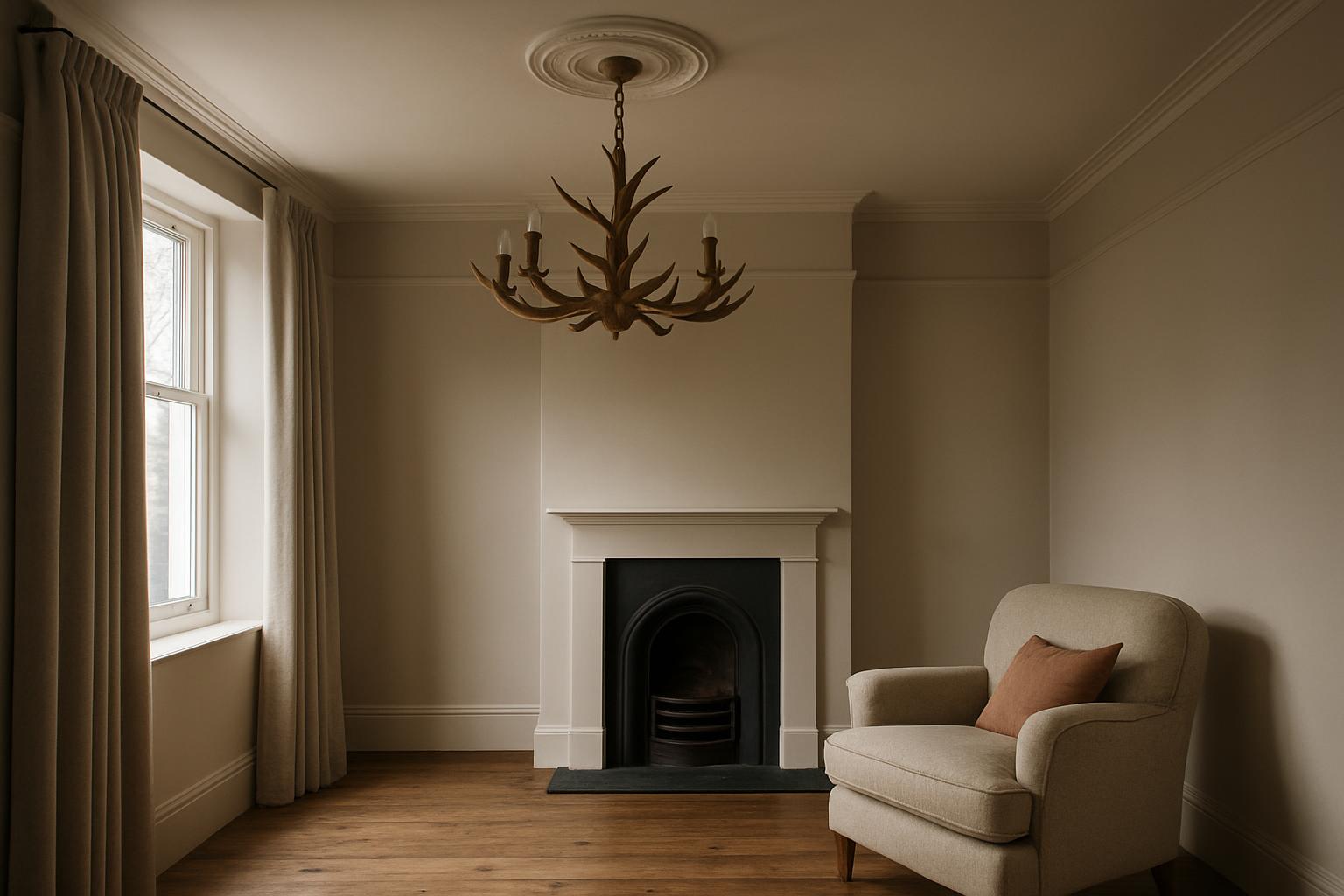
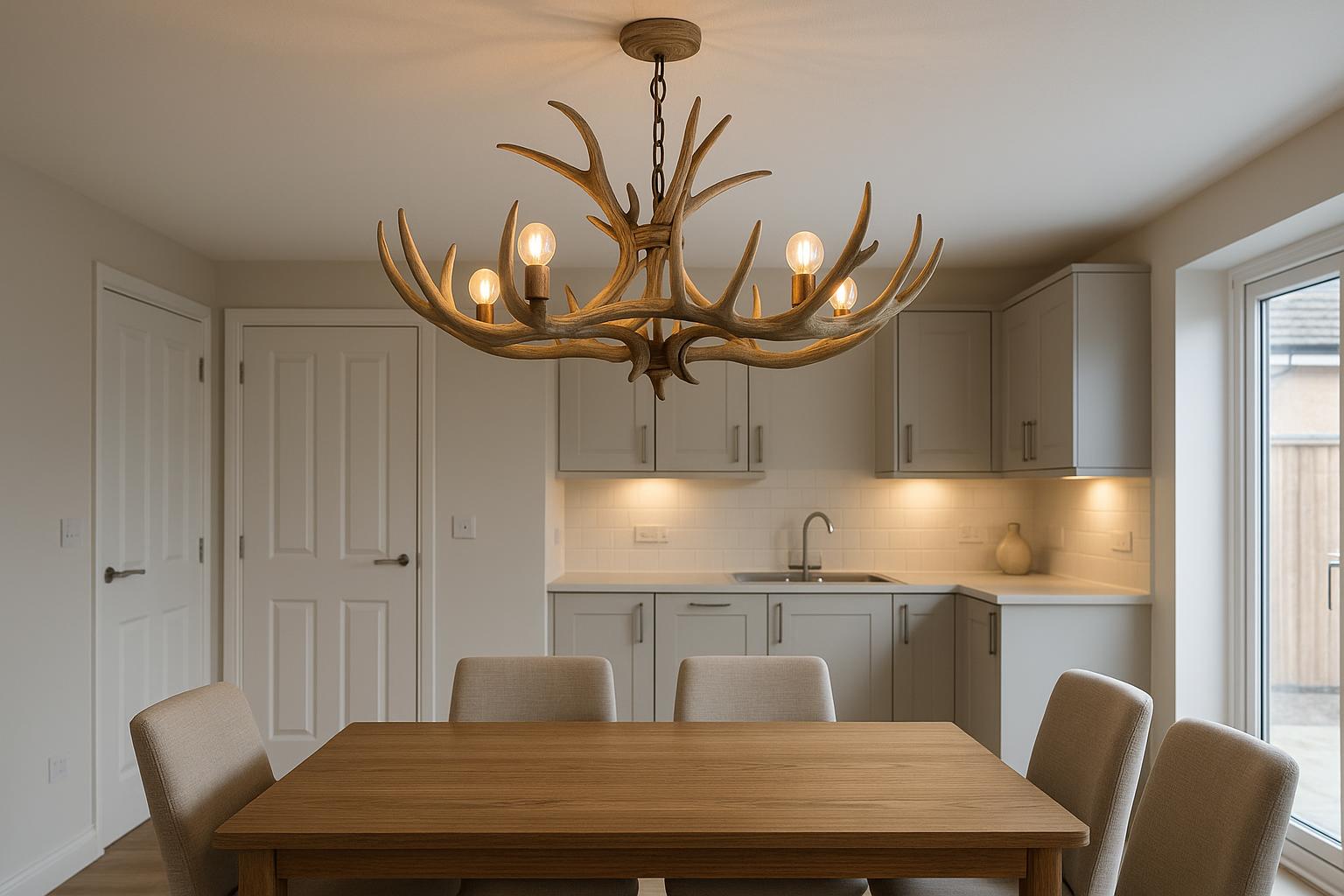
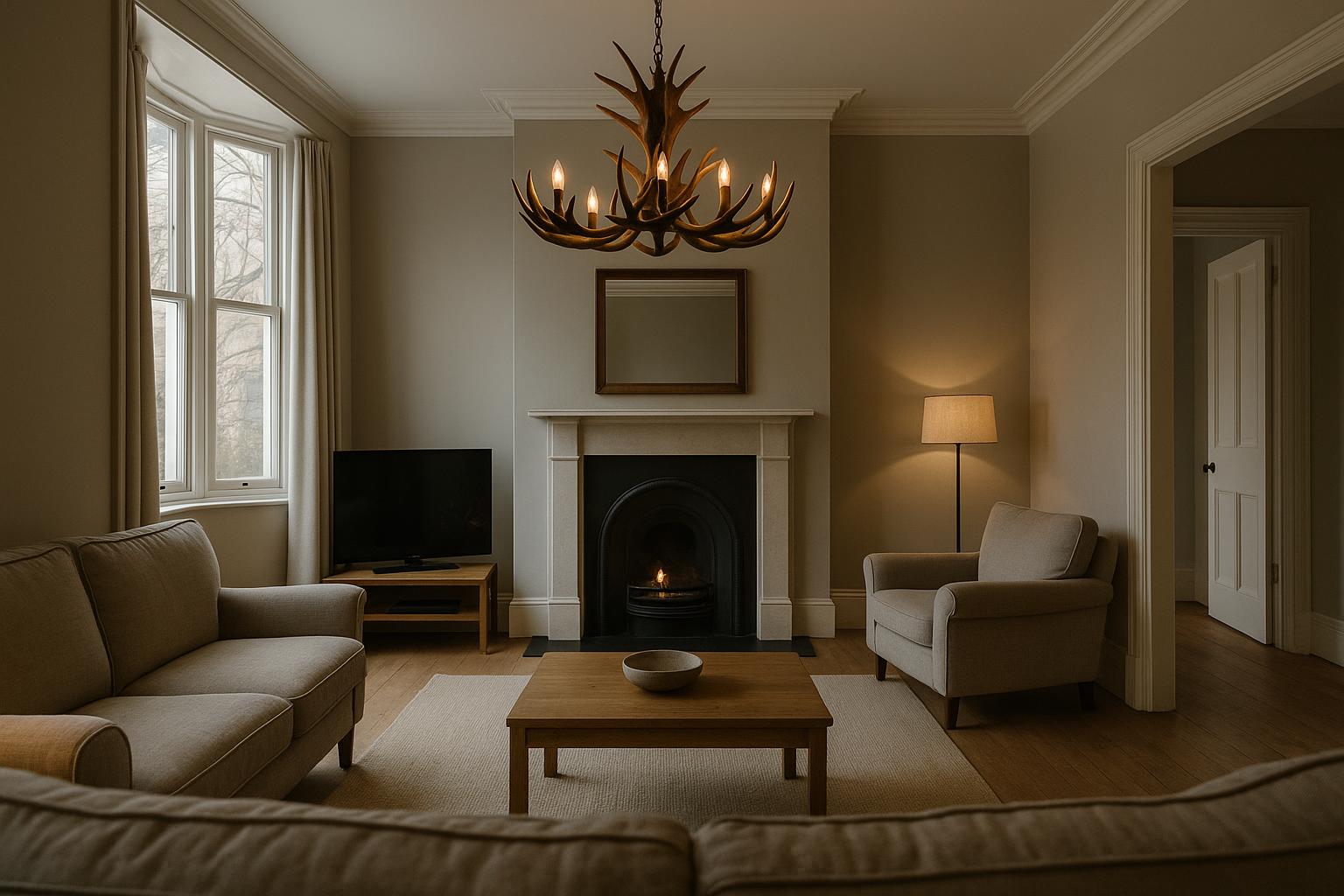
An antler light need not belong to winter. A calm permanent scheme, a few movable elements and well-planned...
- There are no more items in your cart
- Shipping
- Total £0.00
How to Choose the Perfect Ceiling Light for Your Living Room: A Complete Guide to Style, Size, and Brightness
1. Choose a Style That Matches Your Living Room Décor
Lighting has the power to transform any space, creating ambiance and setting the mood for different activities. When it comes to the living room, the right ceiling light not only enhances the décor but also plays a crucial role in creating the perfect atmosphere. From reading and watching movies to entertaining guests, your living room lighting needs to be versatile, functional, and aesthetically pleasing.

Here are some popular living room lighting styles to consider:
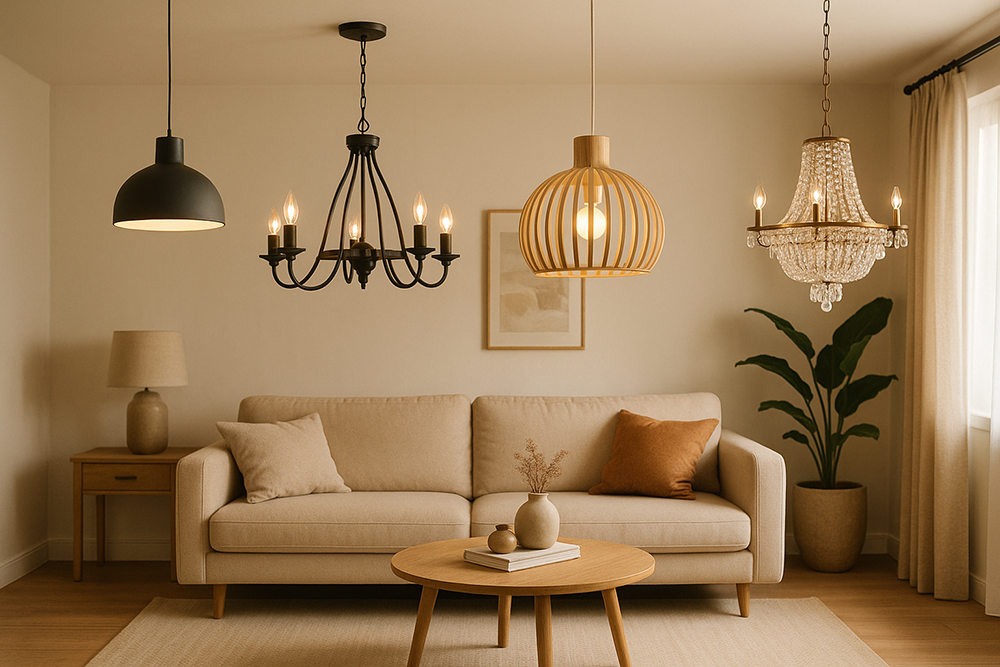
- Modern Minimalist: For a clean and simple design, go for a modern minimalist light fixture. Look for designs with sleek lines, matte finishes, and neutral colors like black, white, or brass. These lights work well with contemporary décor and provide subtle, yet effective illumination.
- Vintage Industrial: If your living room features exposed brick, metal accents, or a loft-inspired design, a vintage industrial chandelier with metal shades, exposed bulbs, and a rustic finish might be the perfect choice. This style offers a rugged yet stylish aesthetic.
- Scandinavian: Scandinavian design is all about clean lines, simplicity, and natural materials. Choose a wooden chandelier or a fixture made from natural wood and fabric lampshades for a warm, rustic touch that complements minimalist Scandinavian décor.
- Classic Elegance: If you love a more traditional, elegant look, a crystal chandelier or a light fixture with gold or silver accents will add a touch of luxury to your living room. Classic, ornate chandeliers bring grandeur and sophistication to any space.
Pro Tip: Matching the metal finishes of your chandelier with the rest of your hardware (e.g., gold handles, chrome mirrors) can help tie the entire space together for a cohesive look.
2. Get the Right Size and Height for Your Ceiling Light
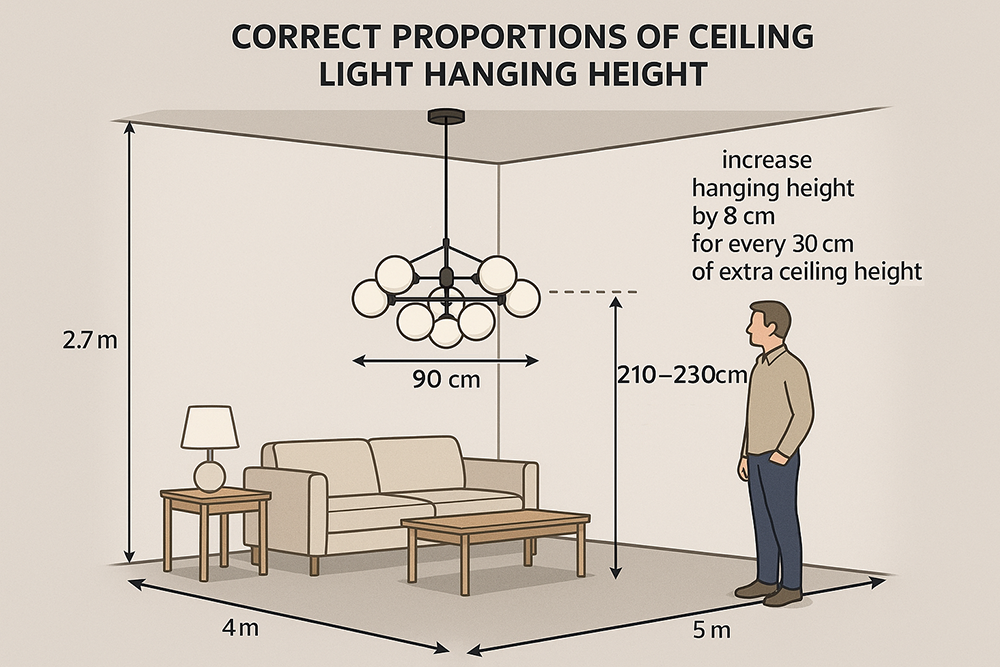
Choosing the right size and hanging height for your chandelier or ceiling light is crucial for maintaining the balance of your living room. A light fixture that is too large or too small for the room can make the space feel off-balance. To find the right size, consider the dimensions of your living room and the height of your ceiling.
Recommended Size Formula: To determine the optimal diameter of your chandelier or light fixture, use the following formula:
Light Diameter (in cm) = Room Width (in meters) + Room Length (in meters)

For example, if your living room is 4 meters wide by 5 meters long, the diameter of your light should be approximately 90 cm. This proportion ensures that the light fixture fits harmoniously within the room’s dimensions.
Hanging Height Guidelines: When it comes to hanging your chandelier or ceiling light, the key is to ensure there is enough clearance for comfortable movement under the light. Follow these general guidelines based on your ceiling height:
- For 2.7-meter ceilings: The chandelier should hang 210–230 cm from the floor, leaving at least 2 meters of clearance underneath.
- For higher ceilings: If your ceiling is taller than 2.7 meters, increase the hanging height by 8 cm for every 30 cm of additional ceiling height. So, if your ceiling is 3 meters high, the light should hang 240 cm from the floor (an extra 10 cm for the additional 30 cm height).
Pro Tip: Before you commit to the exact hanging height, try using painter’s tape or a mock string to measure the chandelier's position. This will give you a visual sense of how the light will look once installed.
3. Choose the Right Brightness and Color Temperature
To create a welcoming atmosphere, it's important to select a ceiling light with the appropriate brightness and color temperature. Brightness affects how well you can see in the space, while color temperature sets the mood and ambiance.
Brightness: When selecting a lightbulb or chandelier, make sure it provides enough brightness for your living room's needs. A general rule of thumb for living room lighting is to aim for approximately 100–150 lumens per square meter (lm/m²). This level of brightness is suitable for most living rooms, but you can adjust based on the natural light your room receives.

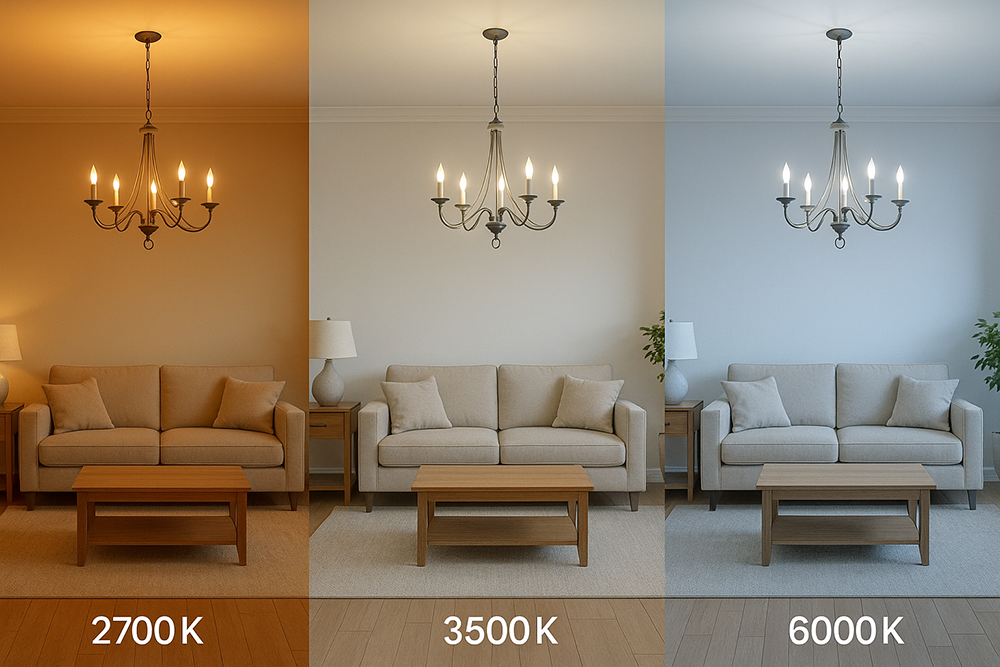
Color Temperature: Color temperature is a key factor in setting the right mood for your living room. Different light color temperatures create different atmospheres, and choosing the right one is essential. The three most common color temperatures are:
- Warm White (2700K): This cozy, golden-toned light is perfect for creating a relaxed and inviting atmosphere. It’s ideal for movie nights or any setting where you want to create a cozy vibe.
- Neutral White (3500K): Neutral white light provides a natural, daylight-like glow that’s ideal for balancing brightness and warmth. It works well in living rooms that need a bit more general illumination but still feel inviting.
- Cool White (6000K): For a bright, energetic look, cool white light emits a bluish hue that mimics daylight. It’s perfect for a modern, fresh ambiance but may feel too stark or cold for some settings.
Pro Tip: Avoid overly cool lights (6000K or higher) in spaces meant for relaxation, as they can make a room feel clinical or overly sterile.
Lighting Layers: To create a balanced lighting design, consider using three layers of lighting:
- Ambient Light: The main light source (your chandelier or ceiling light) provides general illumination for the entire room.
- Task Light: Table lamps, floor lamps, and other task-oriented lights provide extra brightness for specific tasks like reading or working.
- Accent Light: Use wall sconces or LED strips to highlight specific elements like artwork or architectural features. This adds depth and character to the room.
4. Combining Beauty and Functionality
Your ceiling light should not only look good but also be functional. Consider these additional features when choosing your ceiling light:

- Dimmable Options: If you want to adjust the lighting to match different moods or activities, choose a dimmable chandelier. This allows you to control the brightness and create the perfect atmosphere, whether you’re entertaining guests or enjoying a quiet evening at home.
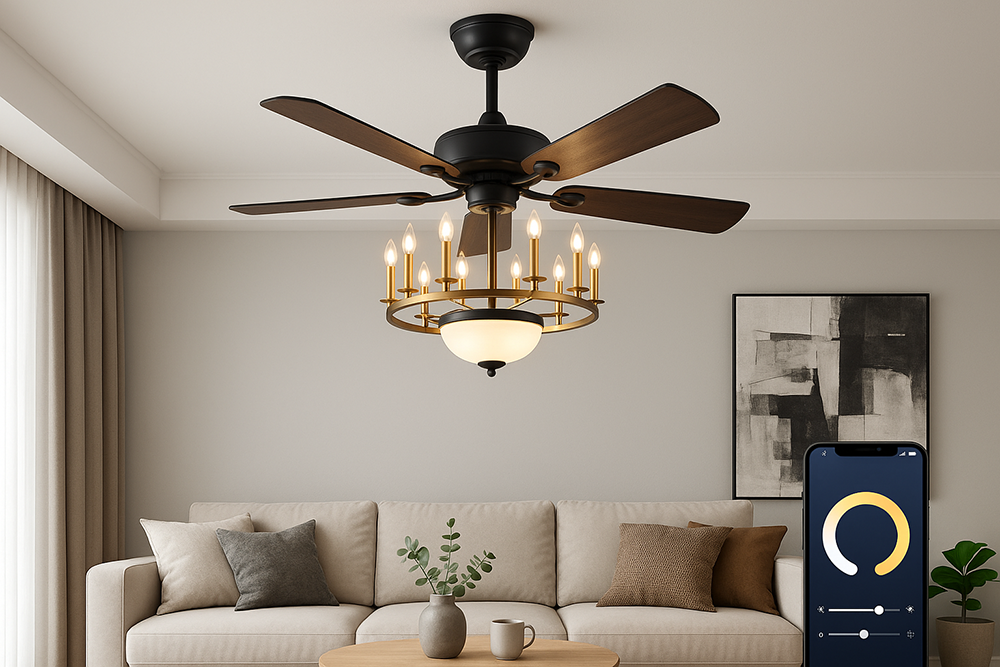
- Ceiling Fans with Lights: If your living room tends to get warm or you want the flexibility of cooling the room, consider a ceiling fan with integrated lights. These fixtures combine both lighting and air circulation, making them a functional and space-saving option.
- Smart Ceiling Lights: If you're into smart home technology, you can opt for smart ceiling lights that can be controlled via your smartphone, Alexa, or Google Home. These lights offer additional convenience and can be customized to suit your daily routine.
Conclusion
Choosing the right ceiling light for your living room is about more than just aesthetics. It’s about creating a space that feels balanced, comfortable, and functional. By considering factors like style, size, brightness, and color temperature, you can enhance your living room and make it a place where you can relax, entertain, and enjoy time with family and friends.
Remember: lighting isn’t just decoration; it’s an essential element of your home’s design. By carefully selecting the right ceiling light and adjusting the height and brightness, you can create a welcoming atmosphere that complements your lifestyle.