An antler light need not belong to winter. A calm permanent scheme, a few movable elements and well-planned...
- There are no more items in your cart
- Shipping
- Total £0.00
Four Seasons, One Antler Light
An antler light is easy to picture in winter: dark afternoons, warm lamplight and a few evergreen branches nearby. That familiar setting can make the design seem more seasonal than it is. The fitting itself does not create a lodge interior; that impression comes from everything placed around it.
Seen against pale plaster, simple furniture or garden glazing, the same branching form reads as sculpture. The useful approach is not to restyle the whole room four times a year, but to give permanent features a quiet foundation and let smaller, movable elements mark the change in season.
Start with what will not change
A ceiling light is part of the room's architecture. Wall colour, flooring, large furniture, curtains and fitted joinery also tend to remain in place, so they should work with the fitting on an unremarkable day in March as well as during Christmas.

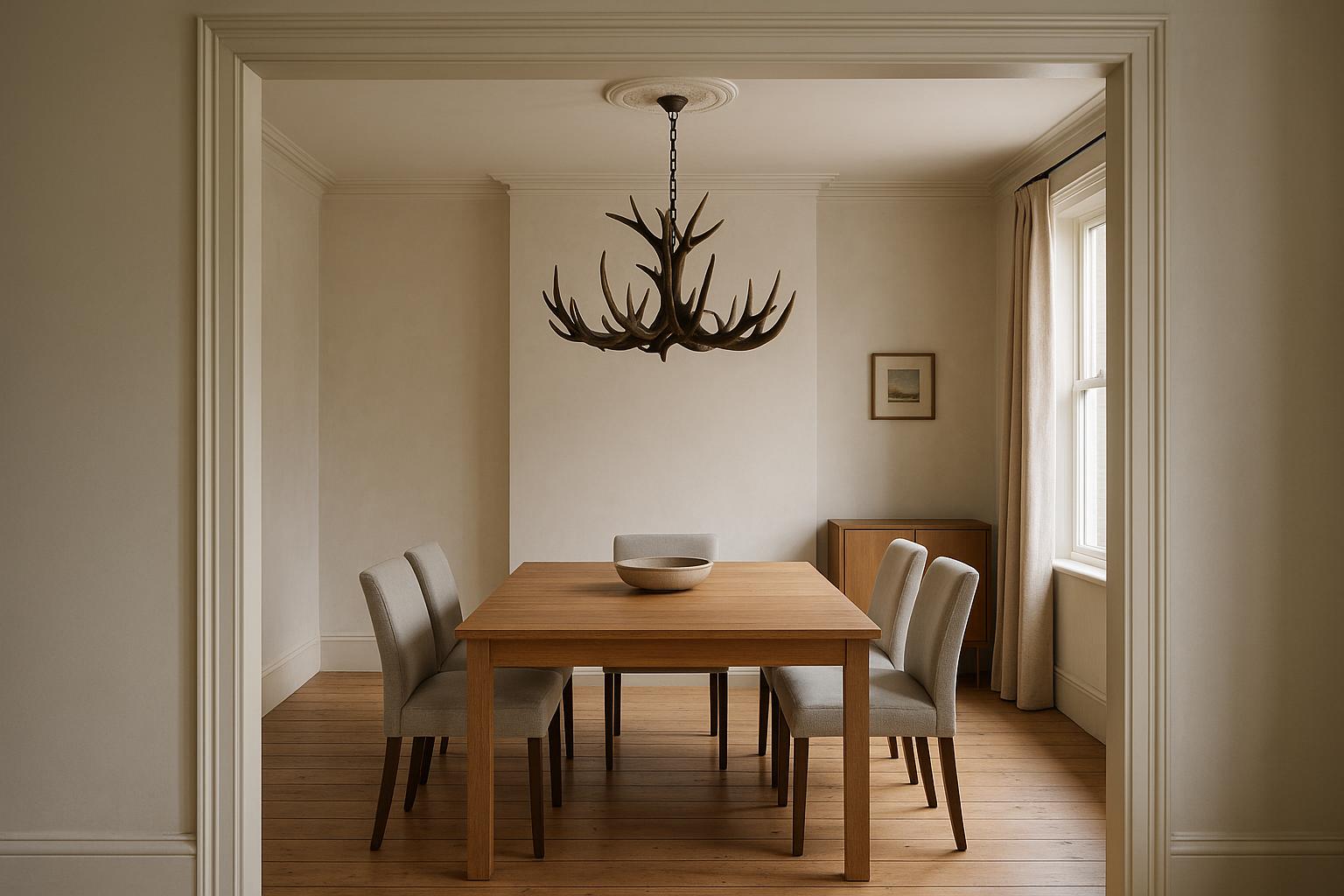
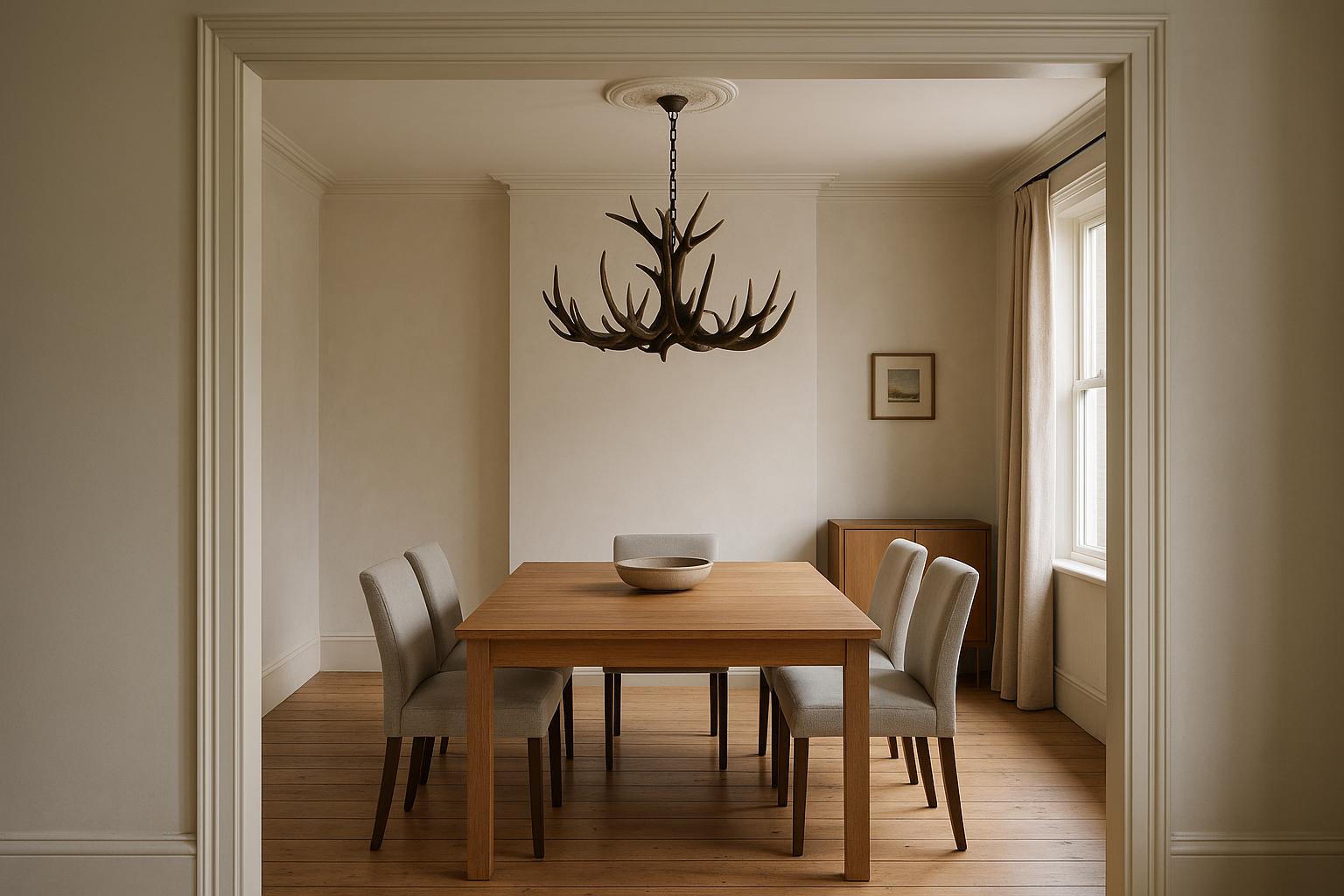
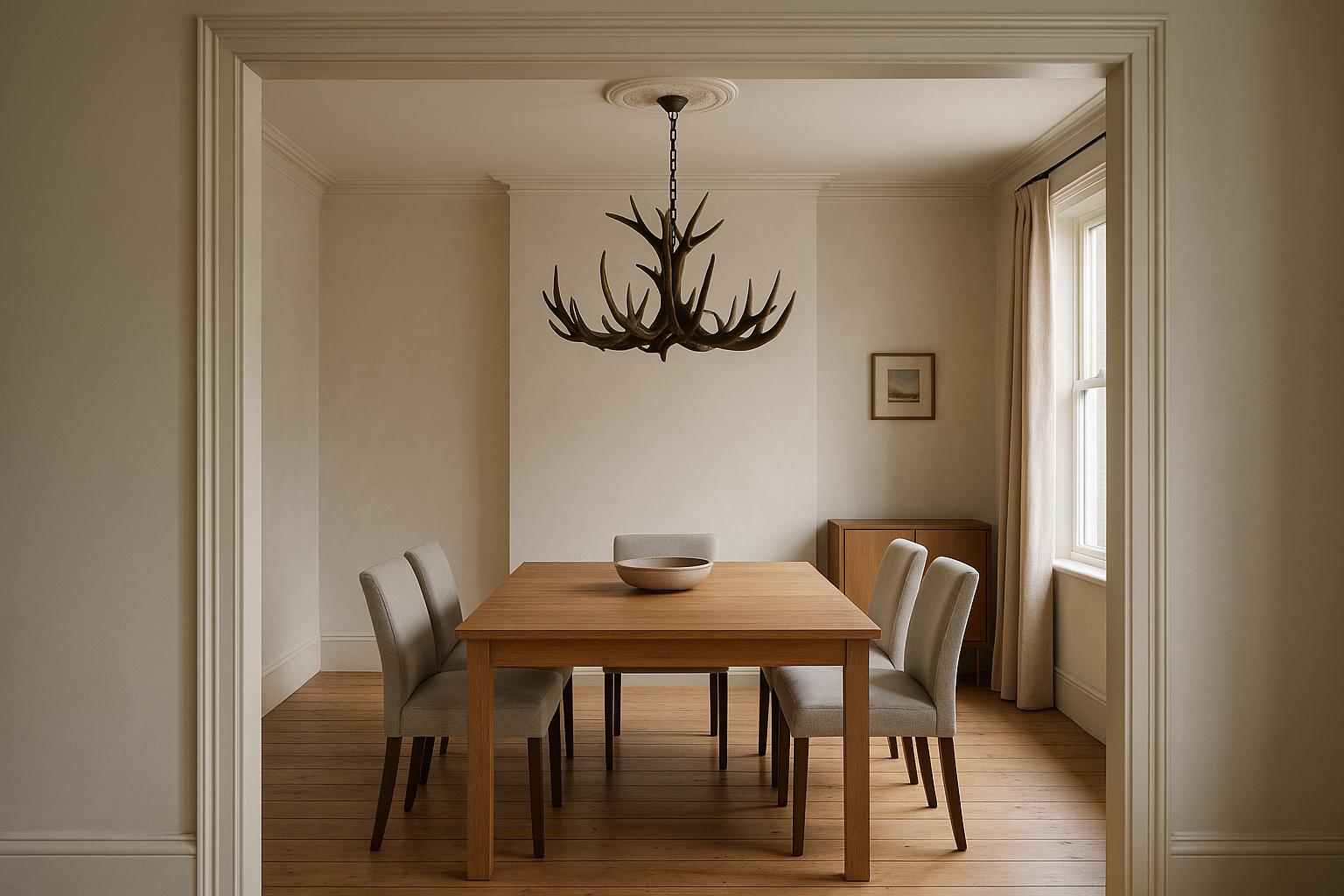
Antler chandeliers already supply irregular lines and visual detail. They rarely need several other rustic statements beside them. In a Victorian dining room, for example, a ceiling rose, timber floor and branching light may provide ample character. Plain upholstered chairs and a simple sideboard will give those details room to register.
It helps to divide the scheme into three practical layers:
- Permanent: the light fitting, walls, flooring, main furniture and window treatment.
- Easy to change: cushions, table linen, ceramics, portable lamps and small artworks.
- Short term: flowers, cut branches and decorations for particular occasions.
If the permanent layer is measured, seasonal changes need not be elaborate. This also prevents the fitting from looking stranded once festive greenery and heavier fabrics have been put away.
A lighter spring edit
Spring calls for removal before addition. Clear tall arrangements and clusters of objects from beneath the light so that its outline can be seen without competing branches at table level. One low bowl or stoneware vessel is usually enough on a dining table.
Washed linen, pale ceramics and fresh green foliage can lift a darker fitting without forcing the room into a pastel palette. In the middle room of a terrace, where daylight may already be limited, keep the bay window or rear doorway visually clear. Light travelling through the room will make the antler form appear more graphic and less weighty.
Brighter days also reveal dust on complex surfaces. Follow the maker's care instructions, switch the fitting off and allow it to cool before cleaning. Avoid sprays or methods that have not been recommended for its finish.
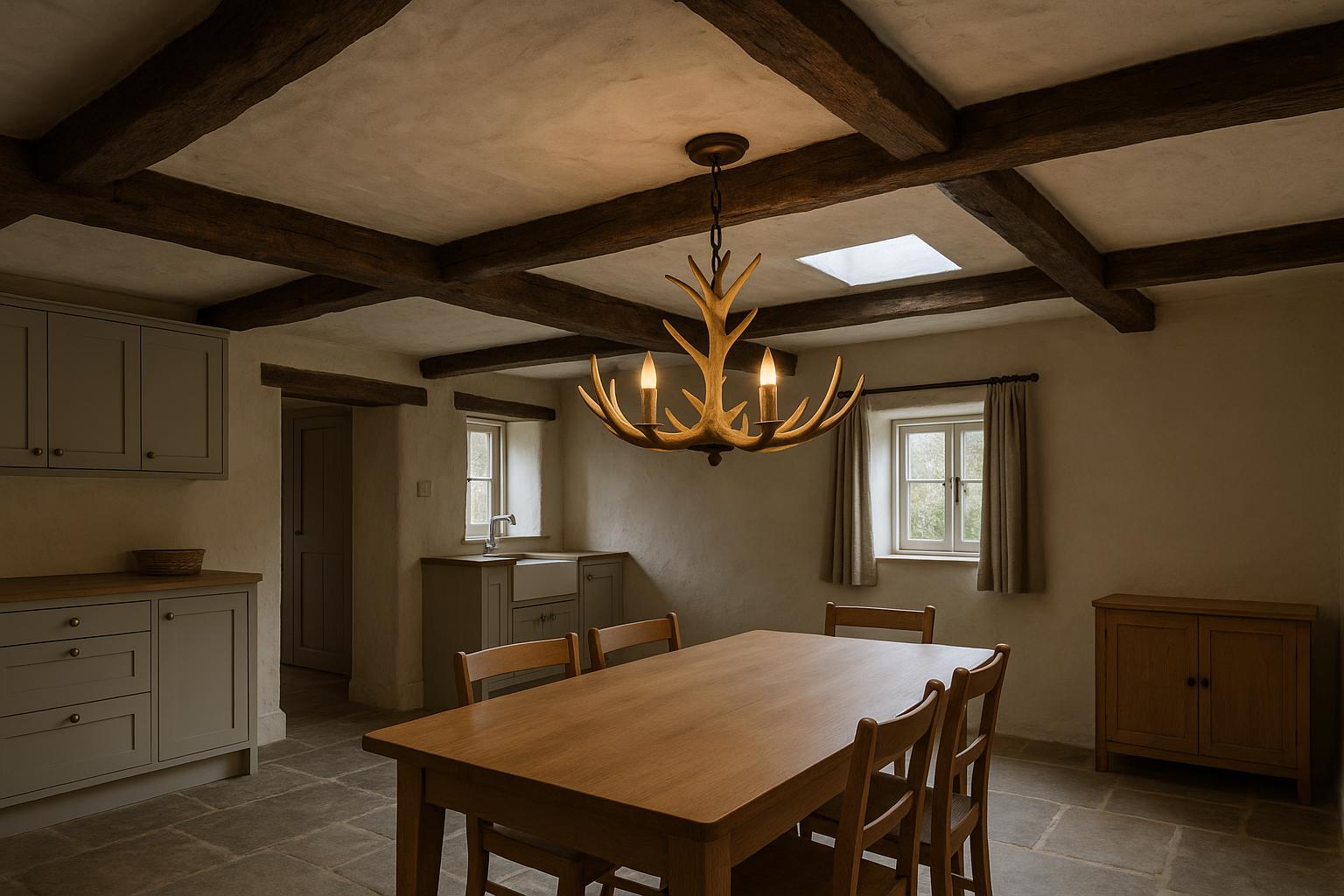
To complement this topic, you can also read Placing Antler Lights Beneath Beams, Slopes and Vaults.
Make the most of the summer silhouette
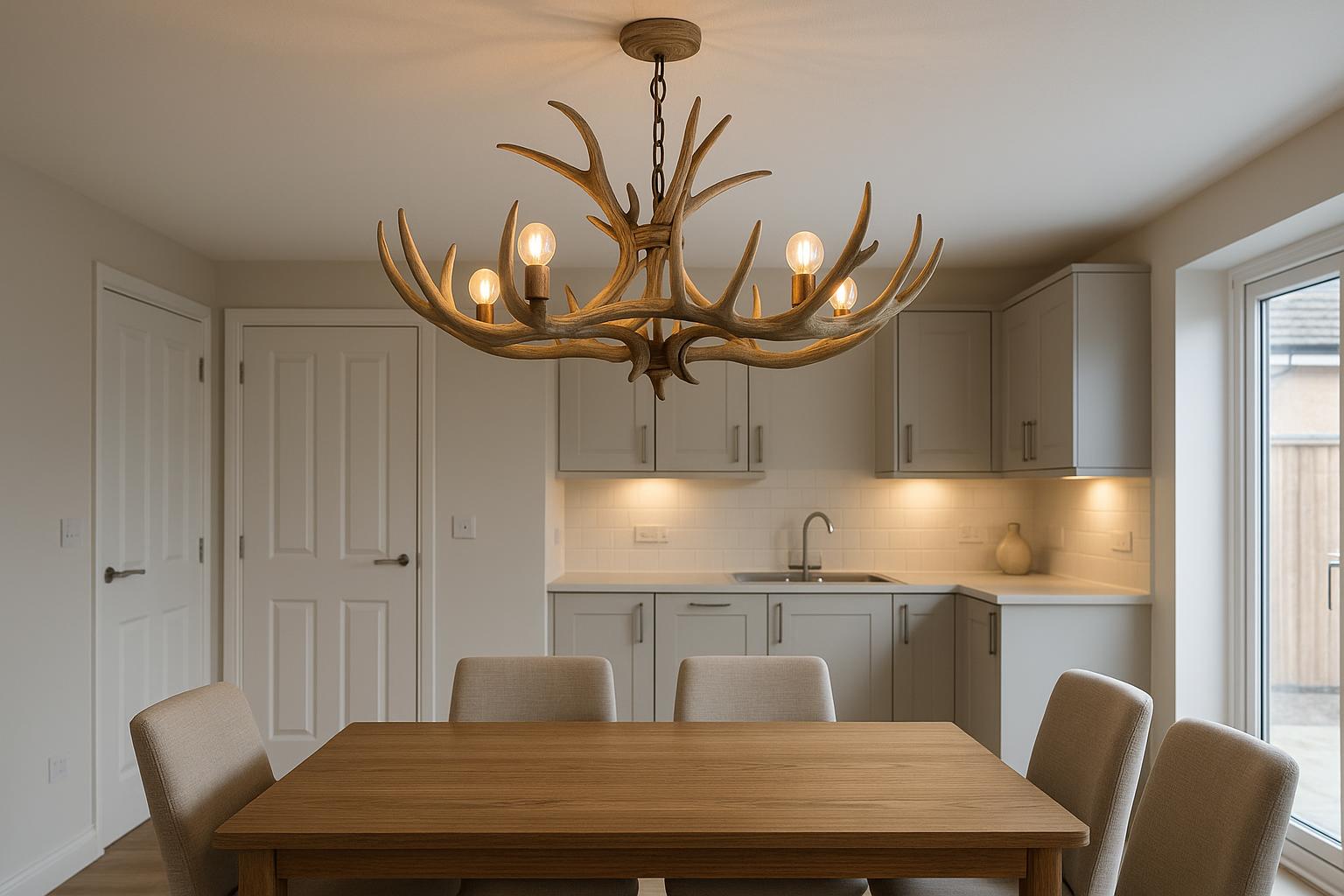
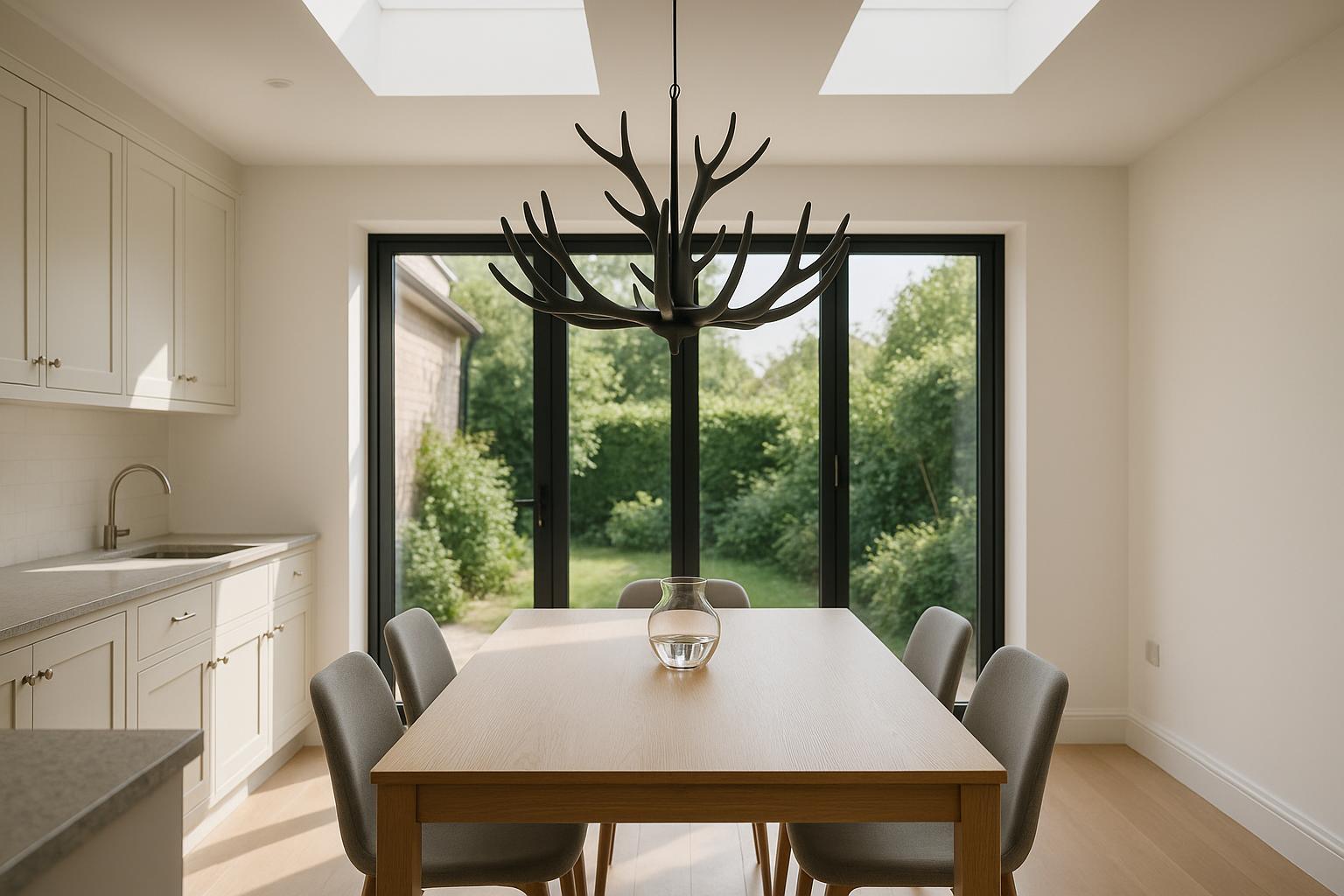
In summer, the ceiling light may remain off until late in the evening. Its unlit shape therefore matters. A dark, open-form pendant can provide useful contrast in a pale kitchen-diner, especially where roof lights and wide glazed doors make the room feel bright and expansive.
Keep the view beyond it in mind. From the kitchen, the fitting might be seen against a plain ceiling; from a chair, it may overlap the garden or a bank of cabinetry. A detailed outline is easier to appreciate when at least one of those backgrounds is quiet.
Summer is not the moment to reinforce every woodland association. Smooth chairs, a clear tabletop and restrained planting allow the organic shape to do its work without turning into themed lodge lighting. If the fitting is being moved or newly installed, check its width and drop from the main routes through the room and use a suitably qualified electrician.
Bring in autumn texture selectively
Autumn naturally suits rustic antler lighting, but too many warm, rough surfaces can flatten the effect. Rather than distributing brown, orange and heavy texture everywhere, choose one or two concentrated changes: a russet cushion, a wool throw or an earthy ceramic lamp base.

Contrast is more useful than repetition. Rough timber looks sharper beside glass or neatly finished metal; a complex antler surface stands out against plain fabric. Faux fur, distressed furniture, animal motifs and tartan can be individually appealing, but using them together leaves little space between character and costume.
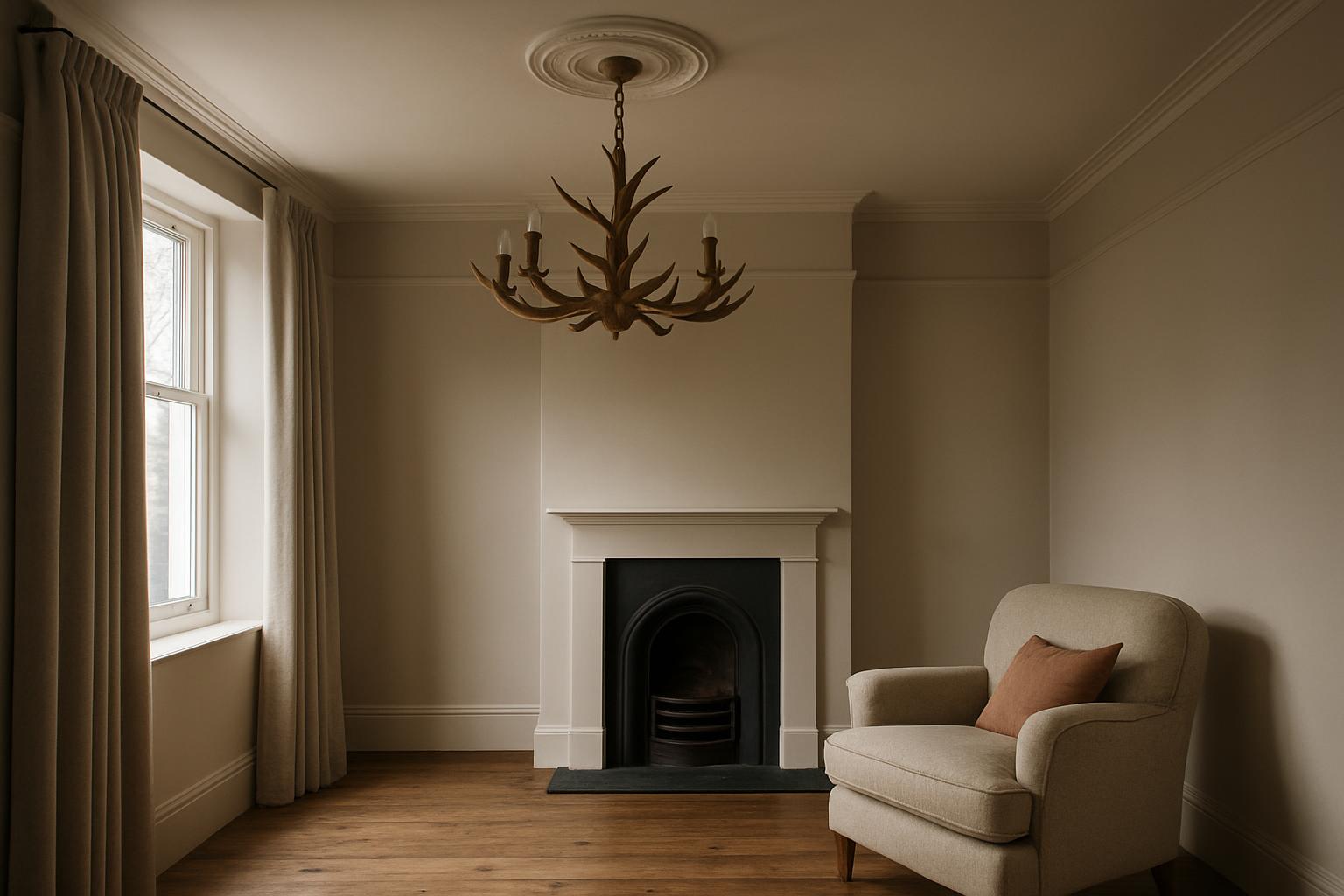
Test deeper paint colours through a full day before committing. A muted green that looks balanced in clear morning light can become much denser on a wet afternoon, particularly in a north-facing sitting room.
In the same direction, Antlers in a New Light: Colour, Surface and Contrast offers useful ideas for choosing home lighting more confidently.
Give winter evenings more than one source of light
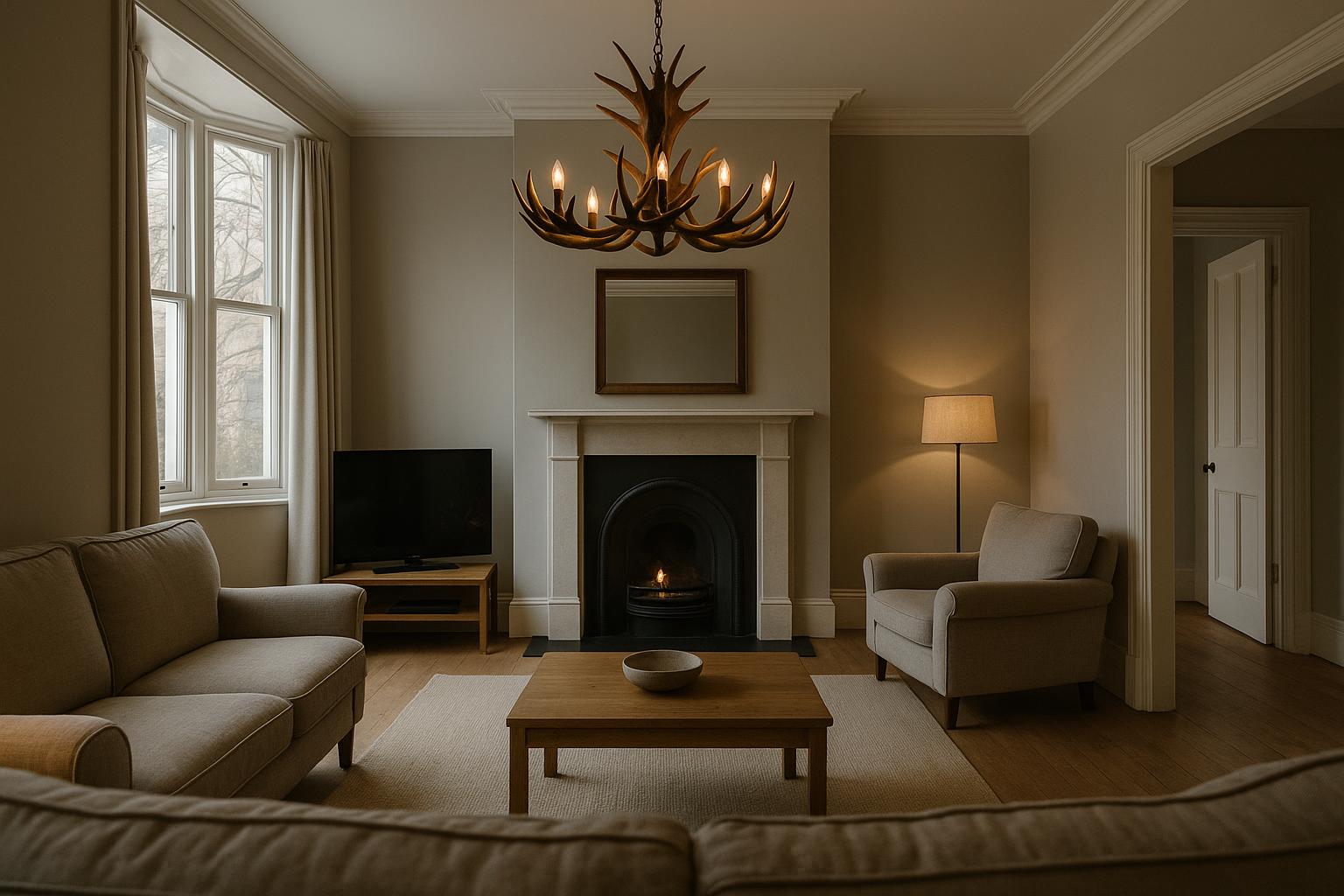
Winter is when the fitting's drama is most apparent, although a central ceiling light should not be expected to perform every task. It can establish the room's overall atmosphere while wall lights, table lamps and reading lights put illumination where it is actually needed.
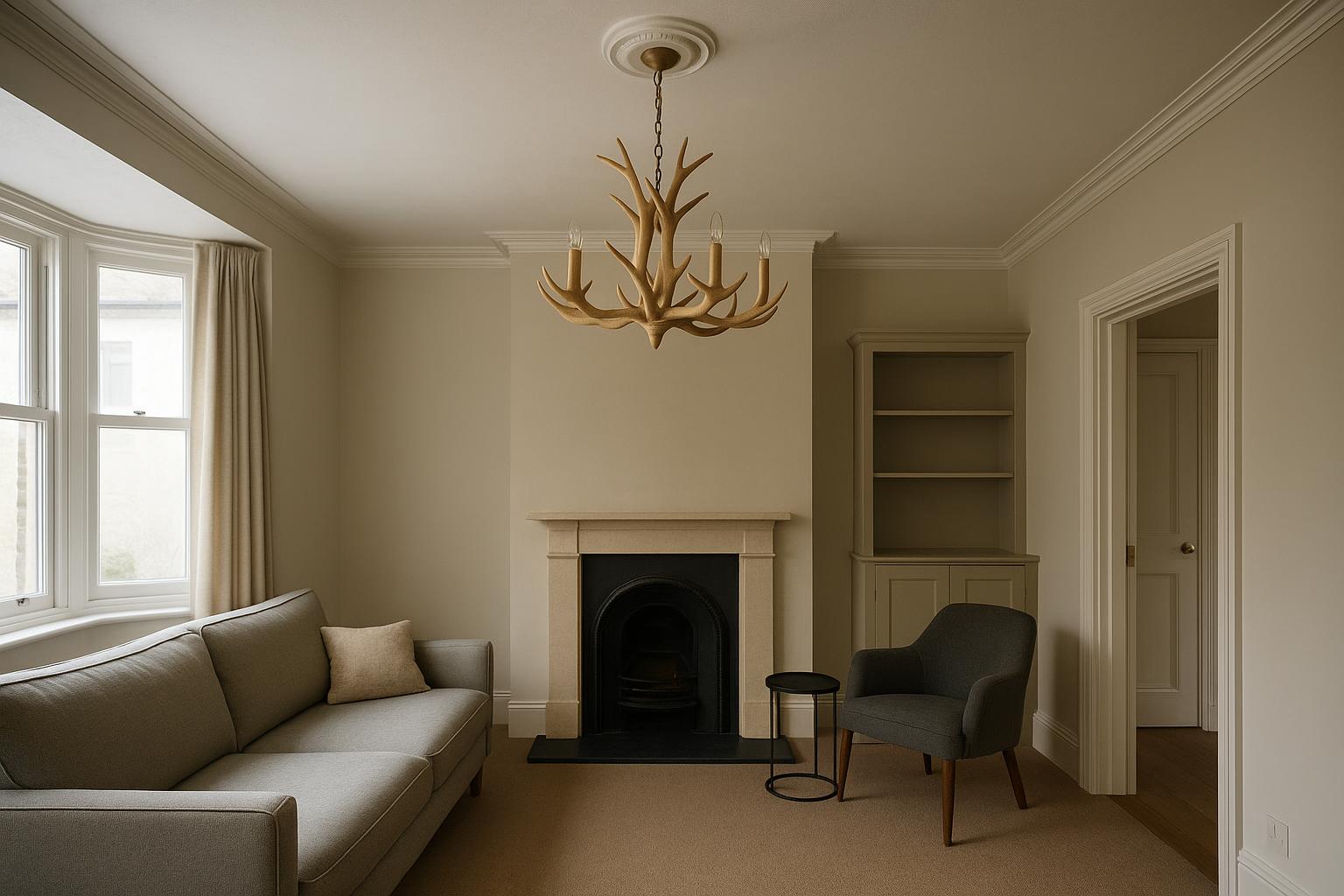
In a sitting room with a chimney breast, a shaded lamp beside the sofa can support reading, while a discreet wall light near shelving prevents the far side of the room from disappearing after dark. In a kitchen-diner, separate work lighting remains important even when a chandelier creates a warmer mood over the table.
A compatible dimmer may make the central fitting more adaptable, but compatibility must be confirmed for the fitting, lamps and control before installation. Decorations should also remain separate from the light. Do not attach foliage, ribbon or ornaments unless the manufacturer expressly permits it; decorative material near lamps, cables or electrical components introduces avoidable risk.
Adjust the room, not the centrepiece
British rooms often change function more frequently than they change appearance. A dining table may handle breakfast, homework and evening guests. A spare room may serve as an office for most of the week, while a conservatory used casually in July may need a warmer atmosphere in November.
Supporting light can respond without disturbing the central fitting. A portable lamp on a sideboard softens the dining area after supper, while a brighter ambient layer is more useful on dark weekday mornings. In a home office, focused light at the desk matters more than increasing the glare from overhead.
For more consistent lighting throughout the home, the article The Antler Light Test: What Product Photos Cannot Tell You may also be helpful.
A country style chandelier can remain the visual anchor through these changes. The room becomes more flexible when practical lighting is assigned to activities instead of making one decorative fitting responsible for all of them.
Choose for an ordinary day
Product photographs often show antler lights in their most atmospheric surroundings. When comparing designs, mentally remove the firelight, greenery, cushions and dressed table. What remains is the form you will see throughout the year.
Look at the overall diameter, height and branch density rather than judging impact from the image alone. An airy outline may suit a compact room or a view towards garden doors, while a denser fitting needs more visual space. Consider what sits behind it from the doorway, sofa and dining chairs, not just from the photographer's position.
Finish matters too, but it need not match every handle or furniture leg. Deliberate contrast can be more convincing than perfect coordination. Before you buy antler lights online, compare the listed dimensions with the ceiling height, furniture position and everyday sightlines in your room. The collection is best approached with the permanent scheme in mind rather than a winter mood board.
Let the seasons move around it
A successful antler light does not require a room to remain rustic, dark or permanently dressed for December. Give it a composed background, change a small number of accessible pieces and provide separate lighting for practical tasks. The seasons can then alter the atmosphere without dislodging the room's main sculptural feature.