An antler light need not belong to winter. A calm permanent scheme, a few movable elements and well-planned...
- There are no more items in your cart
- Shipping
- Total £0.00
Antlers in a New Light: Colour, Surface and Contrast
Antler lighting is often treated as a finishing touch for a country room. In practice, its effect depends less on rustic decoration than on the relationship between the fitting, the ceiling and the largest areas of colour below. The same branching form can recede into warm plaster tones, stand crisply against ink blue or bring movement to an otherwise plain new-build interior.
When gathering antler lights ideas, start with that relationship rather than a list of themed accessories. Colour determines whether the outline feels quiet or emphatic; surface affects how natural or polished it appears; contrast decides how much attention it claims. Settling those points early makes the rest of the room easier to edit.
Treat the ceiling as part of the palette
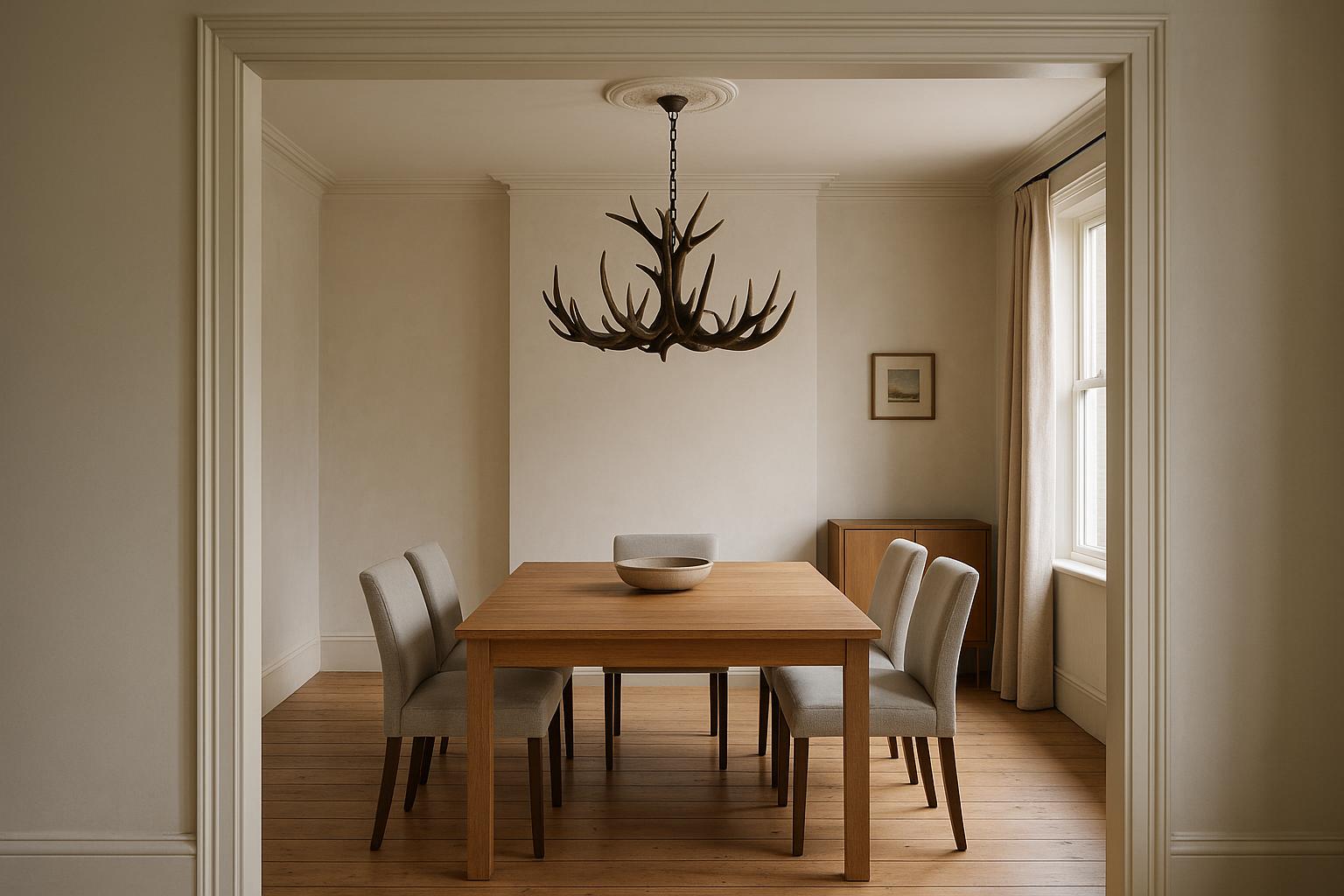
A ceiling is not merely a neutral background. It is the largest uninterrupted surface around a ceiling light, so even a small shift from brilliant white to warm white, pale putty or deep colour can alter the fitting considerably. A close-toned ceiling softens the outline. A contrasting one makes every branch and tine easier to read.

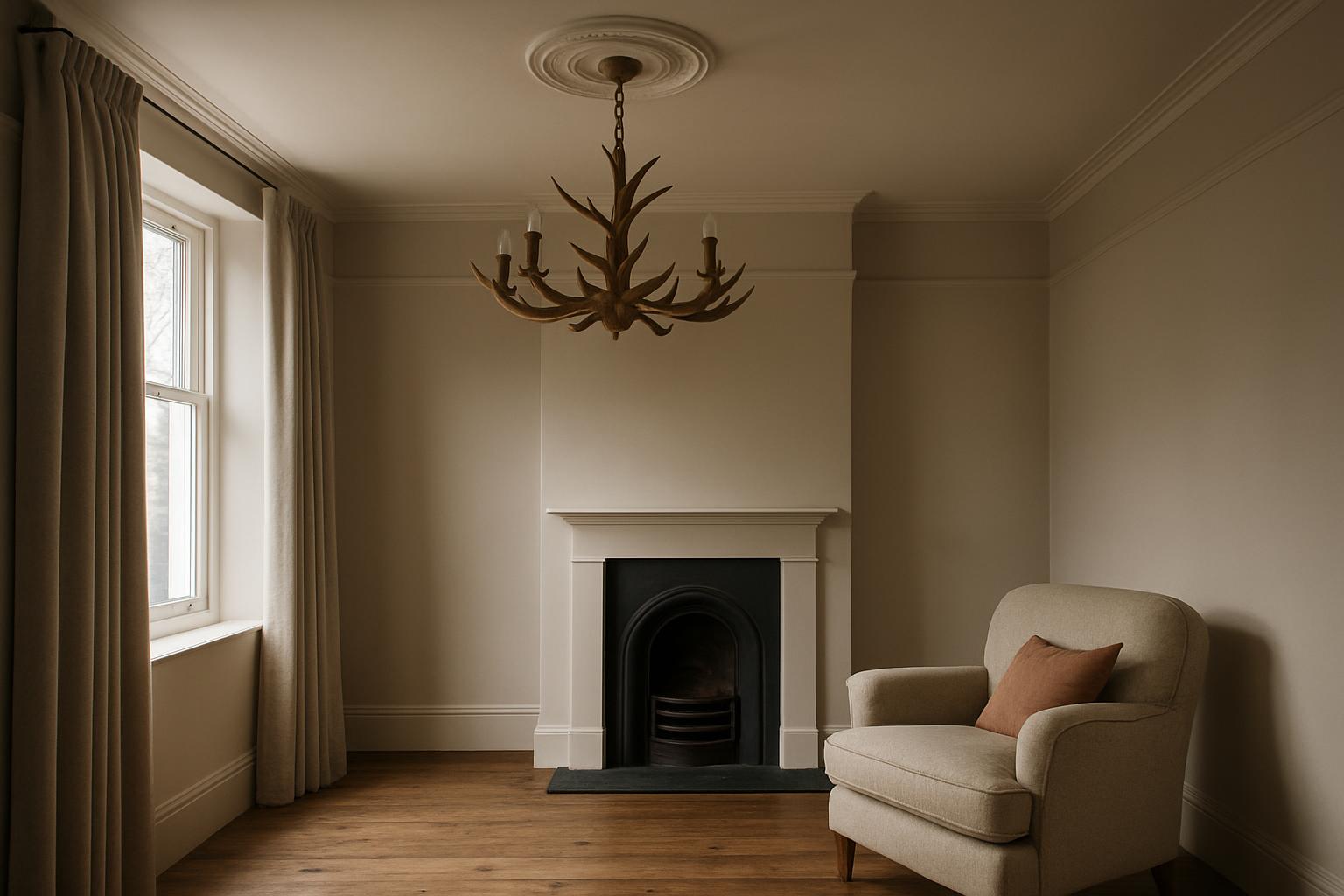
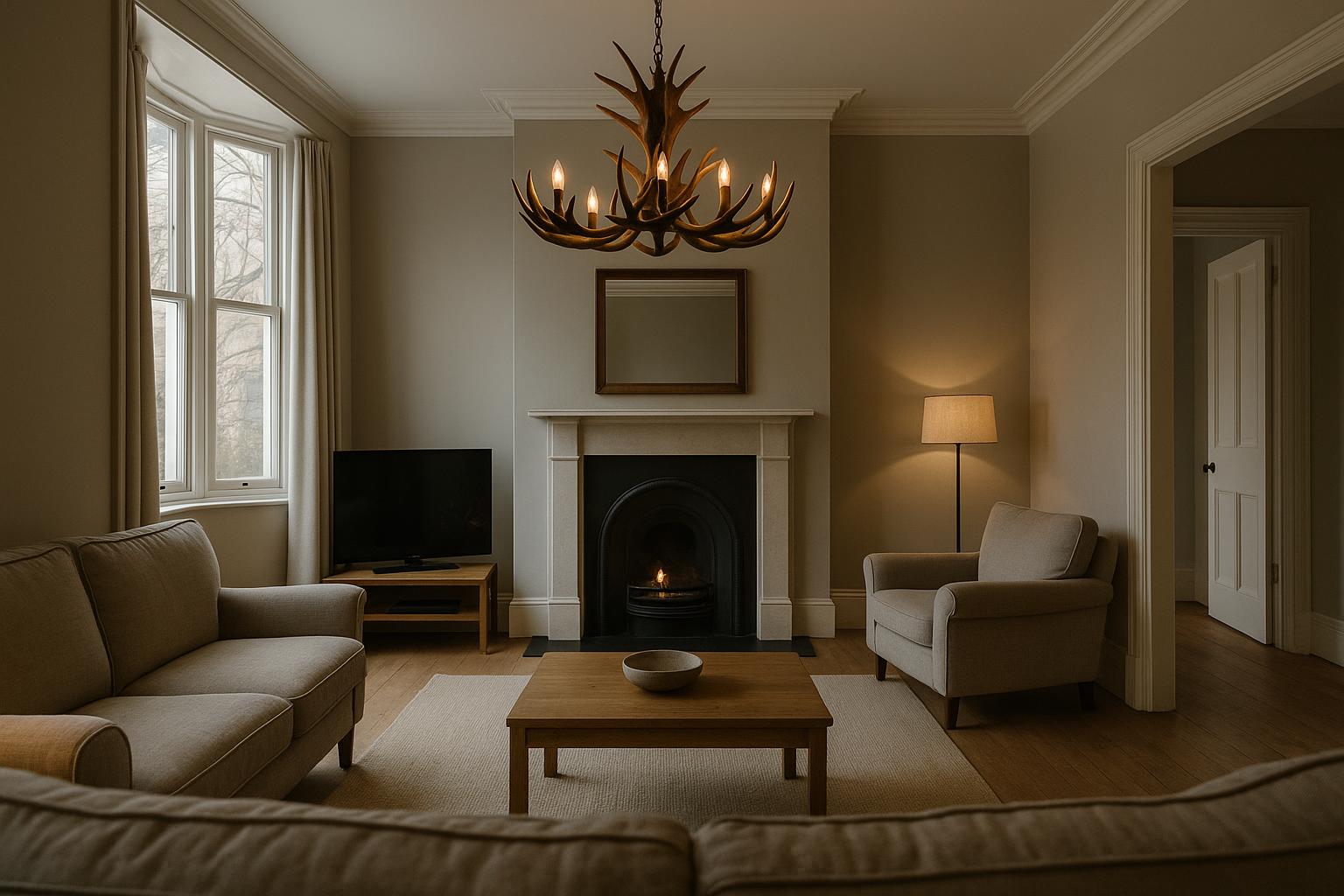
Consider the ceiling alongside the walls rather than matching it automatically to the woodwork. In a compact sitting room with a chimney breast, cornice and ceiling rose, several sharp changes of colour can make the upper part of the room feel fragmented. Carrying a gentle wall colour overhead, or choosing two related tones, may give an antler fitting a calmer setting.
Check the proposed finish in the room itself. A pale natural surface may appear creamy beside a cool grey wall but stonier against oatmeal or plaster pink. Dark brown can look warm in sunlight and almost black on a winter afternoon. Photographs help with silhouette, but physical paint and fabric samples are more reliable for undertones.
Let a pale scheme rely on shadow
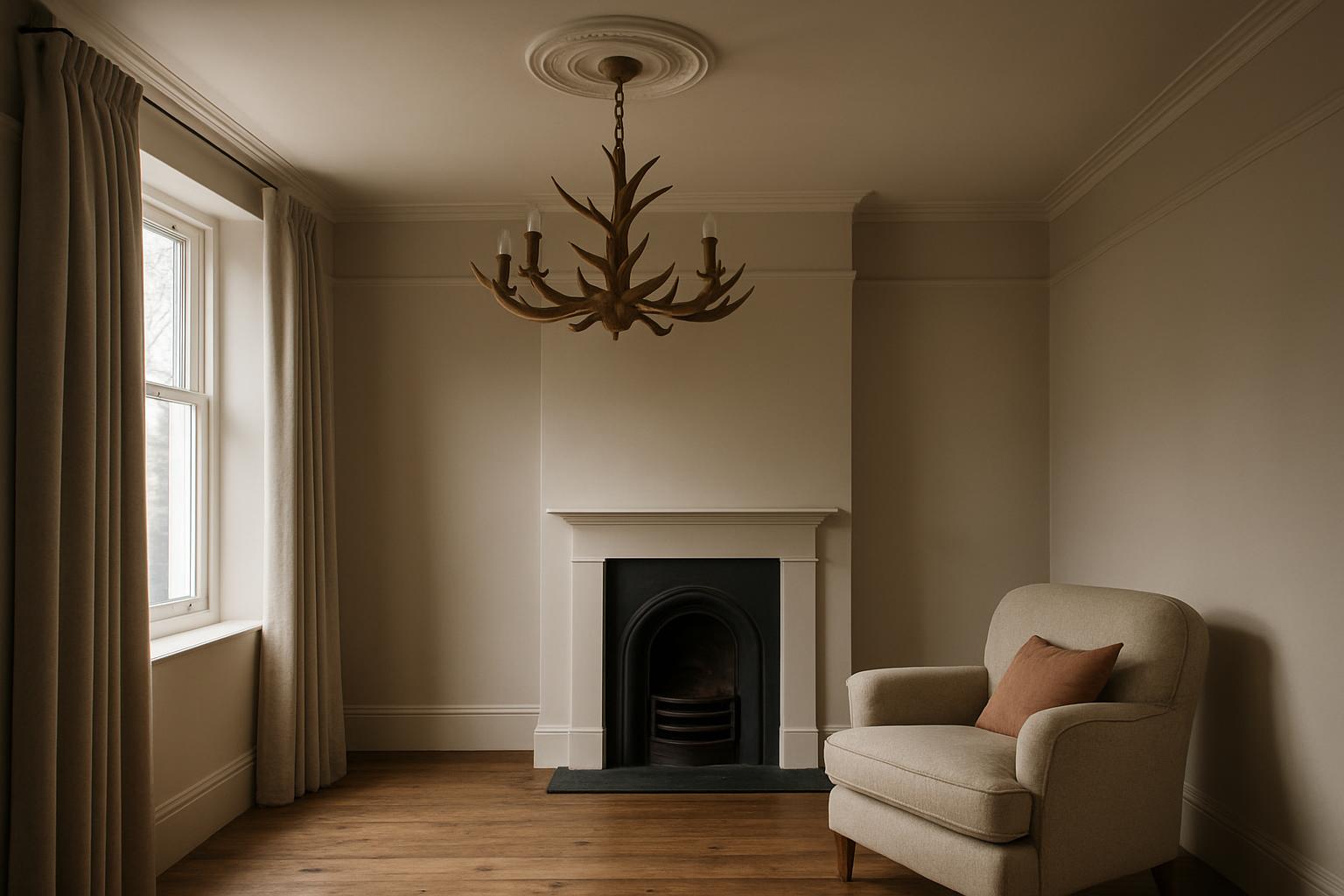
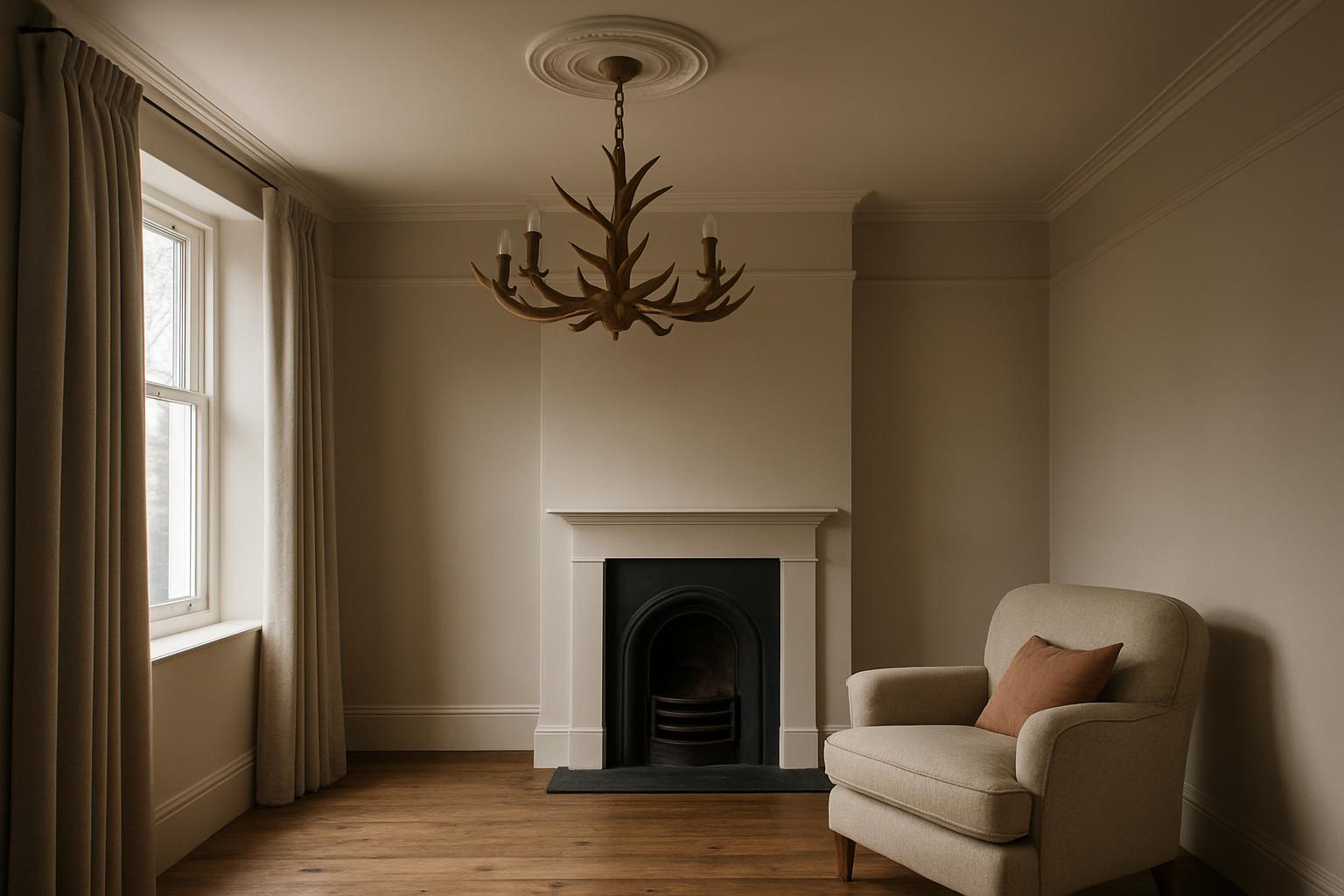
A low-contrast scheme need not lack definition. Pale branches against warm white reveal themselves through the small shadows cast onto the ceiling and through changes in daylight. This is useful in bedrooms, cottages and Edwardian semis where the fitting needs presence without crowding period plasterwork or a modest ceiling height.
Build the room from related, not identical, neutrals. Mushroom walls, an oatmeal chair, aged timber and a chalky ceiling offer enough variation to prevent flatness. A little clay, faded red or tobacco can add warmth without breaking the quiet effect. If the floor has a strong orange cast, repeat that warmth sparingly rather than introducing several cooler greys elsewhere.
Ceiling roses also affect the composition. Painting a plain rose to match the ceiling usually lets it support the fitting without creating another focal point. Decorative original plasterwork can remain visible through relief and shadow instead of being outlined in a sharply different colour.
Borrow woodland colours selectively
Olive, lichen, bark, bracken and berry shades sit naturally with rustic antler lighting, but a room rarely needs the entire woodland palette. Choose one substantial colour, one quieter neutral and one limited accent. Olive walls with flax curtains and a small amount of burgundy, for example, feel grounded without becoming theatrical.
To complement this topic, you can also read The Antler Light Test: What Product Photos Cannot Tell You.
Materials can carry the association more subtly than motifs. A flat-weave wool rug, matt-painted cabinet or irregular ceramic bowl suggests an earthy setting without recourse to stag pictures, branch-patterned wallpaper and faux fur. Once the light has introduced the organic shape, repeated antler references weaken rather than strengthen it.
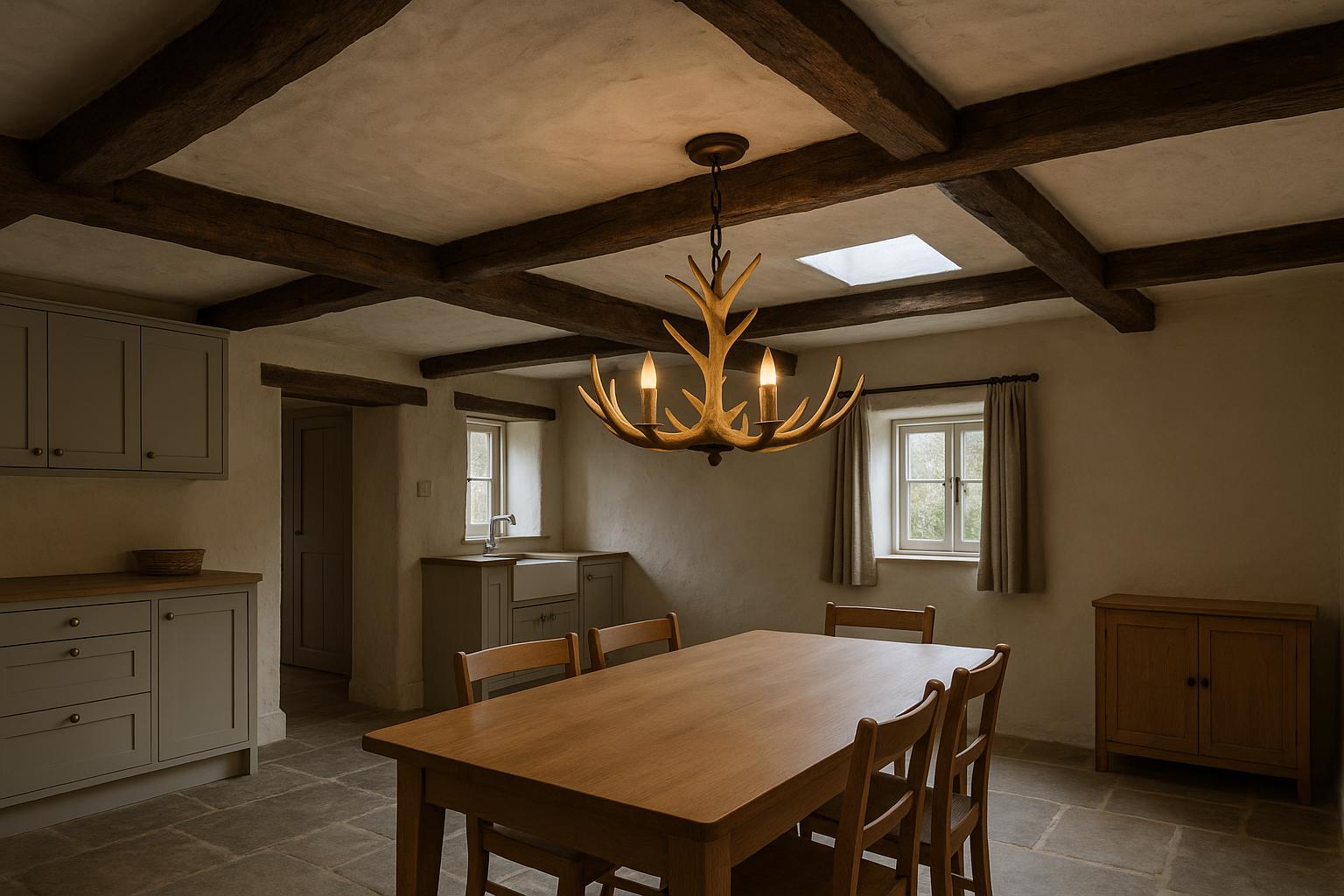
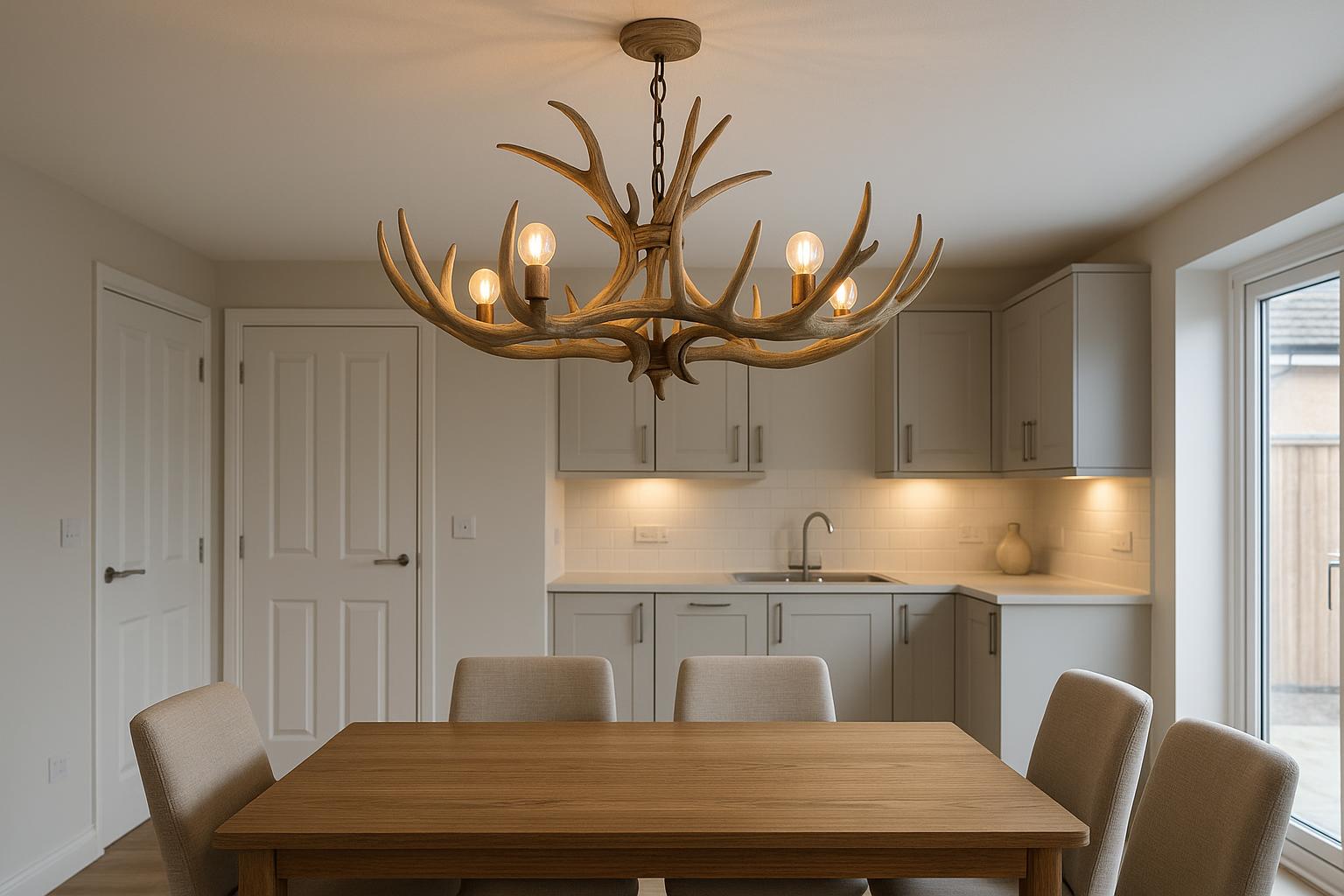
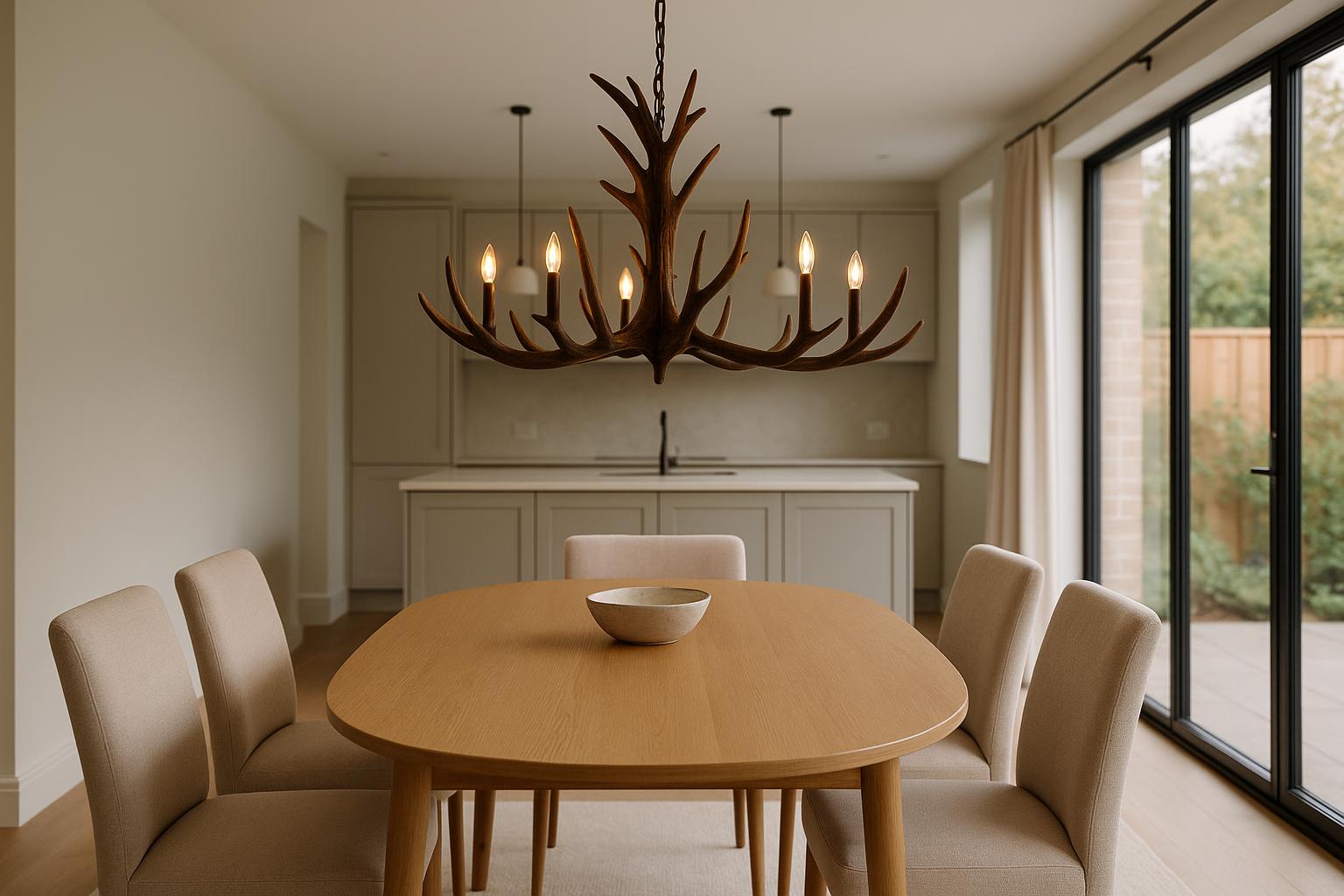
In a kitchen-diner, a country style chandelier may define the table while still belonging to the adjoining kitchen. Link the areas through one shared element, perhaps the timber tone, cabinet colour or curtain fabric. This creates continuity without making the dining end look like a separate decorative set.
Give a dark room a graphic focal point
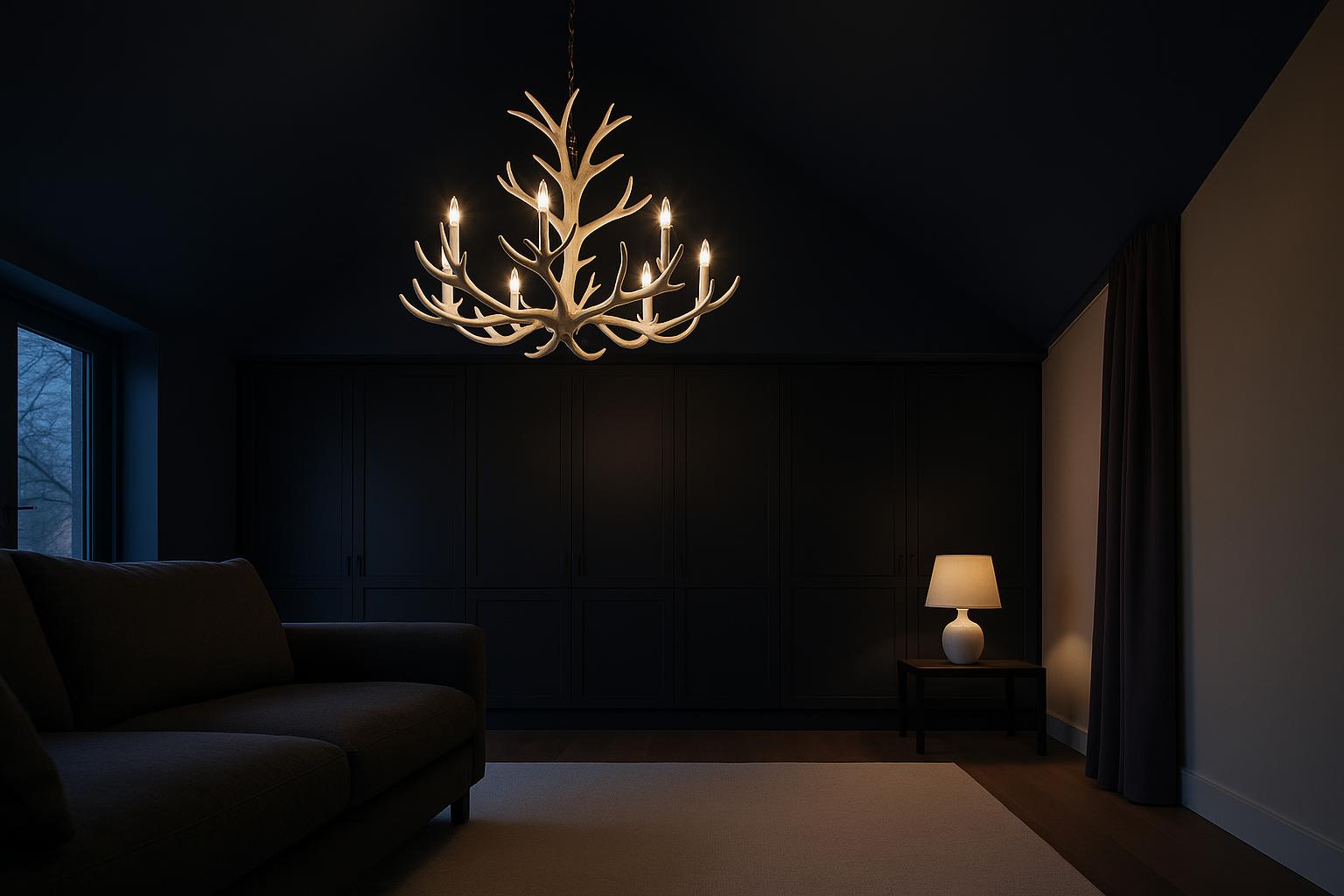
Deep colour can move antler lighting away from its familiar country setting. A pale fitting against an ink-blue, charcoal or aubergine ceiling reads almost as a line drawing. The contrast is particularly effective in a converted loft, modern extension or Victorian sitting room furnished with simple, low shapes.

The surrounding surfaces need discipline. Flat-fronted storage, plain curtains and a largely unpatterned rug leave enough visual space for the branching outline. A dark antler fitting against a dark ceiling offers a quieter alternative, appearing through highlights rather than a hard silhouette.
A dark scheme still needs a lighter plane. This might be a wool rug, a broad sofa, pale curtains or an adjoining wall kept several tones softer. Without that relief, the walls, upholstery and fitting can merge after sunset. Repeating the fitting colour once at a smaller scale, in a side table or ceramic lamp base, is usually sufficient.
Set limits on rustic texture
Texture connects an antler form to the room, but covering every surface in rough timber, distressed paint and heavy fabric can make the result feel staged. A more convincing interior includes smoother counterpoints: linen beside glass, wool beside painted joinery, or natural wood against a fine, plain rug.
In the same direction, Sofa, Hearth and Screen: Placing an Antler Light offers useful ideas for choosing home lighting more confidently.
- For a soft room: combine matt walls, brushed fabric and one clearly grained timber.
- For a cleaner interior: use smooth cabinetry or glass with a substantial wool or linen texture.
- For a period home: allow original boards, plaster or brick to provide age instead of adding several artificially weathered pieces.
Metal details should remain supporting notes. They need not match perfectly, but a mixture of bright chrome, polished brass and blackened metal can distract from the more nuanced finish of the light. Relating handles and lamp bases to one dominant metal creates a steadier background.
Keep the branch shape clear
Antler chandeliers contain numerous angles and changes of direction, so the furniture beneath them can be comparatively quiet. An oval dining table is a useful foil to the branching geometry, while a plain rectangular table gives a firmer, more architectural contrast. In a sitting room, broad upholstery and solid colours provide somewhere for the eye to rest.

Look above eye level as well as across the floor plan. Beams, a roof lantern, curtain poles and pendant lights over an island all introduce lines near the ceiling. If those elements are already prominent, avoid adding another elaborate fitting in every adjoining zone. One characterful ceiling light often has more authority when neighbouring lights are simpler.
Clear space around the fitting matters as much as the objects below it. Dense dried arrangements, spiky ornaments and heavily veined accessories can echo the branches too literally. Repeating the mood through colour or texture is subtler than repeating the shape.
Test the palette after sunset
Daylight shows the fitting as an object; evening light changes both its surface and the surrounding colours. Deep green may become almost black, warm neutrals can grow richer and pale branches may throw animated shadows across the ceiling. Assess the room on a dull afternoon and again after dark before committing to the final paint colour.
For more consistent lighting throughout the home, the article Planning Antler Lighting Around Hallways and Stairs may also be helpful.
The decorative ceiling light should not be expected to handle every task. Add light where it is needed: a reading light beside a chair, shaded lamps around the sitting room or discreet task lighting over kitchen worktops. These lower sources prevent the room from becoming uniformly bright and give textured materials more depth.
Visible lamps also influence whether the fitting leans towards traditional lodge lighting or a more pared-back look. Select lamps according to the product instructions. Where dimming is wanted, confirm that the fitting, lamps and control are compatible, and have installation carried out by a suitably qualified electrician.
Make the final edit from the doorway
Arrange samples of paint, flooring and fabric with a clear photograph of the proposed finish. View them in the actual room, then stand at each main entrance and consider what appears behind the light. A busy curtain, dark beam or strongly patterned wall can change a silhouette that looked simple in isolation.
Remove one competing element before adding another. The light already supplies movement and sculptural detail, so restraint elsewhere is not an absence of design. It is what allows the fitting, palette and textures to work as a single composition.
To compare finishes and branch shapes against your own samples, browse LuminLight's antler lights collection. Choose with the ceiling and surrounding colours in mind, rather than treating the fitting as a final decorative extra.