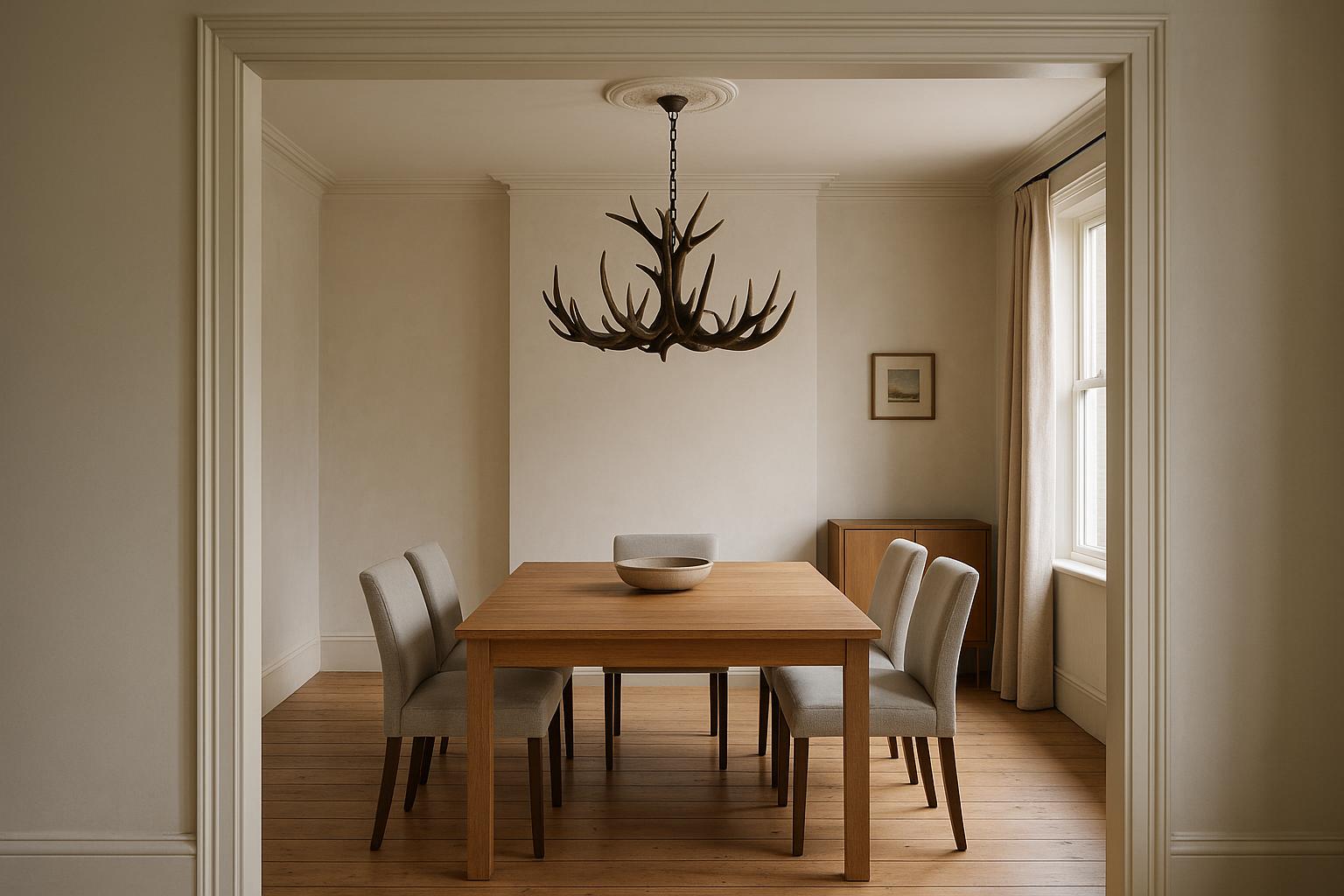
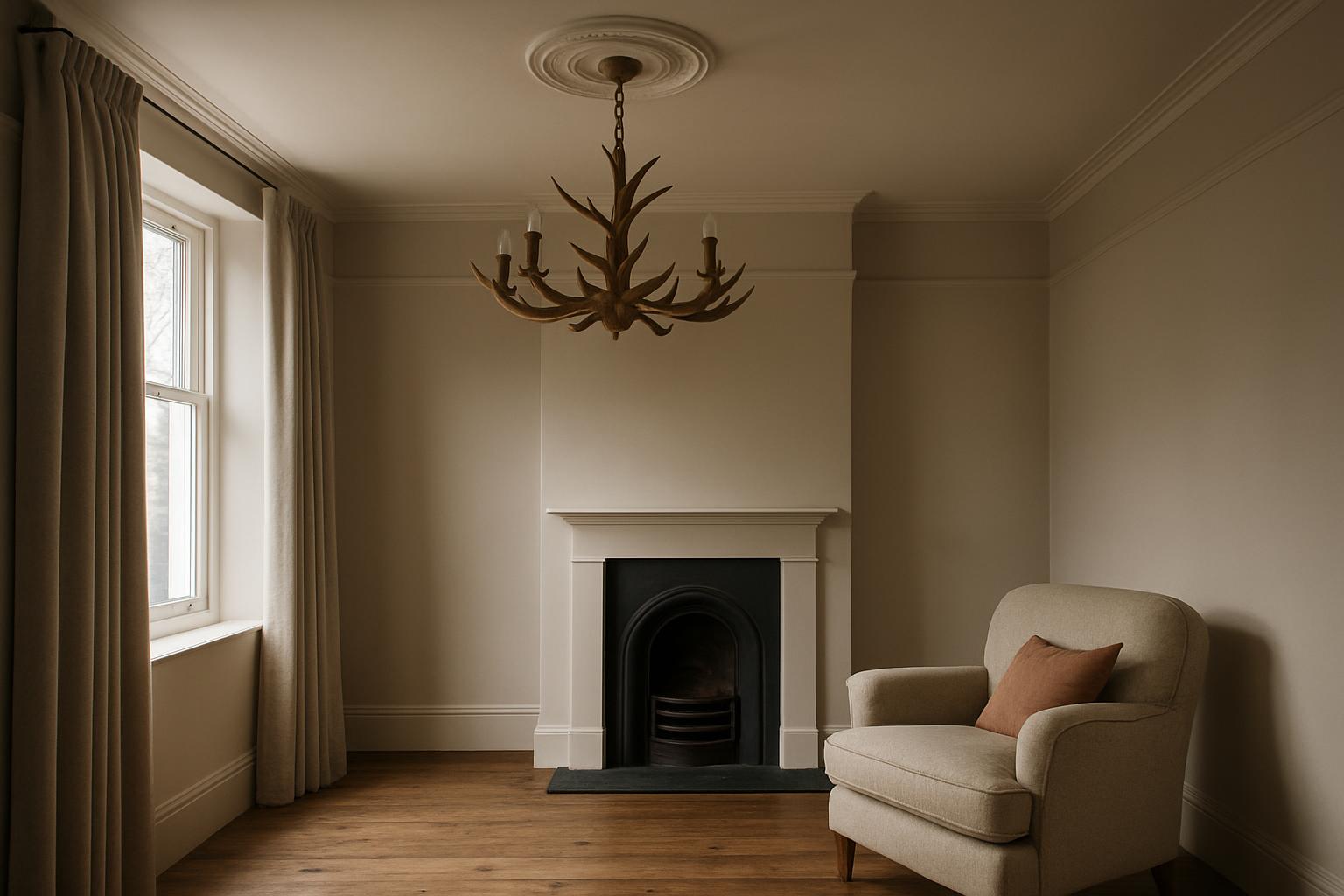
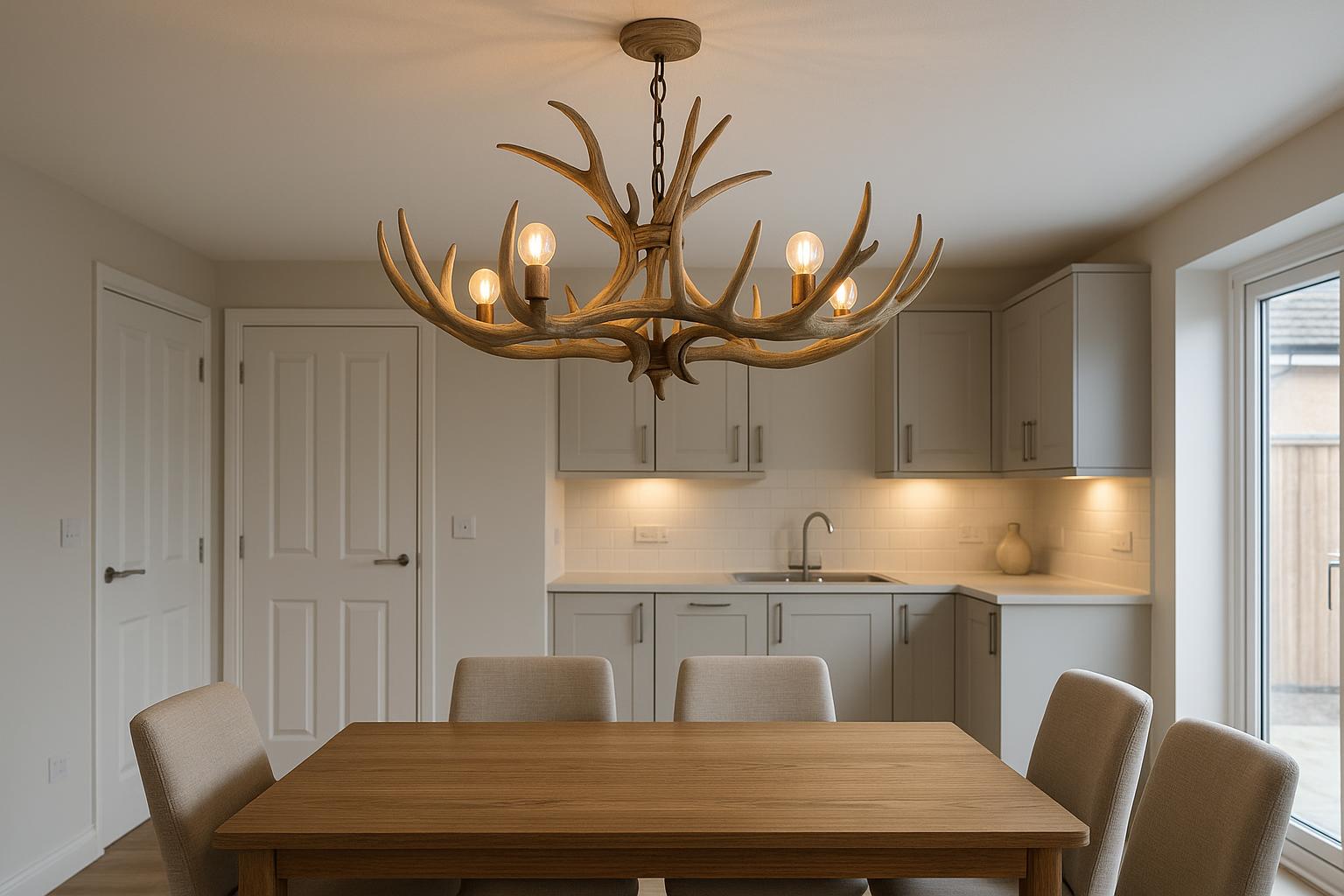
An antler light need not belong to winter. A calm permanent scheme, a few movable elements and well-planned...
- There are no more items in your cart
- Shipping
- Total £0.00
Placing Antler Lights Beneath Beams, Slopes and Vaults
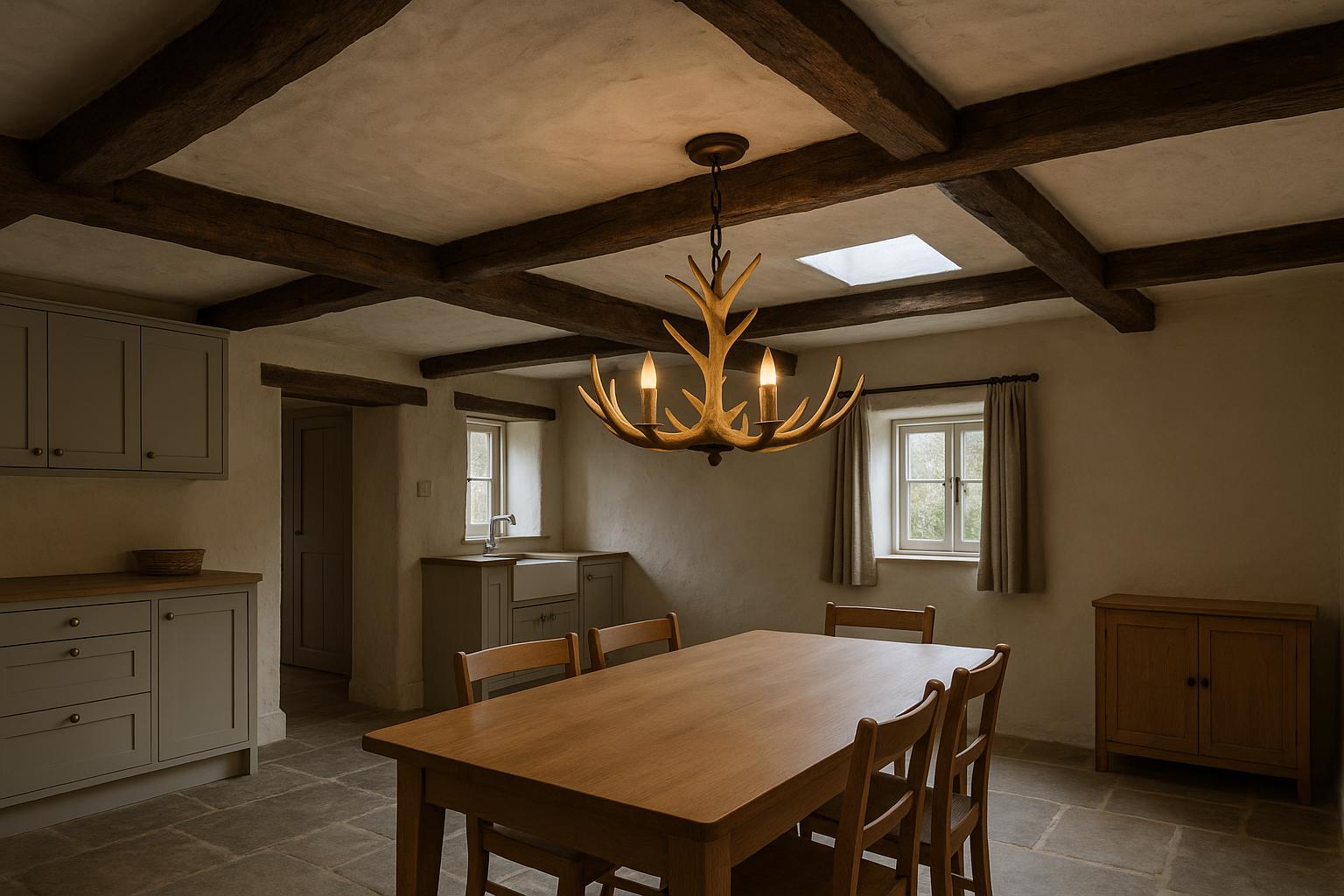
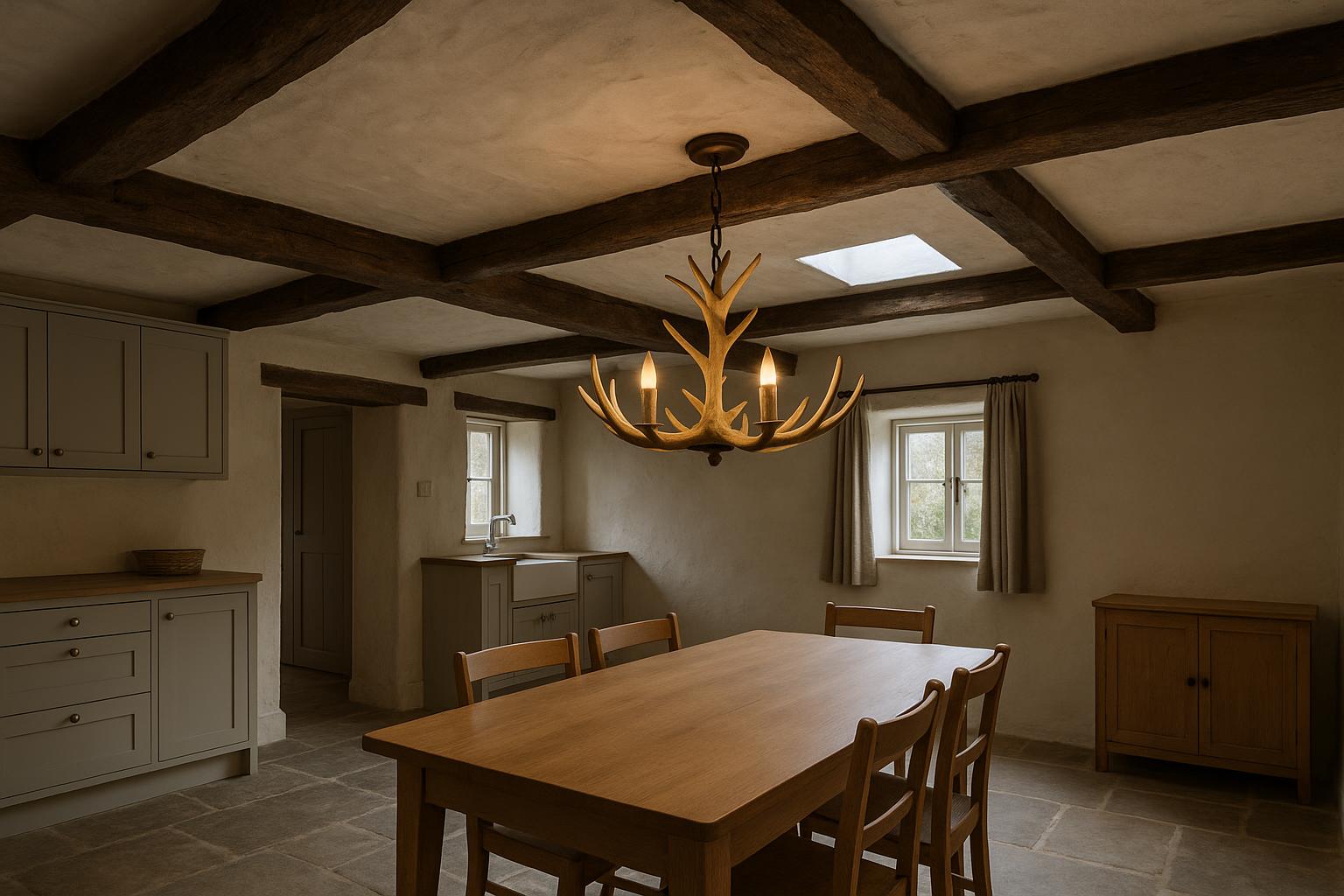
Beams, sloping plaster and uneven rooflines can make an antler light difficult to judge from a product photograph. The fitting will not be seen against a blank backdrop. Its branches will share the view with rafters, rooflights, ceiling roses and changes in ceiling height.
The solution is to treat the ceiling as part of the design rather than as a complication to be hidden. A modest fitting in a well-chosen position can look more assured than a large chandelier squeezed into the highest available space.
Record the ceiling before choosing a fitting
Start with a simple ceiling plan. Note the room dimensions, finished ceiling height, underside of any projecting beams and location of the existing electrical point. For a pendant, record the available drop as well as its overall width. A wide fitting can still feel cramped if its outer branches sit too close to adjacent timber.

Photographs are equally useful. Take one from the doorway, another from the main seating position and a third from any adjoining kitchen or hallway. These views reveal overlaps that are easy to miss when standing directly beneath the ceiling point.
Mark fixed furniture too. A dining table, kitchen island or bed can provide a convincing anchor when the roof itself is irregular. This is often more useful than trying to centre the light within a floor plan that bears little relation to the ceiling above it.
Check the view across the room
Antler forms depend on a readable outline. From one angle, a beam may frame the fitting neatly; from another, it may cut through the lamps and make the whole arrangement look muddled. Check the likely view at seated and standing eye level, not only from below.
In an open-plan kitchen-diner, for example, the strongest view may be from the sink or sofa rather than the dining table. In a loft bedroom, it may be from the doorway. Moving the suspension point a short distance can sometimes create a cleaner composition, although any change to the electrical position and fixing must be assessed properly.
Find a clear bay between beams
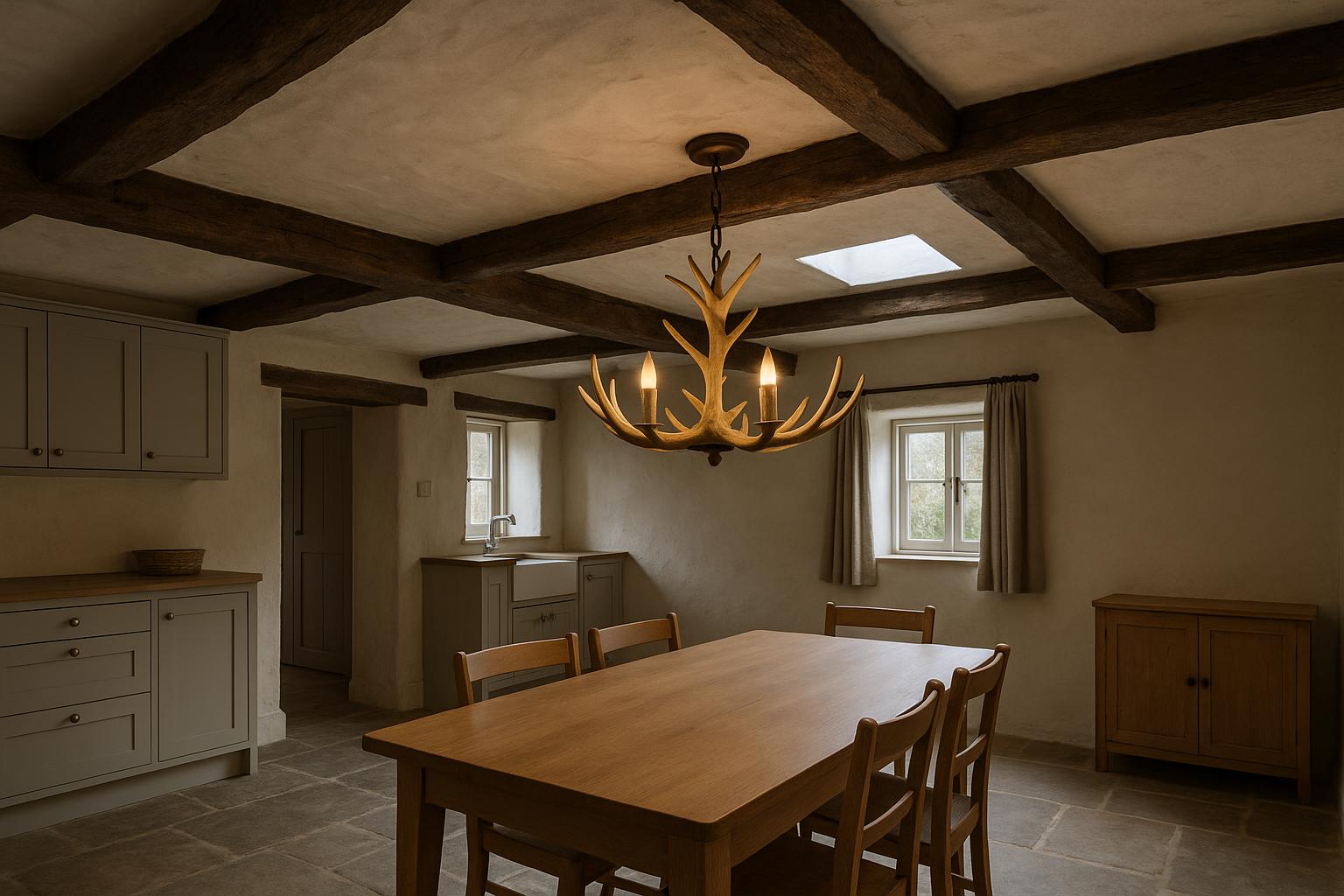
Where exposed beams divide a ceiling into bays, use that rhythm. A fitting usually reads more clearly within one open section than beneath a junction where several timbers meet. The surrounding beams then act as a frame instead of appearing to pass through the branches.
Match the complexity of the light to the spacing above it. Closely set joists favour a quieter, more compact outline. Widely spaced trusses can accommodate a broader antler chandelier, provided there is visible space around it from the main approaches to the room.
To complement this topic, you can also read Antlers in a New Light: Colour, Surface and Contrast.
Colour contrast helps, but it need not be stark. A pale fitting can remain distinct against old dark oak, while a deeper or more defined finish may be easier to read beneath white-painted rafters. Judge this in daylight and after dark, when the upper part of the room may appear much less distinct.
Give an asymmetrical roof a deliberate anchor
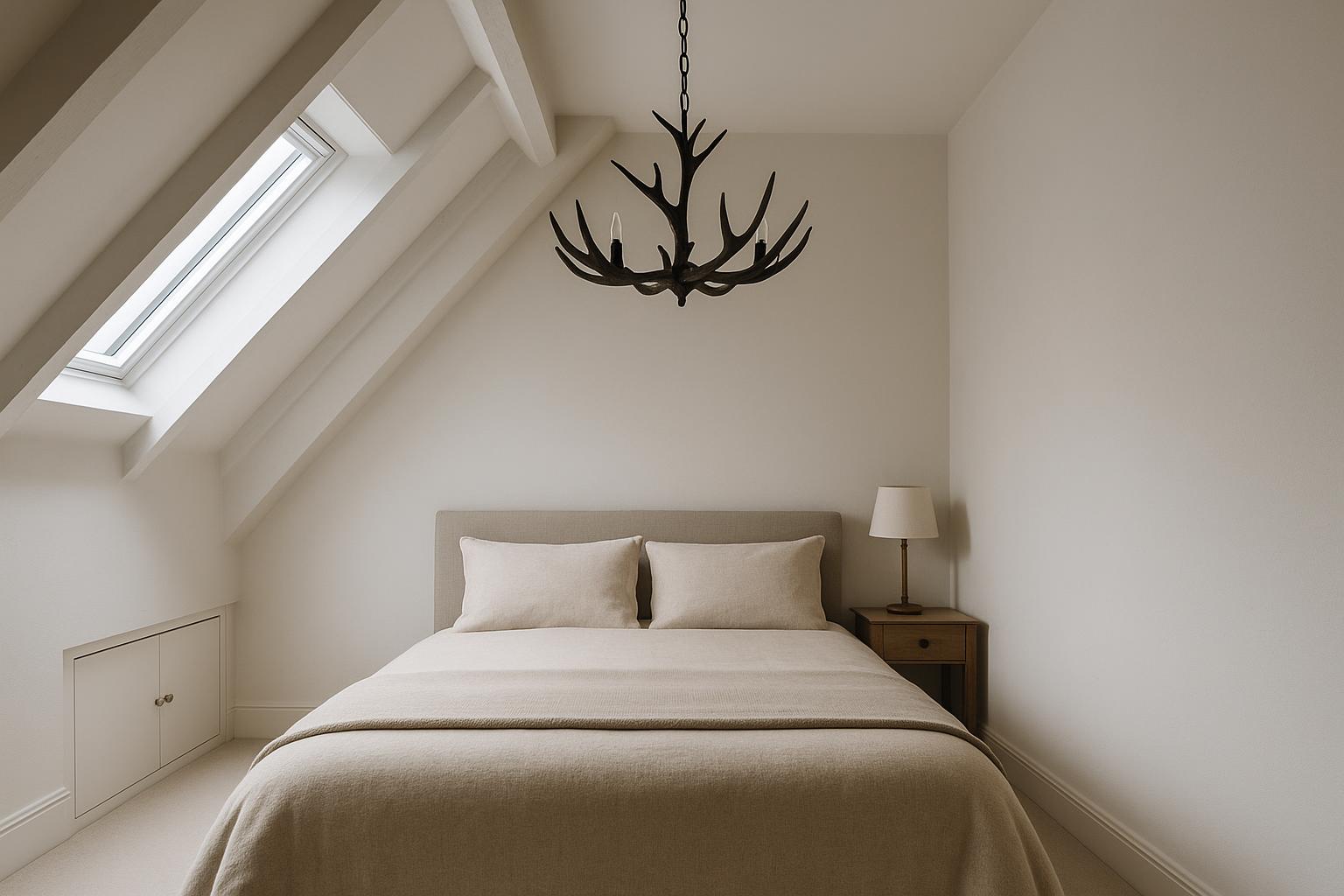
The highest point of a sloping ceiling is not always the right location. In a converted loft, an off-centre ridge may sit above eaves storage or a narrow strip of floor. Hanging a light there simply to follow the apex can leave it disconnected from the usable room.
Instead, relate the fitting to a clear activity zone. It might sit above a bed, dining surface or defined seating area. The position should look intentional from the entrance and remain practical for the people using the space.
The suspension also needs to suit the ceiling angle. Ceiling plates, chains, rods and flex arrangements are not universally interchangeable, so consult the instructions for the particular fitting. A rooflight deserves similar care: side light can cast an attractive branching shadow, but a dense silhouette against timber boarding or patterned wallpaper may become visually restless.
Reduce visual weight beneath low ceilings
A cottage, bungalow or upstairs room does not require lodge proportions. Beneath a low ceiling, depth and branch spread matter more than drama. Look for a shallow fitting with a controlled outline and lamp positions that do not crowd the room overhead.

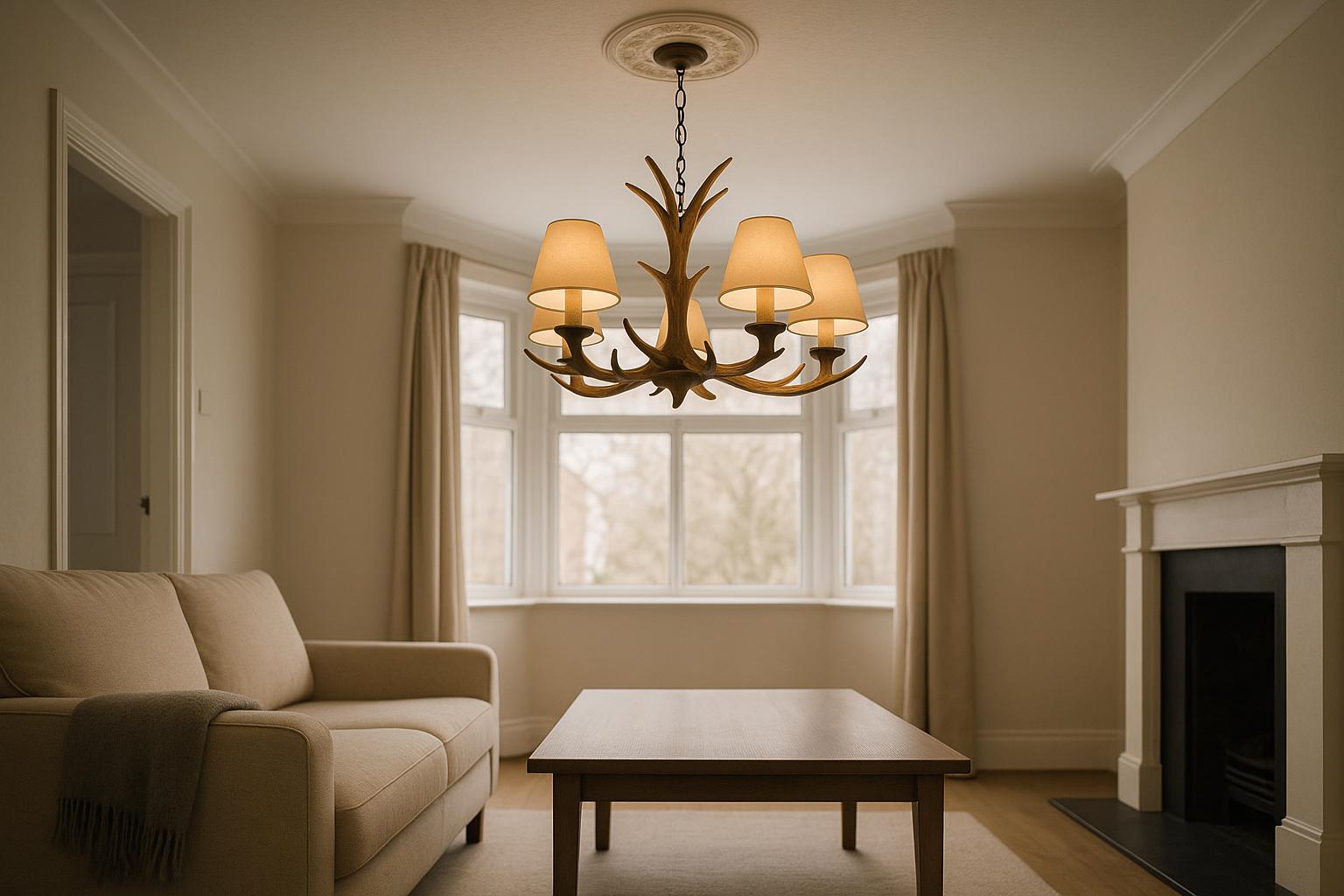
Placement above fixed furniture can keep the fitting away from a regular walking route. A coffee table, dining table or bed may provide a suitable location, but the actual clearances still need to be checked for the household and room.
In the same direction, The Antler Light Test: What Product Photos Cannot Tell You offers useful ideas for choosing home lighting more confidently.
Remember that a low fitting is seen close up. Exposed lamps, branch junctions and the underside of the ceiling plate become prominent from a sofa or bed. A coherent shape and comfortable control of glare are therefore more valuable than an elaborate silhouette.
Support the feature with useful light
An antler fitting can provide atmosphere and general illumination, but overlapping branches may also produce bright points and pockets of shadow. Plan the lighting around what happens beneath it rather than expecting one decorative source to cover every task.
- Use focused light at kitchen worktops, desks and reading chairs.
- Add wall lights or lamps where the room would otherwise fall into dark corners.
- Provide gentle circulation light near changes of level and routes between rooms.
- Light stone, plaster or timber selectively rather than illuminating every surface.
This layered approach is particularly helpful on darker winter afternoons. It allows a country style chandelier to remain the visual focus without requiring it to operate at an uncomfortable brightness whenever the room is occupied.
Resolve fixing and access before ordering
A decorative beam is not automatically a suitable mounting point. Its appearance does not confirm its condition, construction or ability to support a fitting. Old plaster, concealed roof structures and modern boxed-in beams present similar uncertainties. The proposed fixing, electrical supply and suspension should be checked by a suitably qualified electrician.
Access is part of the decision too. Consider how lamps will be replaced and how dust will be removed from the branches. A position above a kitchen island, stair void or double-height area may look impressive but could require specialist access for routine care.
For more consistent lighting throughout the home, the article Sofa, Hearth and Screen: Placing an Antler Light may also be helpful.
Check the product dimensions and installation information before purchase, including the full height, branch spread, ceiling plate and any adjustable suspension. Do not assume that a listed pendant height represents every possible installation arrangement.
Keep the surrounding scheme restrained
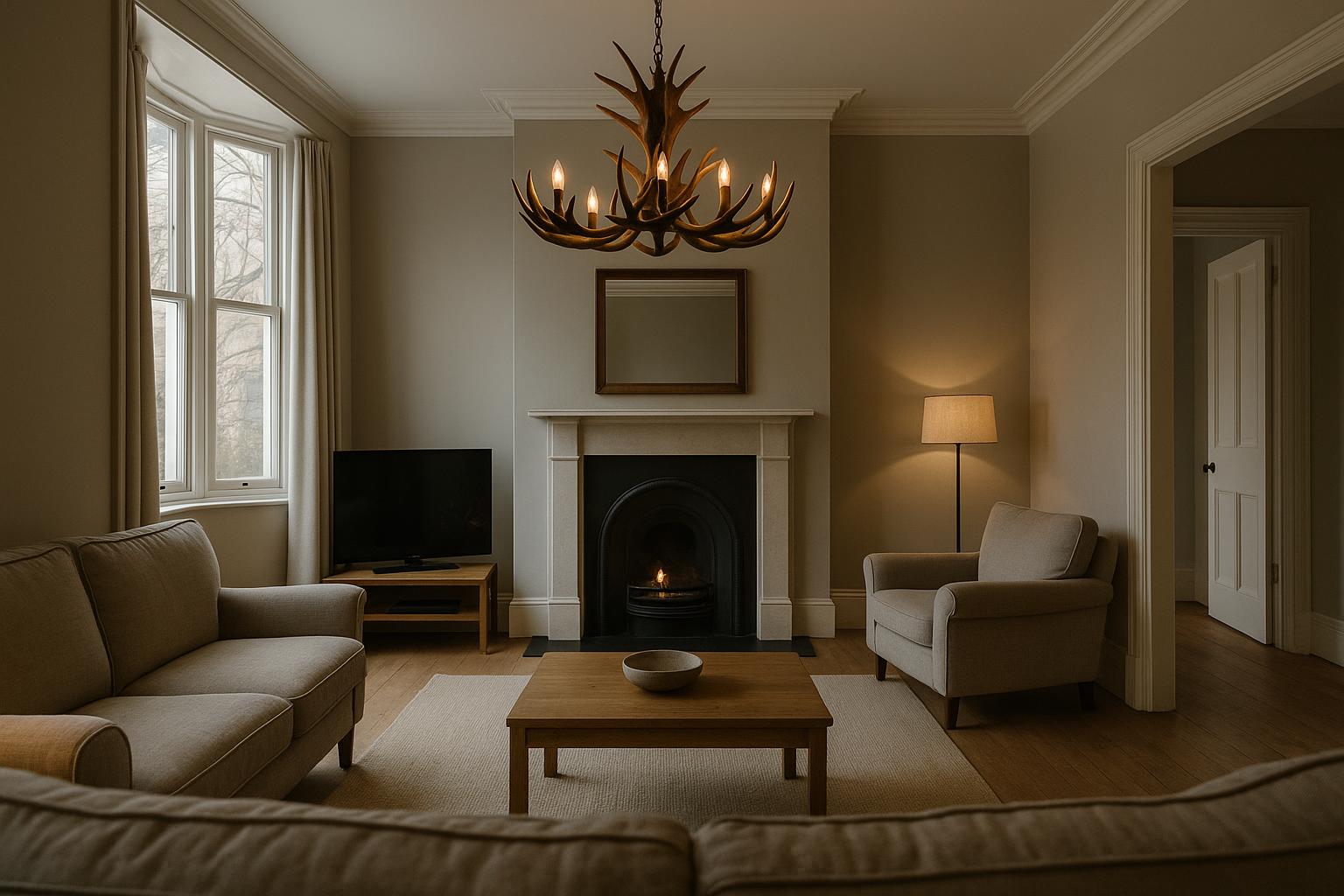
rustic antler lighting already brings an organic shape and a clear material reference. It seldom benefits from being surrounded by repeated woodland motifs. Plain upholstery, simple curtains and a limited range of finishes allow the ceiling light to hold its place without turning the room into a themed interior.
One or two quieter connections are enough: the tone of a timber table, the texture of wool or the irregular surface of stone. In a contemporary extension, smooth cabinetry and uncluttered furniture can make the branching form appear more deliberate, not less appropriate.
Shortlist for the ceiling you have
Compare prospective fittings with your measurements and room photographs beside you. Prioritise a clear outline, sensible drop and a position that works from everyday viewpoints. The largest fitting that physically fits is rarely the only option and may not be the strongest one.

When browsing antler lights in the UK, use the stated dimensions to build a shortlist before considering decorative detail. The right choice should belong to the ceiling, sit comfortably within the room and remain practical to live with.