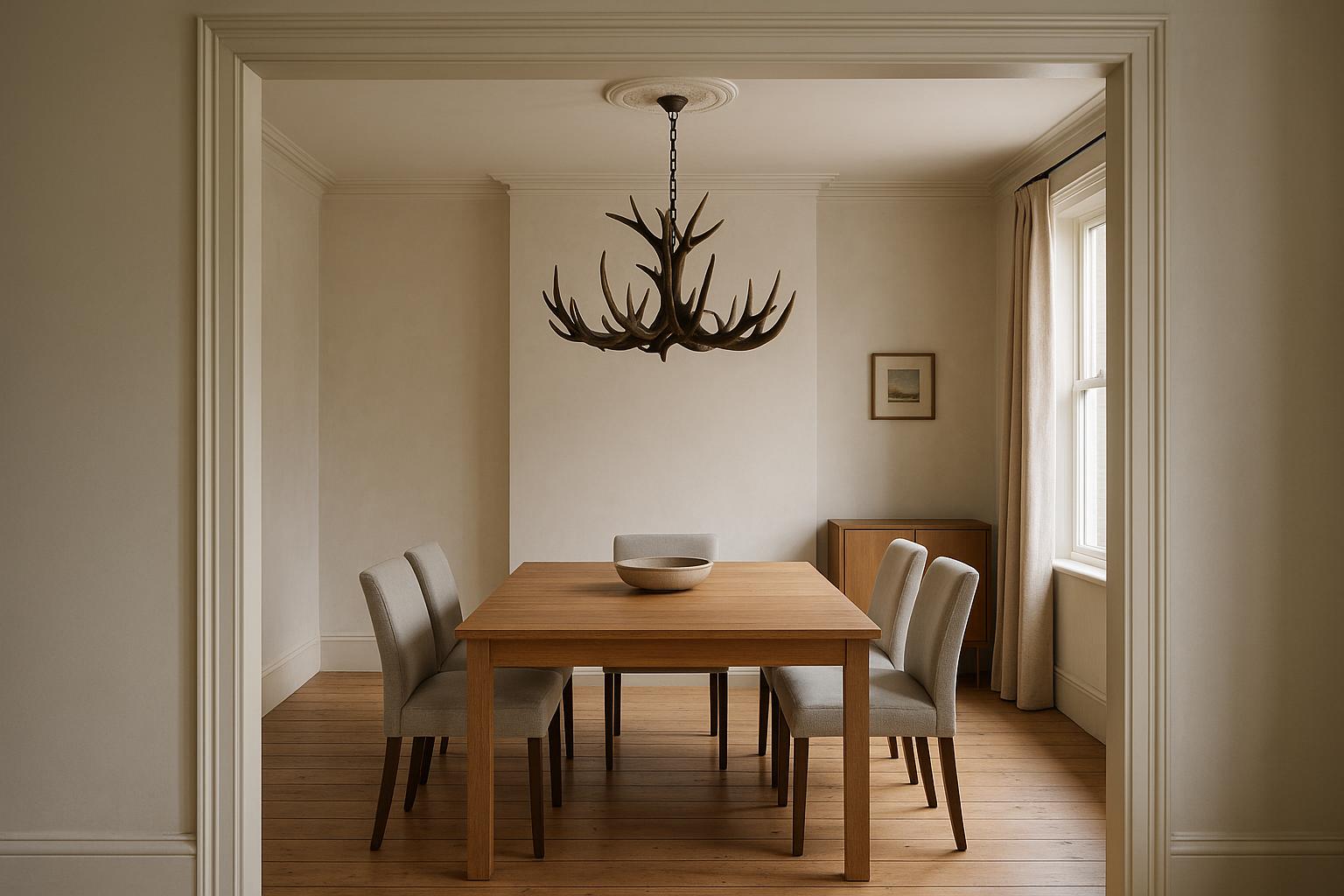
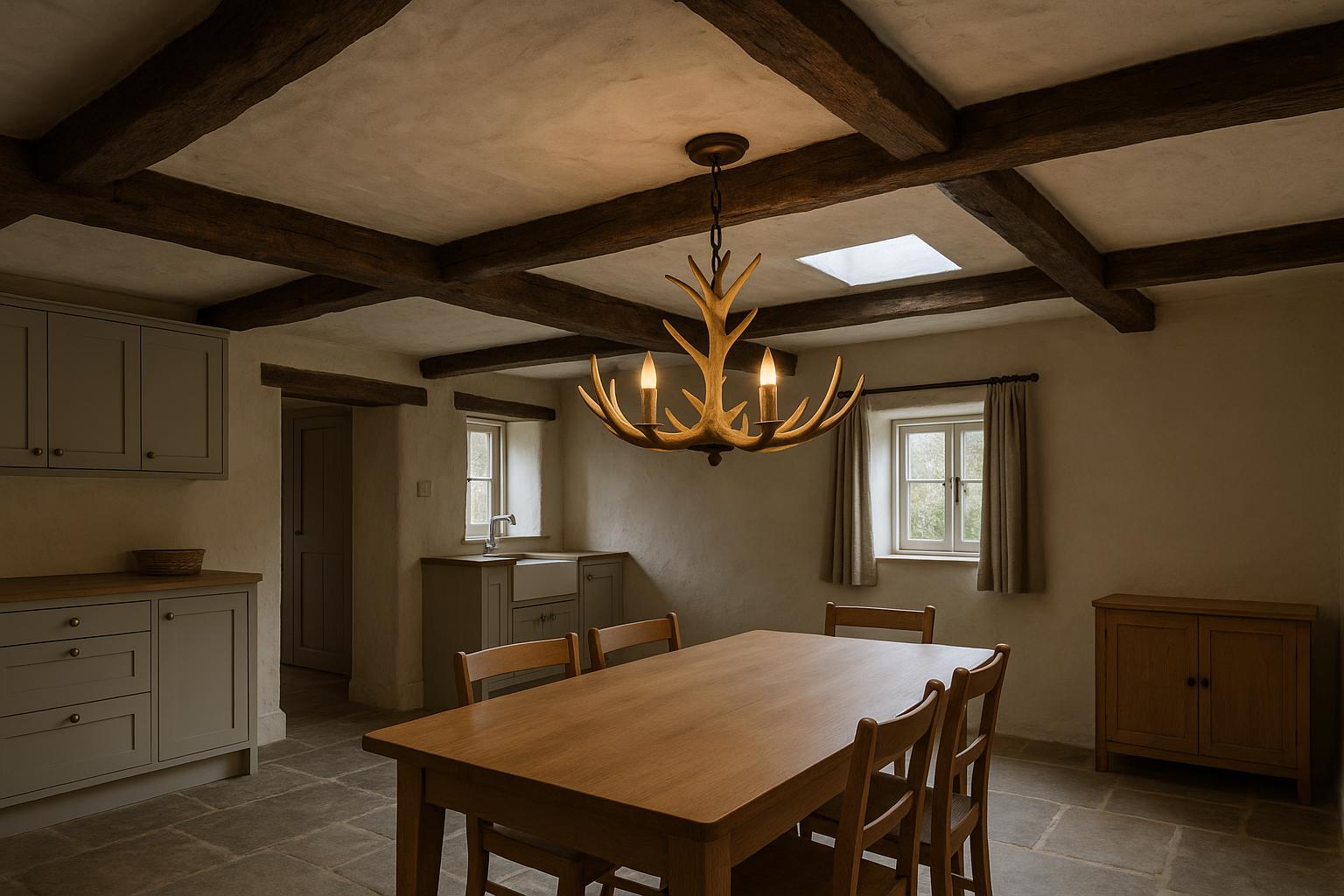
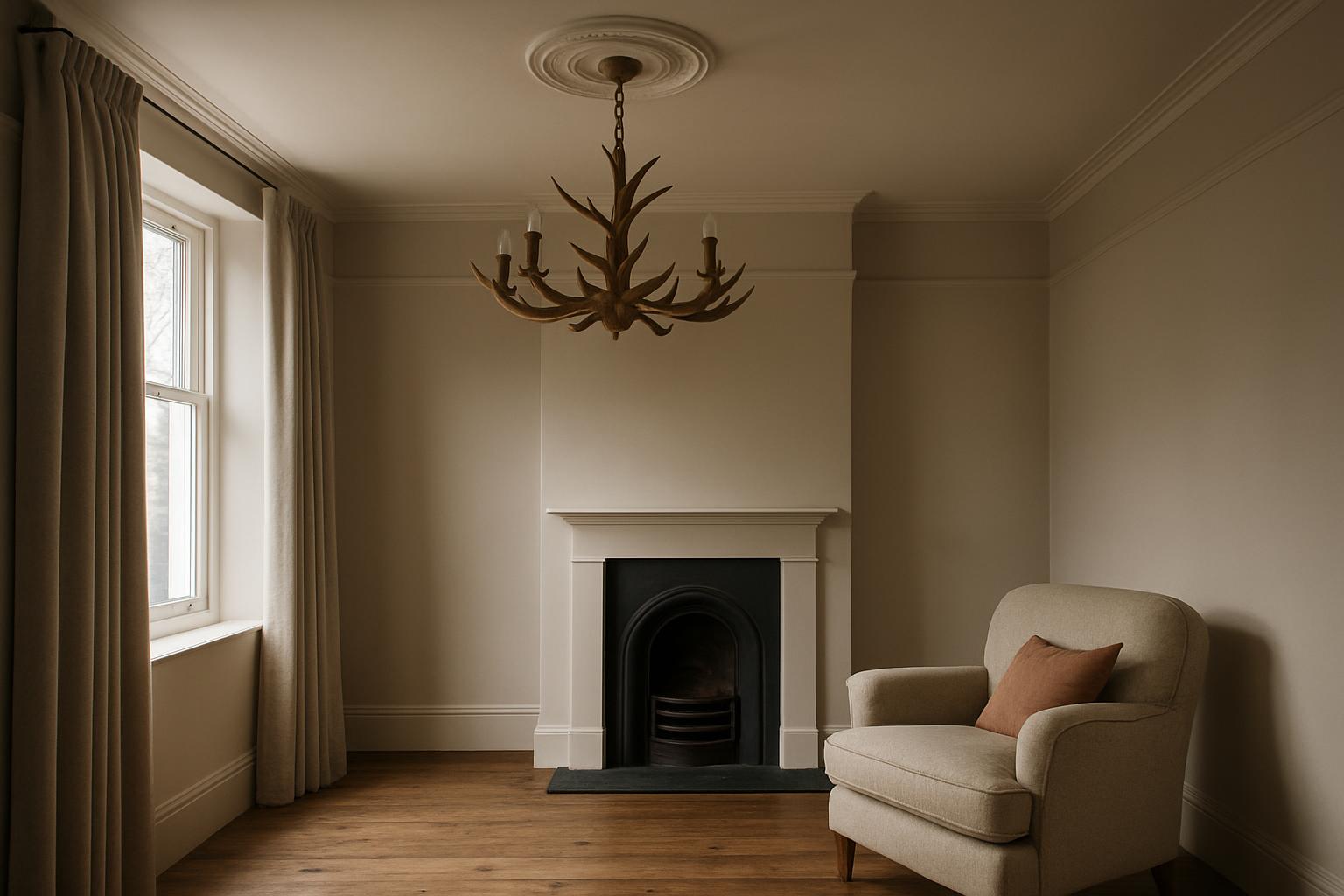
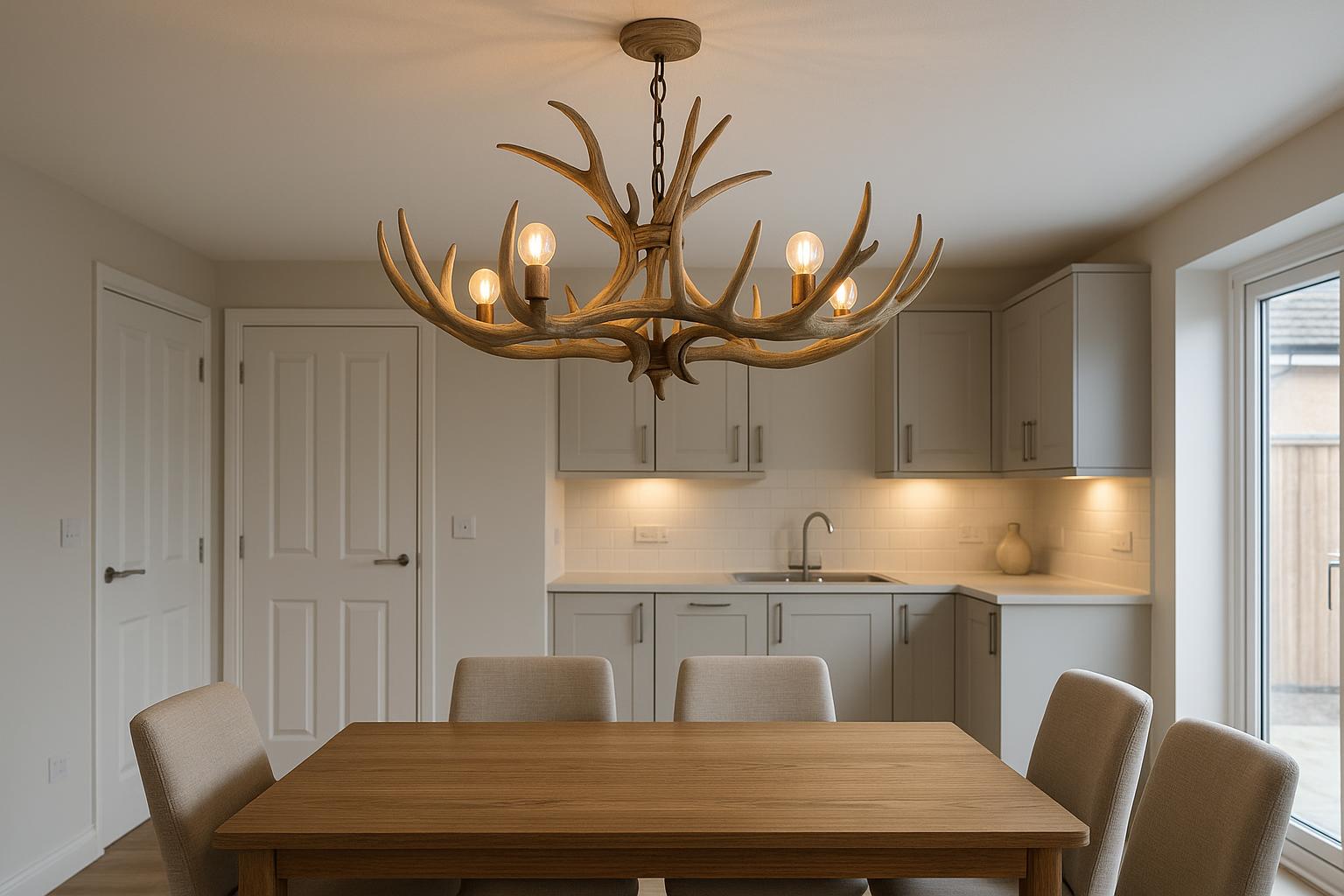
An antler light need not belong to winter. A calm permanent scheme, a few movable elements and well-planned...
- There are no more items in your cart
- Shipping
- Total £0.00
Sofa, Hearth and Screen: Placing an Antler Light
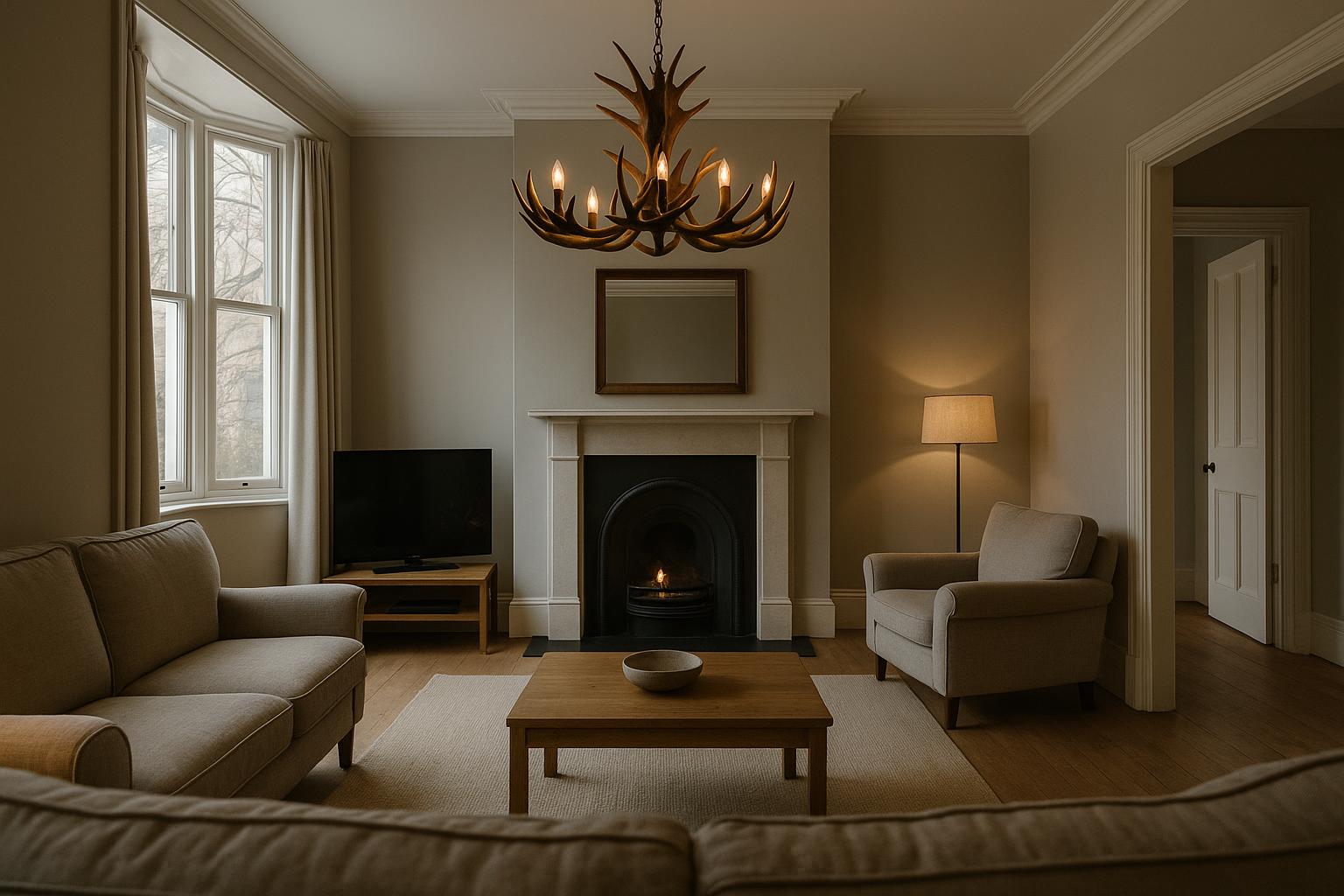
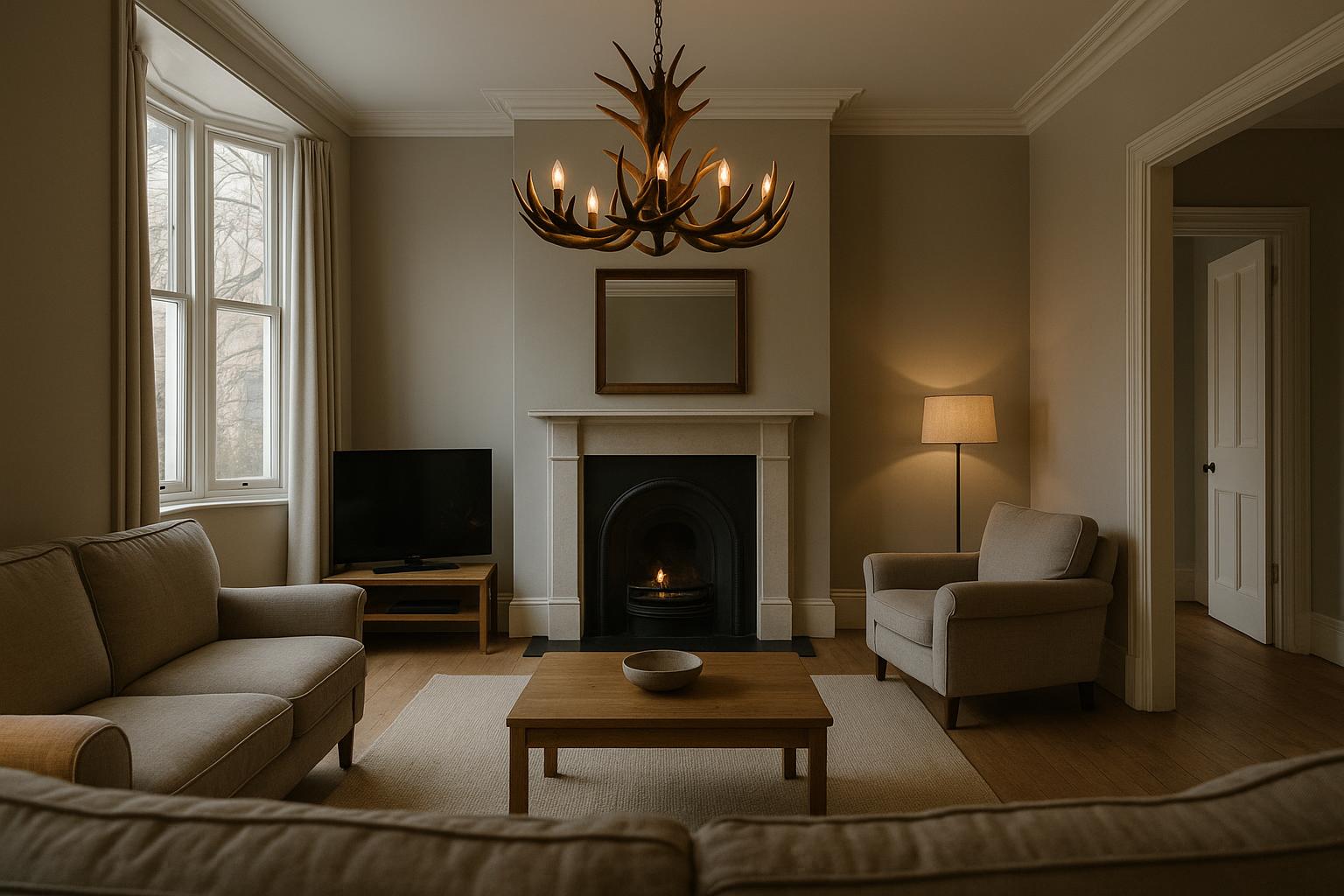
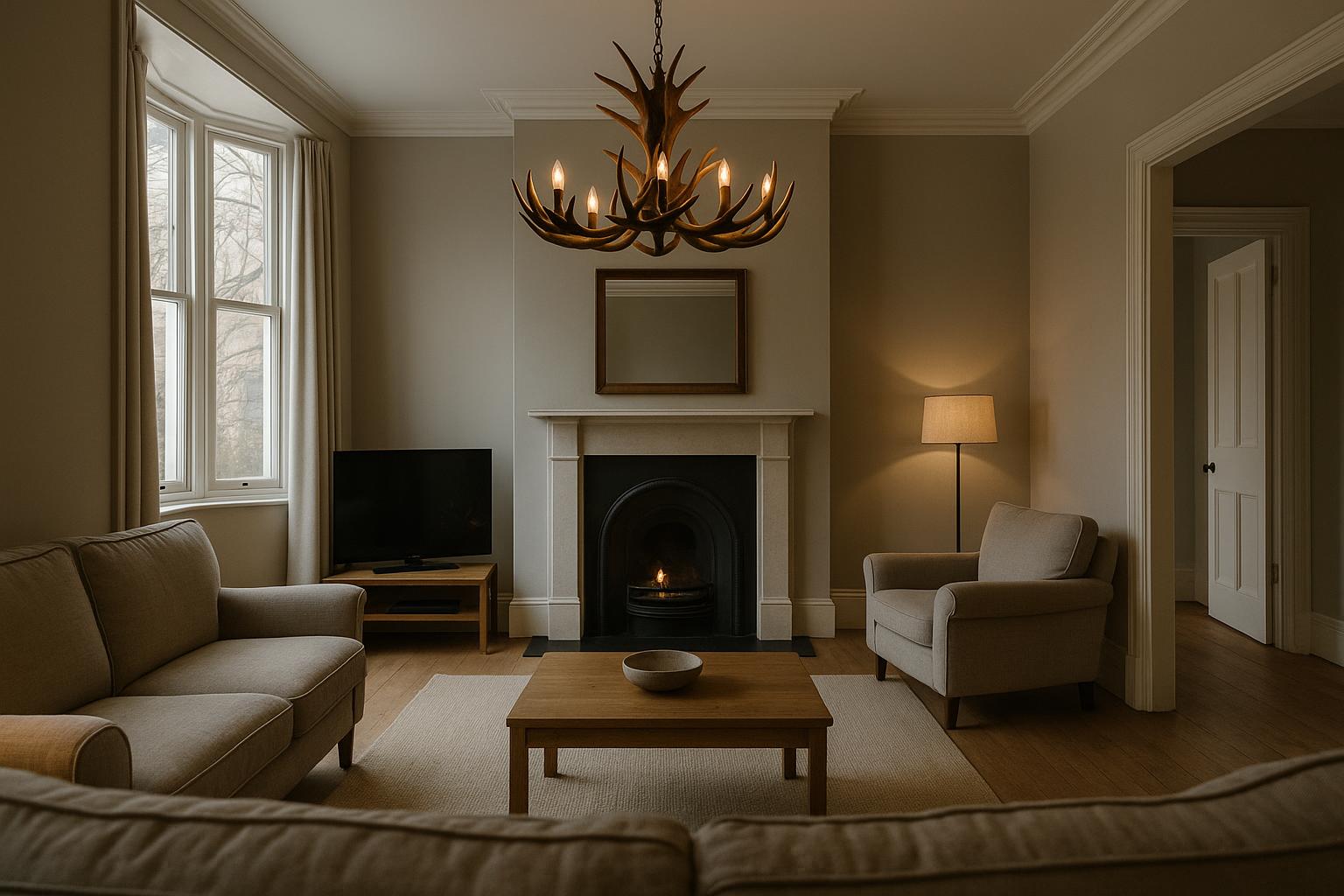
An antler light may be fixed to the ceiling, but its success is judged much lower down. From the sofa, its branches can frame a fireplace, collide visually with a television or disappear into a busy background. Its position also affects whether the seating area feels gathered together or merely furnished beneath a decorative object.
When considering antler lights for living room use, begin with the room as it is occupied after dark. The important relationships are between the fitting, the regular seats and the features people face. Ceiling dimensions matter, but they do not tell the whole story.
Start with the seated view
Look at the proposed position from every chair that is used regularly. A fitting that appears neatly centred when viewed from the doorway may overlap the screen from one end of the sofa or cut across a bay window from an armchair. Those overlaps can make a comfortable room feel cluttered, even when there is ample physical space.

Repeat the check with the television switched off. Its dark surface often becomes more noticeable when it reflects lamps or the illuminated branches of a ceiling light. A slight change in the fitting's position, or in the angle of the screen, may produce a calmer composition.
Do not forget the view into the room. In a Victorian terrace or Edwardian semi, the fitting may be visible from the hallway through an open door. It should look connected to the furniture arrangement from that approach, not as though it has drifted towards one wall without reason.
Settle the room's focal order
A chimney breast, television and branching chandelier can all carry considerable visual weight. Decide which one should be noticed first. The answer will depend on how the room is used rather than on a universal decorating rule.
If an original fireplace is the architectural anchor, the ceiling light can sit in sympathy with it while the screen remains slightly to one side. In a television-led room, a shallower or quieter antler form may be preferable to a large fitting suspended directly above the screen. Where neither feature dominates, the light can take a more sculptural role over the seating group.
Symmetry is not essential. A balanced arrangement can include a central fireplace, an offset television and an off-centre lamp, provided their heights and visual strengths differ. Problems arise when every element is equally bold and each appears to be competing for the same patch of wall.
To complement this topic, you can also read Planning Antler Lighting Around Hallways and Stairs.
Place the light over the living area
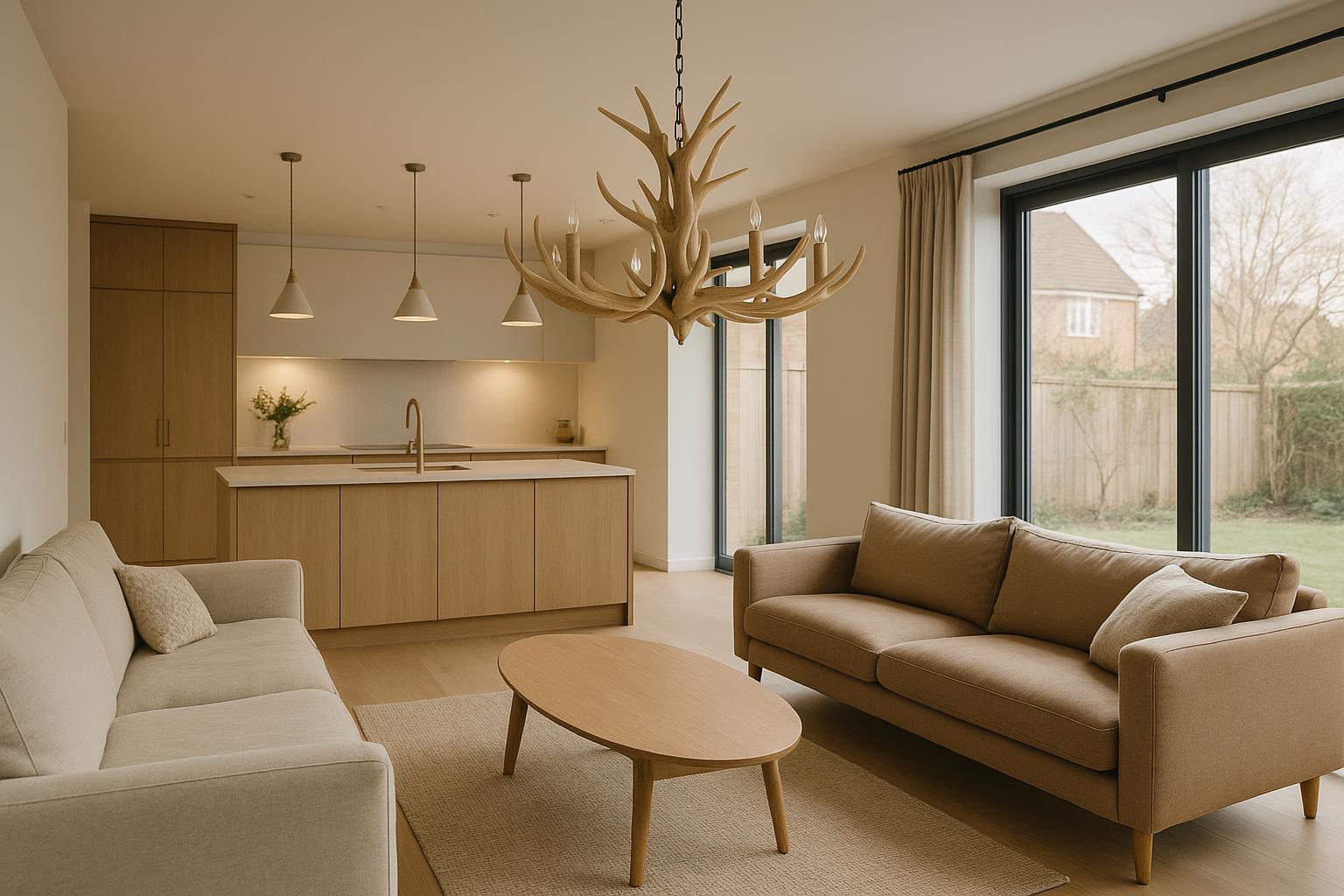
The geometric centre of the ceiling is often irrelevant in a long sitting room or open-plan extension. Use the rug, coffee table and principal seats to identify the centre of the living area. Positioning the fitting in relation to that group helps the furniture read as one place for conversation.
This is particularly useful in a kitchen-diner, where practical kitchen lighting and pendants may already define other zones. An antler chandelier over the relaxed end can mark a change of mood without a screen, partition or change of flooring.
Period plasterwork requires a more considered decision. If a ceiling rose is prominent, moving the fitting away from it can look accidental unless the new position clearly belongs to the furniture below. Sometimes retaining the rose and shifting the seating arrangement slightly gives a cleaner result. Any change to the electrical point should be assessed and completed by a suitably qualified electrician.
Test the outline at full size
Diameter alone does not describe how an antler fitting will feel. Two designs of similar width may have very different amounts of open space between their branches. One may appear airy; another may form a dense silhouette.

Make a simple full-size guide before ordering. Mark the overall width with removable tape or suspend a light paper or string outline at the intended level. Check it while seated and standing, then walk along the normal routes between the door, sofa and window. The lowest point matters around a coffee table because people may lean across it or stand there while moving furniture.
Also examine the background from each seat. Pale plaster can give dark branches a crisp outline, while beams, shelving or patterned wallpaper may break it up. A restrained design often has more presence against a complicated ceiling than a larger one whose detail becomes difficult to read.
In the same direction, The View from the Table: Getting an Antler Light Right offers useful ideas for choosing home lighting more confidently.
Light the room without emphasising the screen
A decorative ceiling light should not be expected to serve reading, television viewing and entertaining equally well. Living rooms are more comfortable when light comes from several levels, particularly during darker winter afternoons.
- Ceiling light: use the antler fitting for general illumination and atmosphere rather than maximum brightness at all times.
- Reading light: place a floor or wall light beside the chair where it is needed, with the light directed towards the page.
- Low-level light: use a table lamp to soften a dark corner or bring gentle light to shelving and side tables.
Avoid arranging every lamp where it will be reflected in the television. Check reflections from the usual viewing position and move portable lamps before committing to new sockets or wall fittings. Suitable controls can then allow the ceiling light to be reduced while the lower lamps remain useful.
Work with awkward architecture
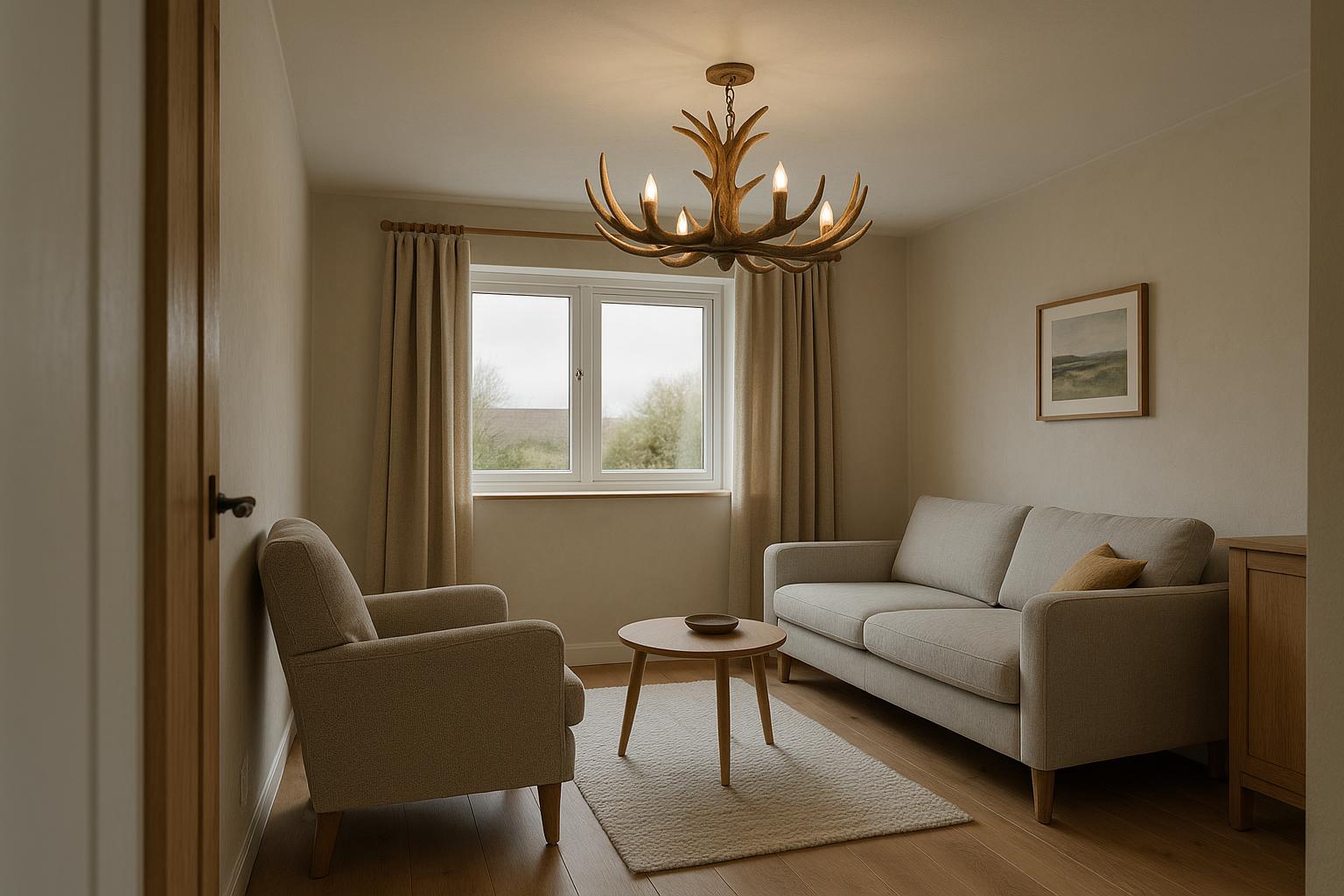
Low ceilings call for control of depth rather than an automatic rejection of antler forms. A broad, comparatively shallow fitting can retain the branching character without hanging heavily into a compact bungalow or new-build sitting room. Its lowest point should be considered in relation to standing areas and circulation, not only the sofa.
Exposed beams present a different problem. Placing an intricate fitting too close to a beam can merge the two outlines and make both look busier. A clear patch of ceiling around the light is usually more helpful than trying to align every branch with the timber.
In a bay-window room, centre the fitting on the furniture rather than the window recess if the seating sits farther back. For a sloping ceiling, judge the useful volume below the roof. Hanging a chandelier at the highest available point can leave it detached from the room, while forcing it into a narrow apex can make it appear cramped.
For more consistent lighting throughout the home, the article From Old Cottage to New Barn Room: A Connected Lighting Plan may also be helpful.
Keep the rustic reference measured
Antler chandeliers already introduce a strong organic shape. The room rarely needs several other woodland motifs to explain it. Wool, timber or a single landscape artwork can support the fitting without turning the scheme into an imitation of lodge lighting.
Contemporary seating, plain linen curtains and quiet wall colours provide a useful counterweight. A country-style chandelier can look convincing in a modern extension when it is the one deliberately rustic note among cleaner lines. In a cottage, the opposite may help: simple upholstery and uncluttered surfaces can prevent rustic antler lighting from feeling overly themed.
Check the choice before ordering
Return to the mock-up in daylight and after dark. Look from each seat, through the open doorway and from any adjoining dining or kitchen area. Check the fitting against the screen, fireplace, ceiling rose and top of the curtains. If one relationship feels awkward, test a small positional change before abandoning the design.

Confirm the product's full dimensions, suspension arrangement and installation instructions rather than relying on the scale of a room photograph. Consider tall occupants, doors, furniture-moving routes and access for changing lamps or cleaning. The ceiling structure and electrical installation should be checked by a suitably qualified electrician.
Once the position and proportions are clear, compare the different outlines in Lumin Light's antler lights collection. The strongest choice will belong to the seating area from every important viewpoint, rather than simply filling the available ceiling.