An antler light need not belong to winter. A calm permanent scheme, a few movable elements and well-planned...
- There are no more items in your cart
- Shipping
- Total £0.00
How to Make Antler Lights Work in a British Home
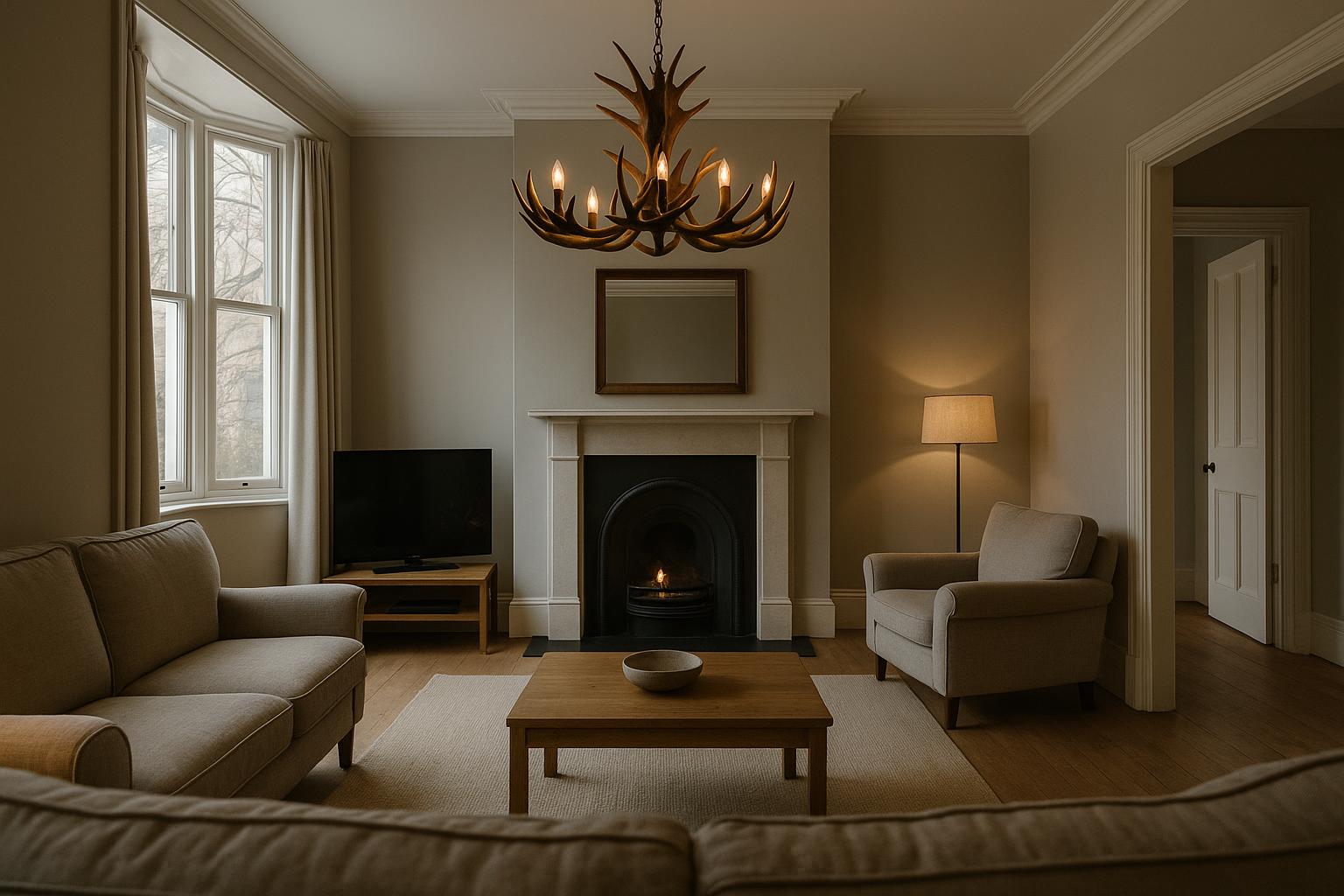
antler lights are difficult to ignore, which is exactly why they can be effective. Their branching outline breaks up the straight lines of walls, tables and cabinetry, bringing movement to a part of the room that might otherwise receive little attention. Used carefully, the effect is sculptural rather than rustic.
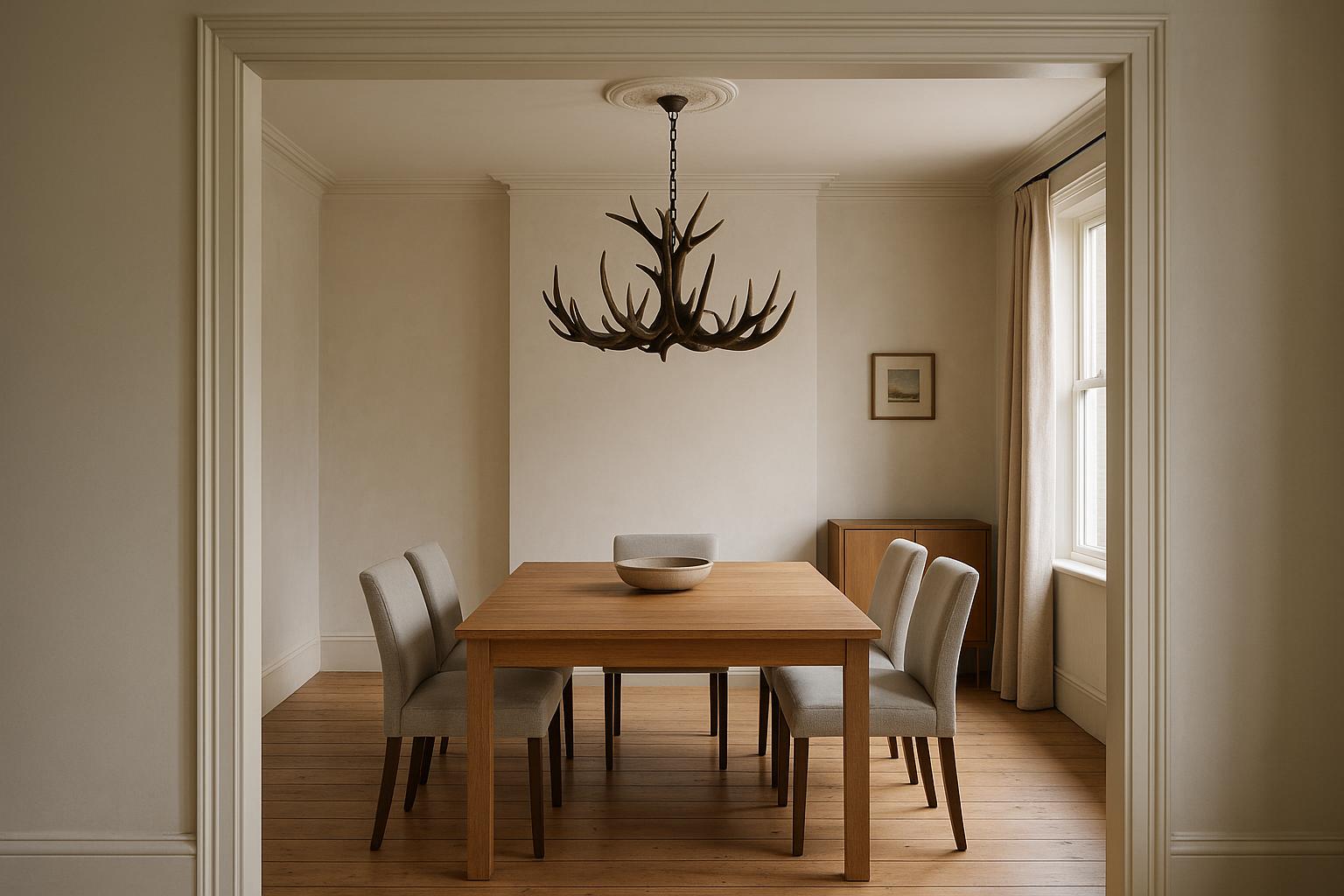
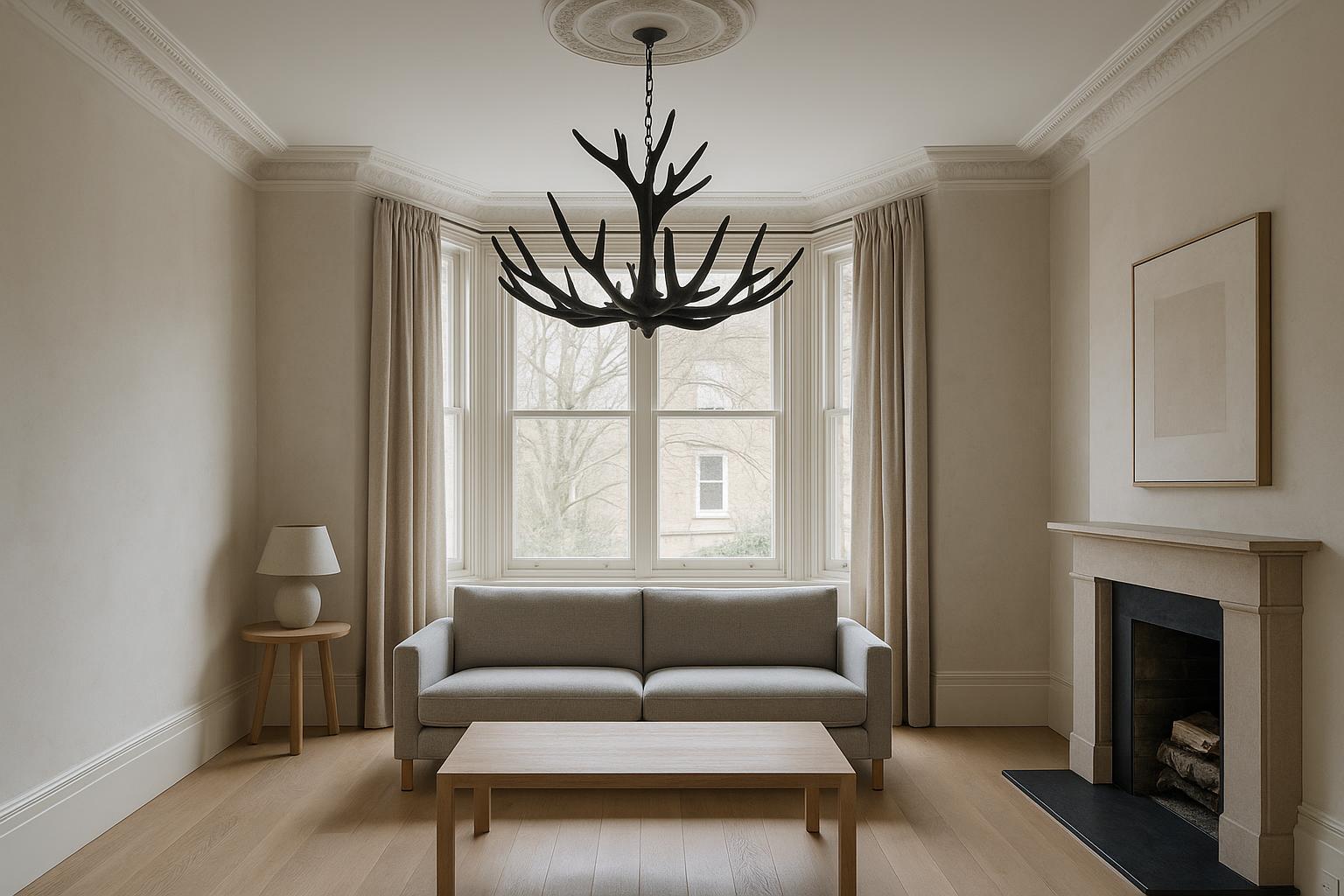
The distinction matters. An antler fitting does not require timber-clad walls, checked fabric or a collection of woodland ornaments. It can sit above a restrained dining table, within a modern extension or beneath the ceiling rose of a period room. What determines whether it belongs is not a surrounding theme, but its relationship with the architecture, furniture and other sources of light.
Take your cues from the room, not a rustic theme
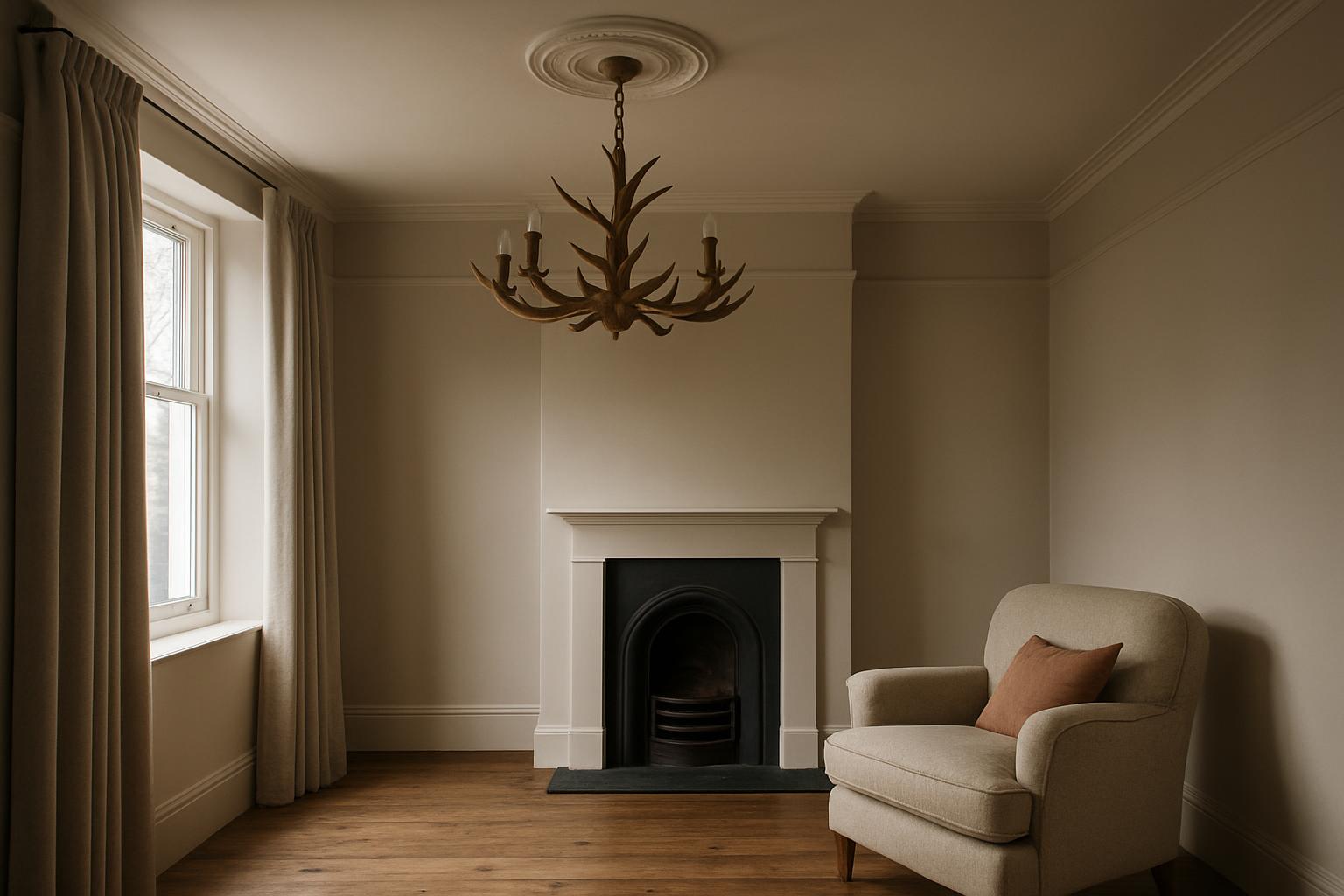
Begin with the features already competing for attention. A Victorian sitting room may contain cornicing, a chimney breast, alcoves and a bay window. A contemporary kitchen-diner might have a run of tall cupboards, wide glazing and a prominent island. The antler light needs enough visual space to register clearly without obscuring those elements.

Natural materials can support the organic shape without making the scheme literal. Limewashed or softly painted walls, linen curtains, wool upholstery, pale oak and honed stone all provide texture while remaining quiet. In a cleaner interior, smooth cabinetry and restrained artwork can make the irregular silhouette feel more deliberate.
Resist the urge to repeat the motif. Antlers on mirrors, cushions and ornaments weaken the impact of the ceiling light and push the room towards lodge lighting. One expressive piece usually carries more authority than a collection of matching references.
Judge the whole silhouette, not only its width
Product dimensions are particularly important with antler chandeliers because the branches extend beyond the central frame. Two fittings with a similar stated width can feel quite different if one has dense, downward-reaching points and the other has a sparse, open structure. Check the overall width, depth and drop, including the suspension and ceiling canopy.
A simple mock-up can reveal more than a product photograph. Mark the fitting's width on the floor beneath its proposed position, or suspend a lightweight card outline at the intended drop. View it from the doorway, from a seated position and from any adjoining room. This makes it easier to spot a clash with curtain headings, beams, tall cupboards or decorative plasterwork before ordering.
Low ceilings do not automatically rule out antler lights, but they favour a controlled profile. A shallow design with fewer projecting tips will generally sit more comfortably than a broad fitting with a deep drop. In a taller room, more generous branches can work well provided there is clear space around the outline and practical access remains possible.
To complement this topic, you can also read How to Choose the Perfect Ceiling Light for Your Living Room: A Complete Guide to Style, Size, and Brightness.
Position the fitting around furniture and sightlines
The architectural centre of a room is not always the useful centre. In a terrace, the ceiling rose may align with the chimney breast while the dining table sits closer to glazed garden doors. Decide whether the light is intended to reinforce the room's symmetry or define a particular activity, then assess whether the existing electrical point supports that choice.
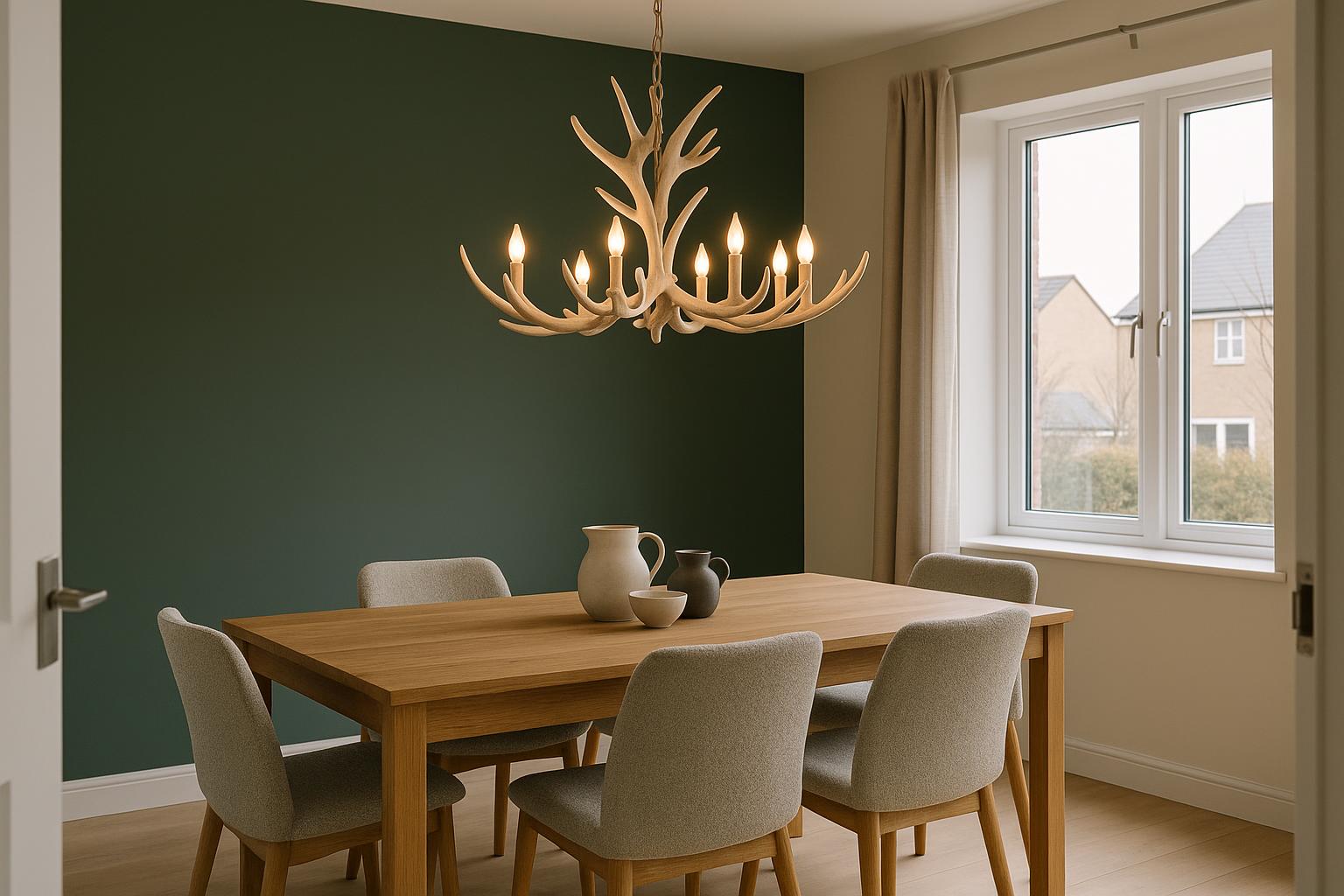
Above a table, a lower fitting is easier to accommodate because people do not need to walk beneath it. Even so, its branches should not form a visual barrier between diners or block the view towards a window, kitchen or garden. Sit in several chairs and look across the table before fixing the final suspension length.
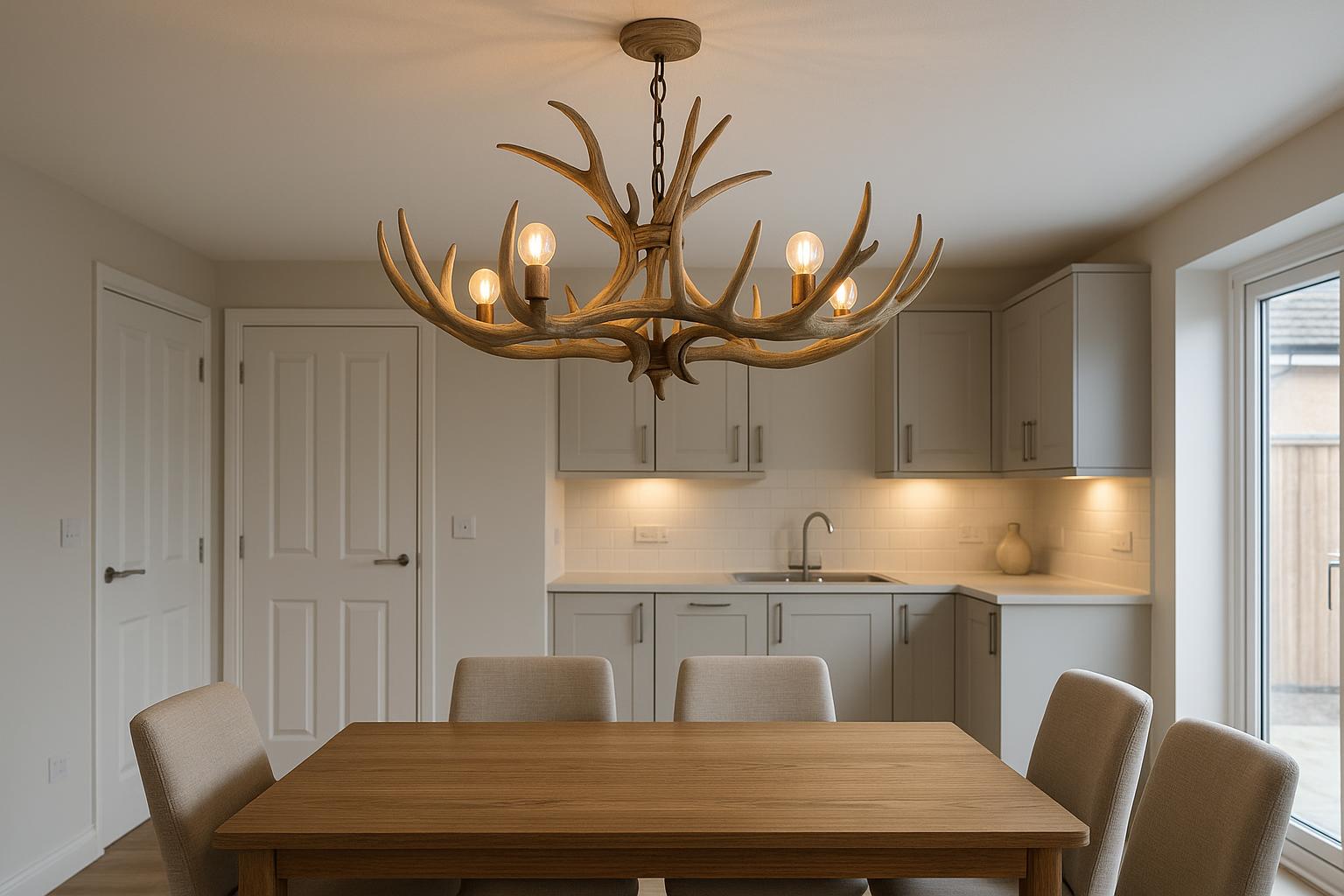
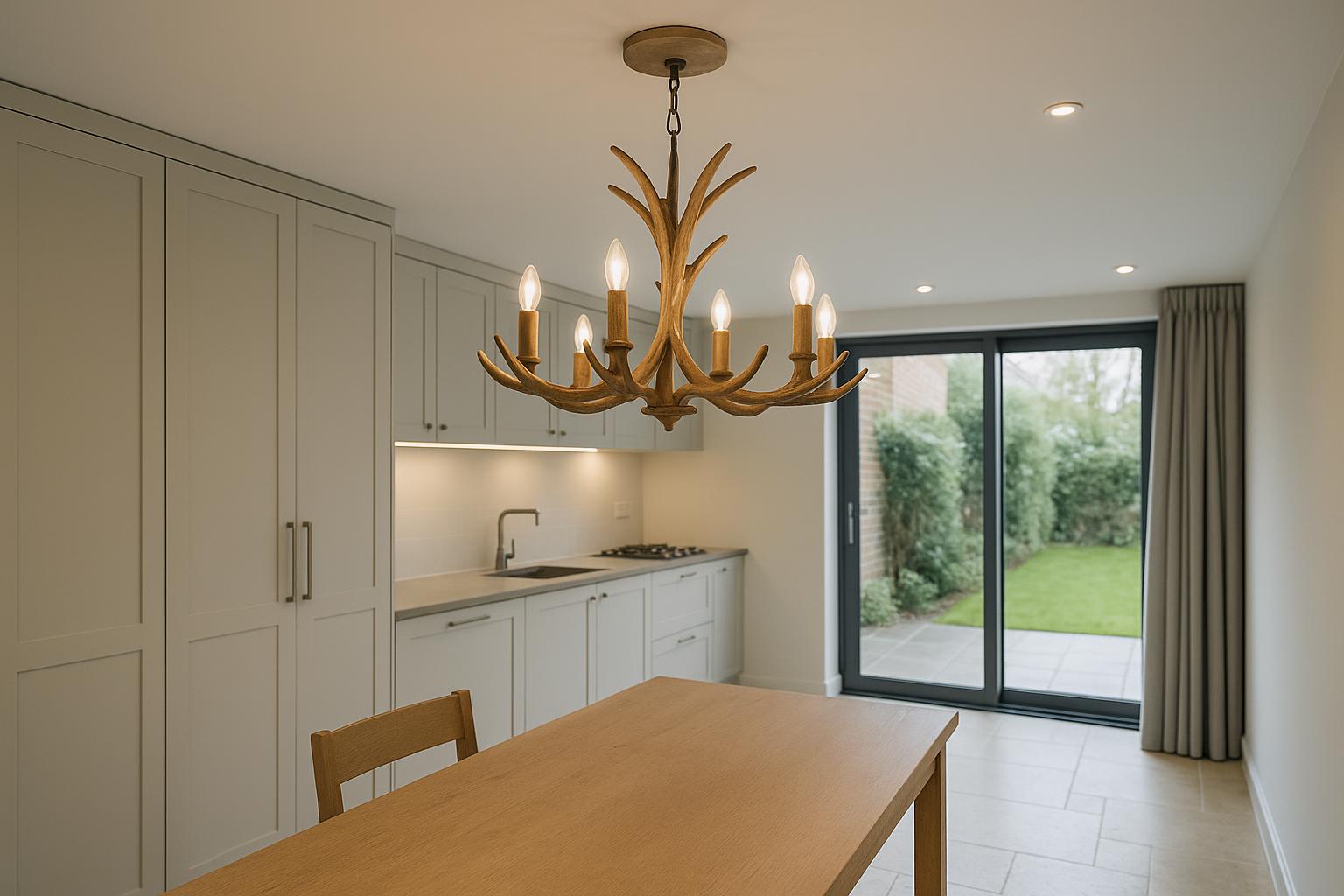
Open-plan spaces require another check: the ceiling as a whole. An assertive antler chandelier over the dining area can establish a useful pause between the kitchen and sitting space, but it may compete with decorative pendants above an island. If the antler form is the principal feature, discreet downlights or integrated task lighting will usually keep the wider composition calmer.
Choose a finish in the room's actual light
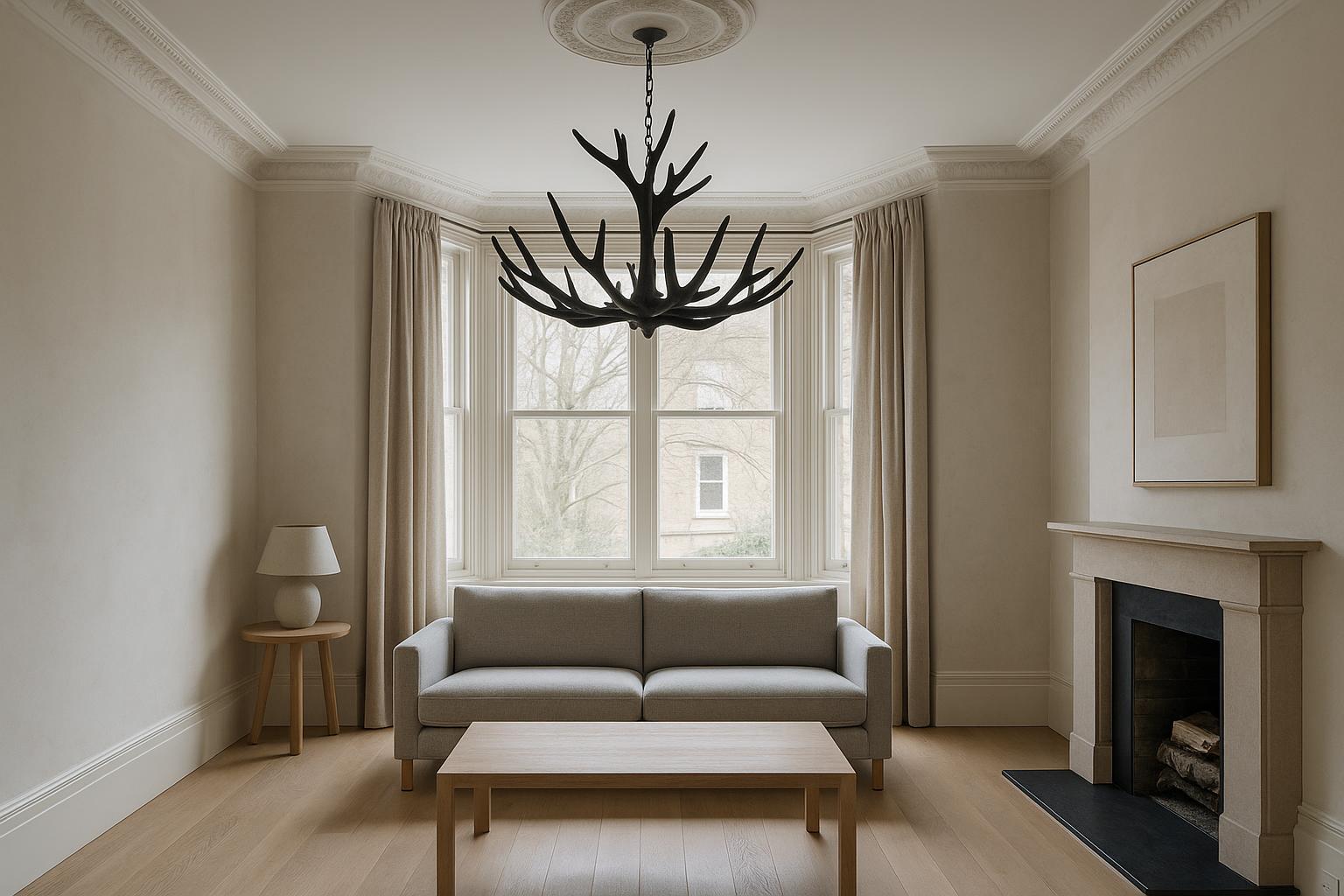
Finish affects both style and apparent scale. Pale branches tend to merge gently with a light ceiling, while dark or high-contrast finishes make every projection more emphatic. A strongly defined silhouette can suit a generous, uncluttered room but may look busy against beams, patterned wallpaper or ornate cornicing.

British daylight should also influence the decision. In a north-facing room or during a dark winter afternoon, cool pale surfaces can appear flatter than they do in bright product photography. Warm timber, muted plaster colours and tactile fabric can soften that effect. Against deep green, earthy red or navy walls, a lighter fitting may provide a crisp point of contrast.
Check the listed material and finish rather than assuming that every antler-style product imitates natural horn or timber. Surface texture, colour variation and sheen alter how the fitting responds to daylight and lit bulbs. A tonal relationship with the room is often more convincing than trying to match every cream, brown or grey exactly.
In the same direction, Pendant Lights: Your Ceiling's Favorite Accessory! offers useful ideas for choosing home lighting more confidently.
Give the centrepiece some supporting light
A decorative ceiling light is rarely the best source for every activity. Branching arms may create attractive highlights and shadows, but reading, food preparation and desk work still benefit from more directed illumination. Plan the room in layers rather than increasing the output of the central fitting and expecting it to solve every need.
- For general light: use the antler fitting to establish the room's main pool of illumination and visual focus.
- For tasks: add a reading lamp, desk light or under-cabinet lighting where concentrated light is useful.
- For atmosphere: use restrained wall lights, table lamps or joinery lighting to soften corners and reveal artwork or texture.
Separate controls make those layers more useful. A sitting room may feel better with the ceiling light off and two lower lamps on, while a dining room might use the chandelier together with quiet wall lighting. Before planning adjustable light levels, confirm the lamp type, controls and dimming compatibility stated for the individual fitting.
Adjust the approach to the property
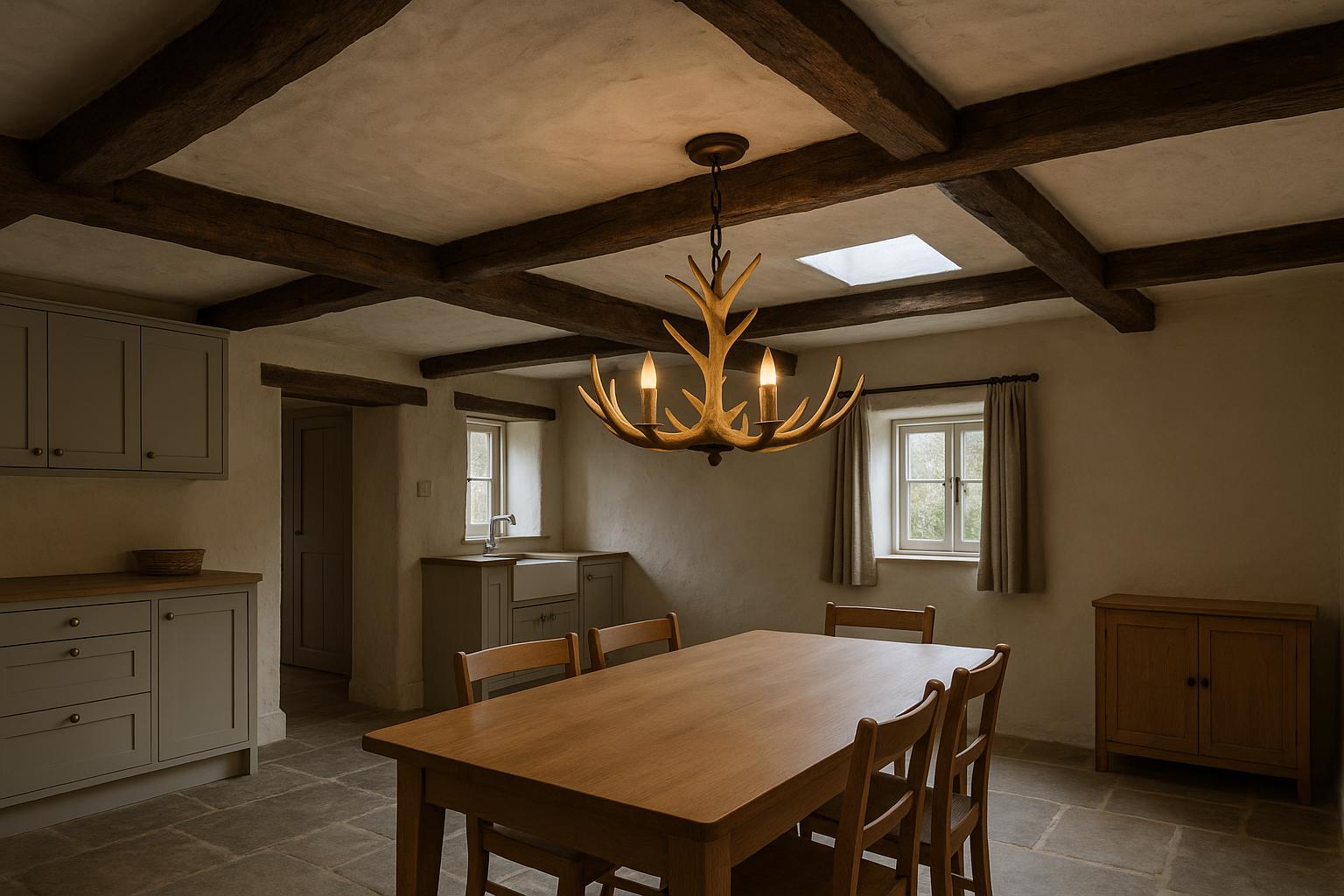
In a compact cottage, rustic antler lighting can complement old timber and uneven plaster, but restraint is important where ceilings are low. Keep the branch pattern clear of beams and curtain headings, and avoid surrounding it with numerous small decorative objects. A plain wool sofa or simple timber table gives the fitting room to breathe.
A London flat often calls for a tighter silhouette and careful protection of circulation routes. A bungalow may have a broad floor plan but limited ceiling height, so both spread and drop need attention. In a Georgian townhouse or tall stairwell, vertical space can accommodate a more dramatic country style chandelier, although cleaning and bulb replacement become more demanding.
Modern new-builds and extensions offer a different opportunity. Smooth walls, simple flooring and flush cabinetry provide a composed background for the irregular outline. Rather than manufacturing a rustic setting, use the antler light as a single piece of contrast. This tends to feel fresher and allows the architecture to retain its identity.
Plan fitting, cleaning and bulb access
Antler forms have more ledges and junctions than a simple pendant shade, so dust will be more noticeable and cleaning may take longer. Check whether the fitting can be reached safely from the floor and whether individual lamps can be removed without dismantling surrounding branches. Double-height rooms and stairwells may require specialist access for routine care.
Position also affects maintenance. In a kitchen-diner, the area beside a hob is exposed to airborne grease as well as dust, making a location above the dining table more practical. Allow space for doors, tall cupboards and nearby pendants, and consider how the fitting will be carried into the room if it arrives partly assembled.
Before installation, confirm the weight, canopy dimensions, suspension arrangement, bulb access and stated ceiling requirements. An existing ceiling rose may affect how the canopy sits, while an older fixing point may need assessment. Follow the manufacturer's instructions and use a suitably qualified electrician for the electrical work.
Make one confident choice
A successful antler light does not need a themed room around it. It needs an appropriate outline, a position that respects important views and enough quieter lighting to make the space comfortable after dark. Assess it from the doorway, the main seats and neighbouring zones rather than judging it from a single angle.

Once those practical decisions are clear, the antler lights collection can be considered by shape, finish and presence rather than novelty alone. The strongest choice will add character while still allowing the room itself to be seen.