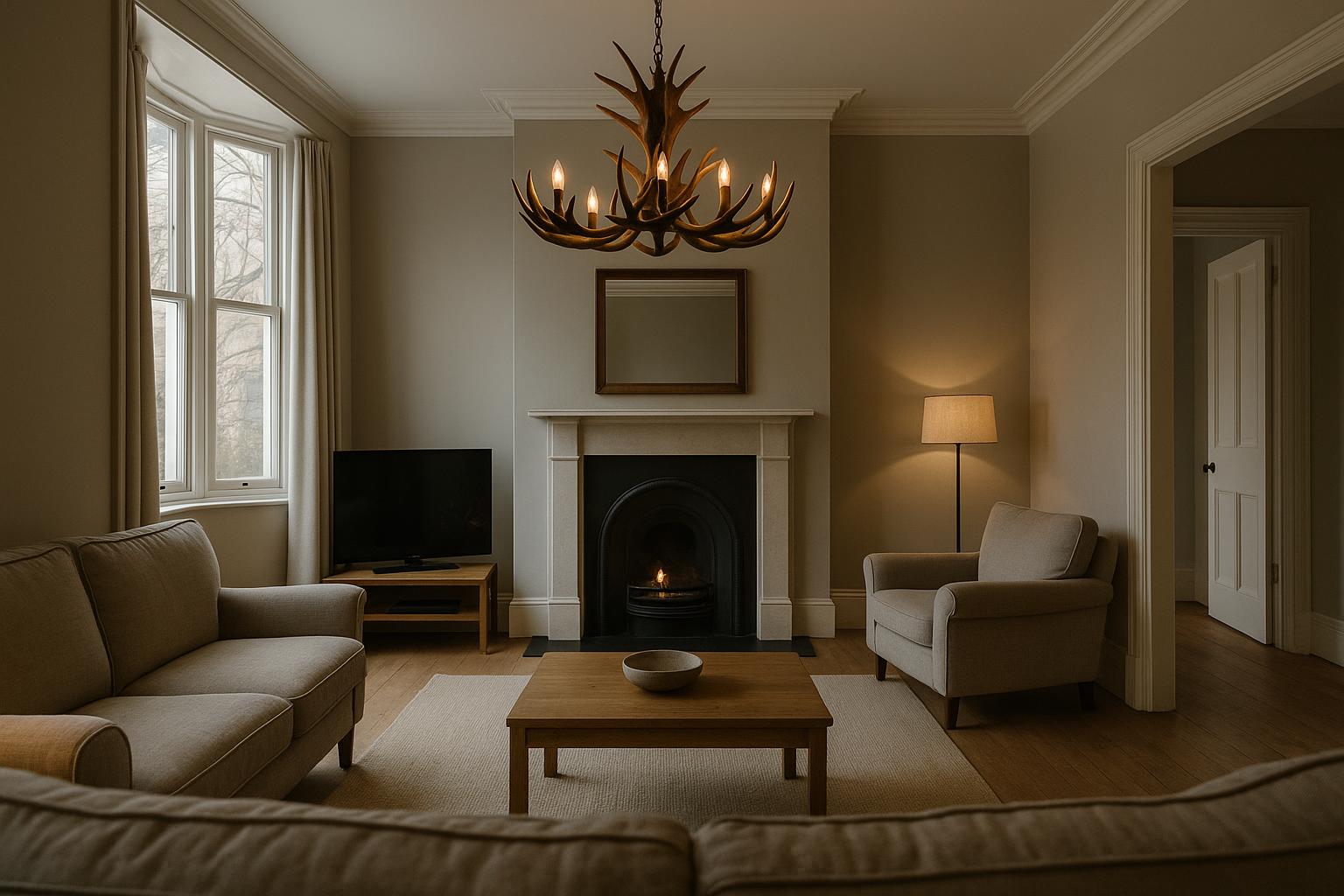
An antler light need not belong to winter. A calm permanent scheme, a few movable elements and well-planned...
- There are no more items in your cart
- Shipping
- Total £0.00
From Old Cottage to New Barn Room: A Connected Lighting Plan
A country renovation often brings several kinds of architecture under one roof. Low rooms with thick walls may lead into a tall kitchen-diner, while an old outbuilding might become a glazed living space. Lighting can either make those changes feel abrupt or help the house read as a connected whole.
People looking for antler lights for country home renovations need not treat every ceiling as an opportunity for the same motif. A more convincing plan gives the strongest fitting to the room that can support it, then carries quieter references into adjoining spaces. The result is continuity without making the interior resemble a themed lodge.
Map the route through the house
Start with the path people actually take rather than studying each room in isolation. Stand at the entrance to the kitchen, look towards the extension and note every light fitting visible along the way. Repeat the exercise from the garden doors, the sitting room and any landing overlooking the main space.

This reveals where several fittings may compete within a single view. A branching chandelier, a row of pendants and a decorative wall light can all be individually attractive, yet appear restless when seen together. Decide which piece should be noticed first and allow the others to support it.
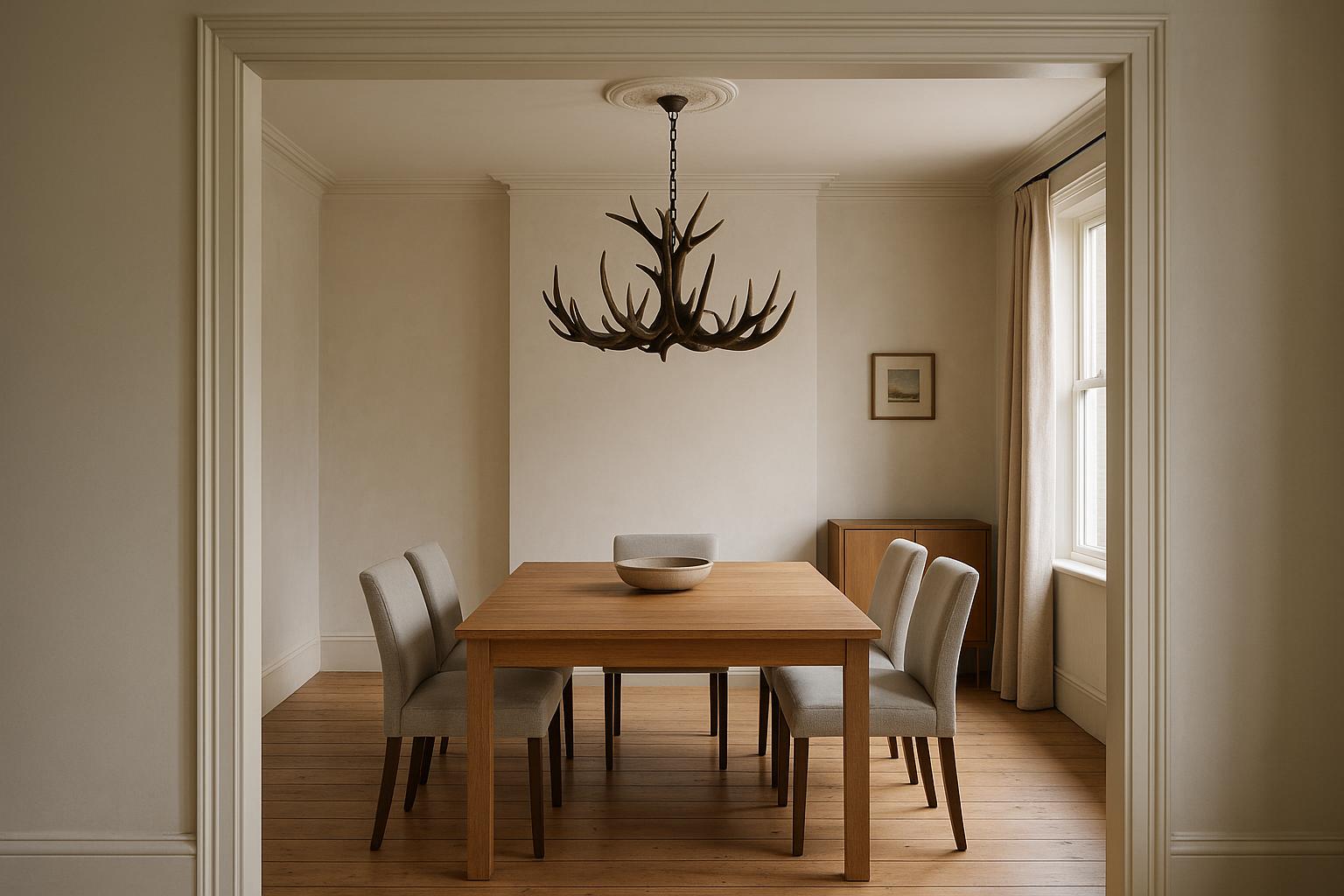
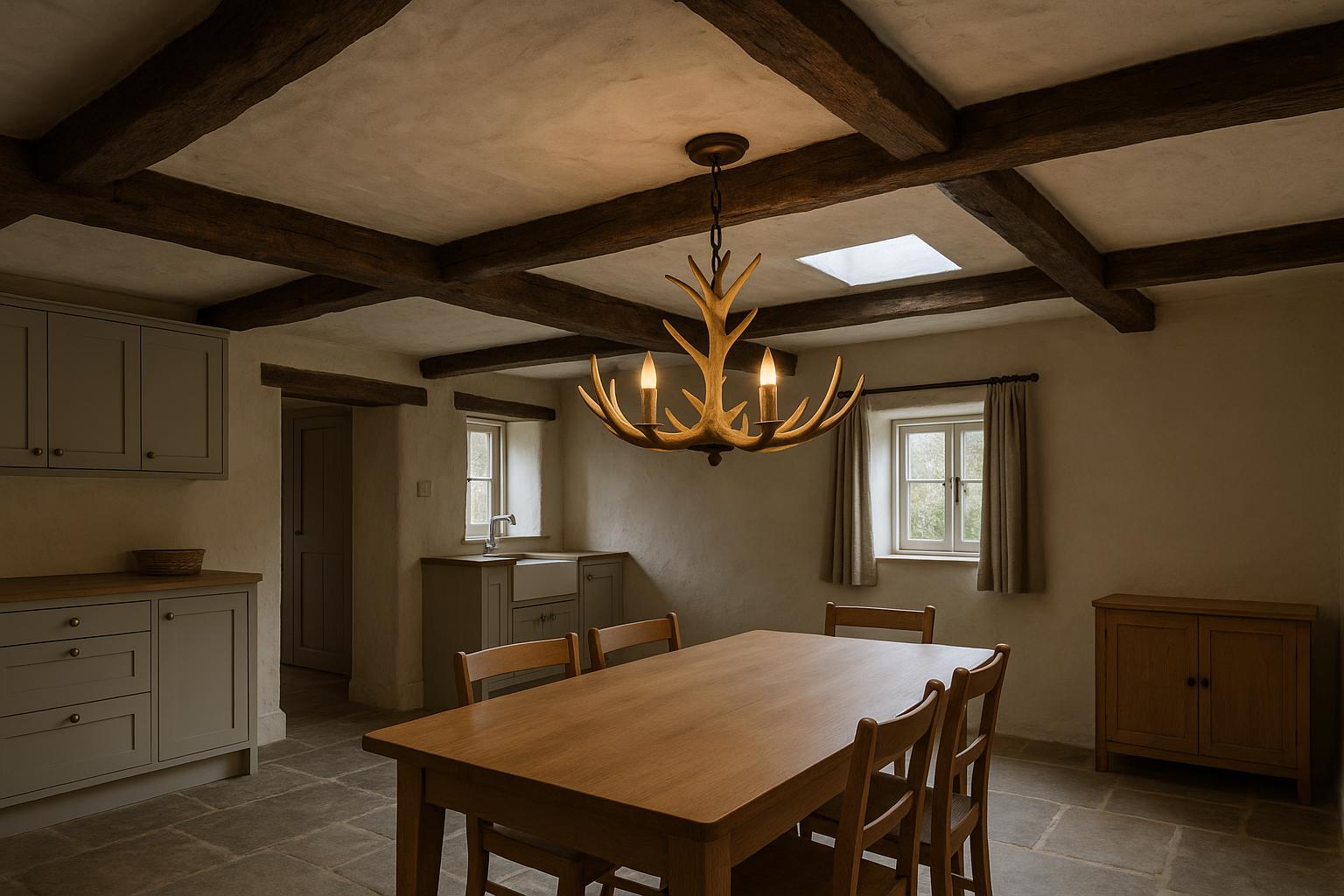
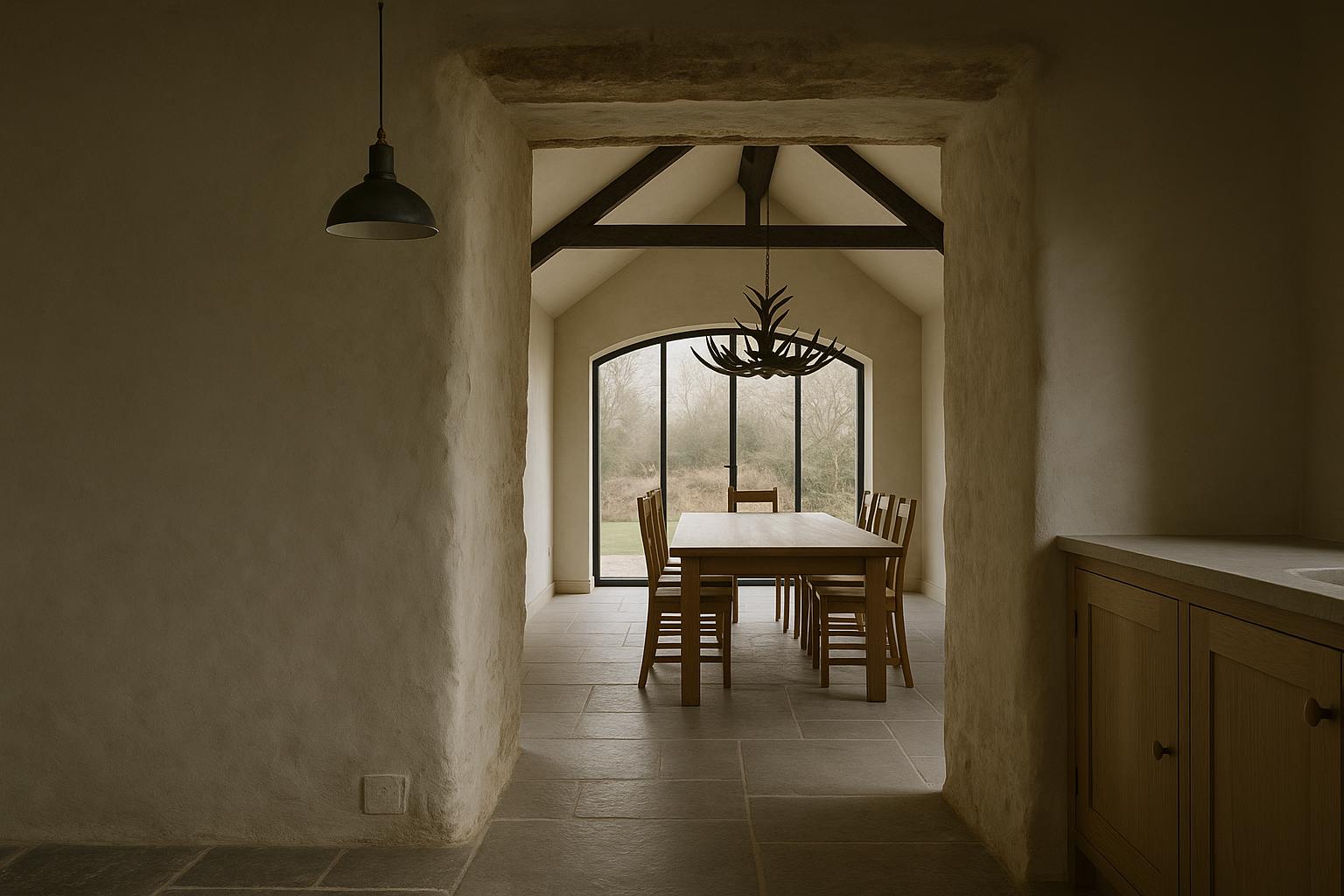
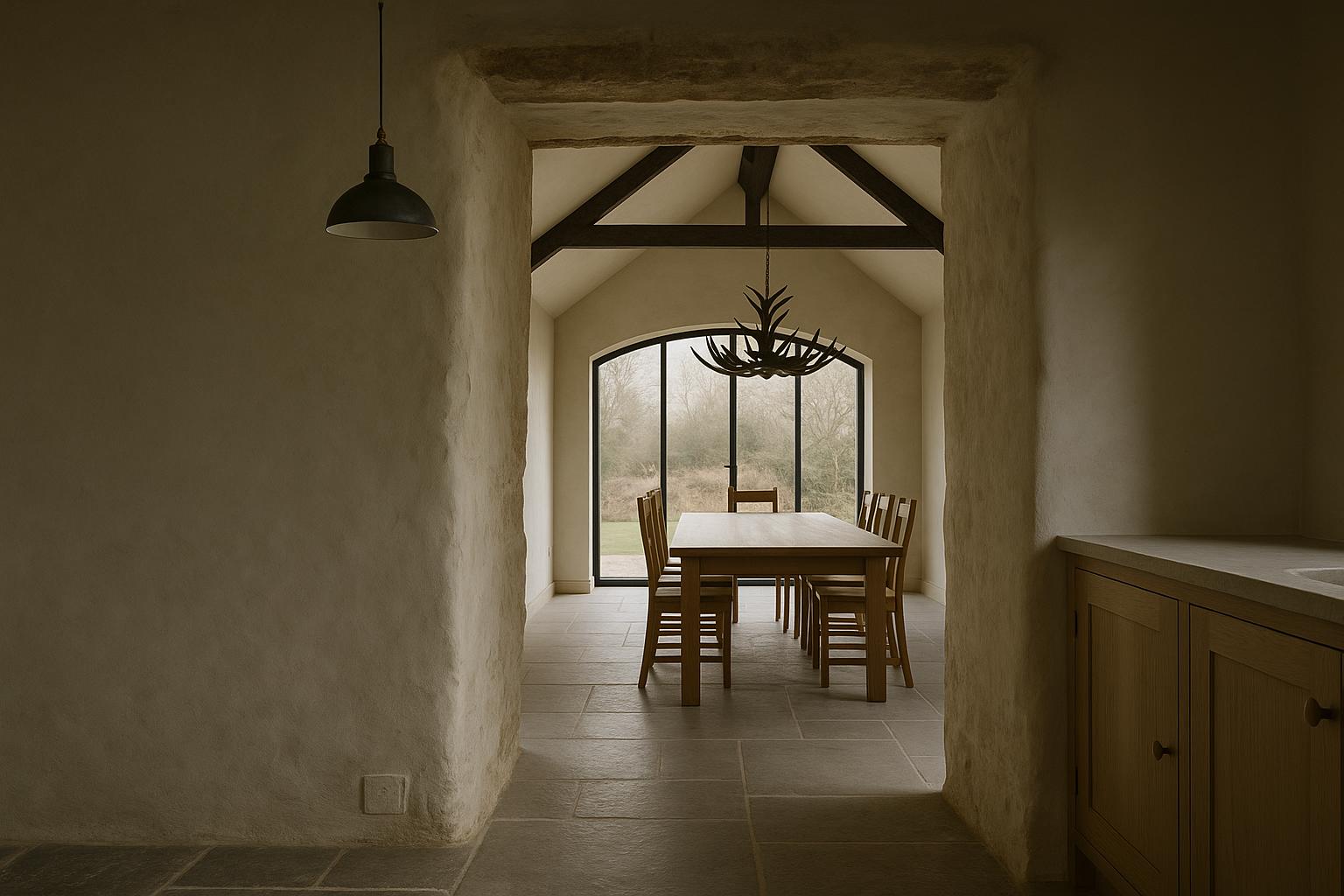
Doorways are particularly useful frames. In an older cottage, a deep opening between the original kitchen and a new dining room can present the principal light almost like a picture. The fitting needs enough clear space around its outline to make that view effective. If branches disappear behind a beam, door head or tall cupboard, a smaller diameter may create more impact than a larger one.
Let the largest room carry the main feature
A barn-style extension often has the height, breadth and long viewing distance needed for an expressive light. That does not mean the ceiling should automatically receive the biggest available design. The room still needs a hierarchy, especially if it contains exposed trusses, extensive glazing and a substantial dining table.
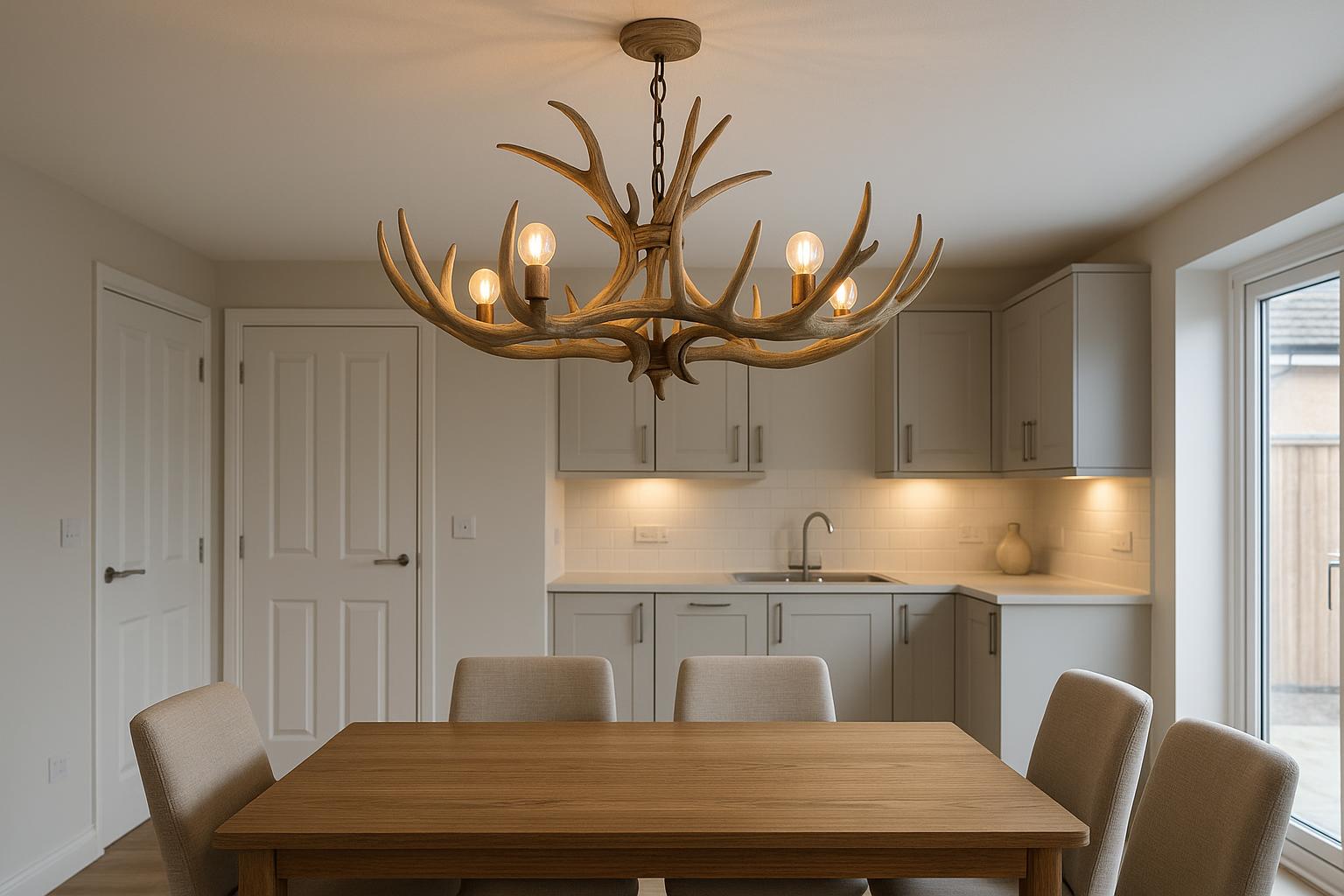
Choose one element to anchor the composition. In a kitchen-diner, the dining table is usually a better partner for an antler chandelier than the centre of the floor. It gives the fitting a clear purpose and keeps a lower suspension away from circulation routes. Centring the light over the table also remains visually persuasive when the kitchen units make the overall room asymmetrical.
There is rarely a need to repeat antler chandeliers over both the dining and seating areas. A simpler ceiling light or a group of restrained lamps can serve the second zone. Leaving some visual quiet around the principal piece makes the architecture easier to appreciate.
Use furniture to establish position
Finalise the likely furniture arrangement before confirming the electrical point. A ceiling rose or existing cable may suggest the middle of the room, but that position can be a poor match for a table placed to preserve access to patio doors or a stove. Where the building and installation allow, the relationship between light and furniture is generally more important than abstract symmetry.
To complement this topic, you can also read How to Make Antler Lights Work in a British Home.
Make a temporary outline before ordering. A hoop of card at the proposed width, with string showing the intended drop, is enough to judge the volume from several positions. View it while seated as well as standing. A fitting that seems modest from the doorway may dominate the table once diners are beneath it.
Check the outer branches rather than relying only on the stated central body. They determine how much ceiling remains visible and whether the fitting feels comfortably contained. Also consider whether the table might later be extended or turned. A light positioned for only one very precise arrangement can make an otherwise flexible room awkward to change.
Frame the fitting with the building
Timber beams, sloping ceilings and old plasterwork should be treated as part of the composition. Dark antler forms placed directly beneath dark trusses can merge into a visually dense tangle. Moving the fitting into a clear bay, or selecting a paler and more open design, allows both the light and the structure to retain their identity.
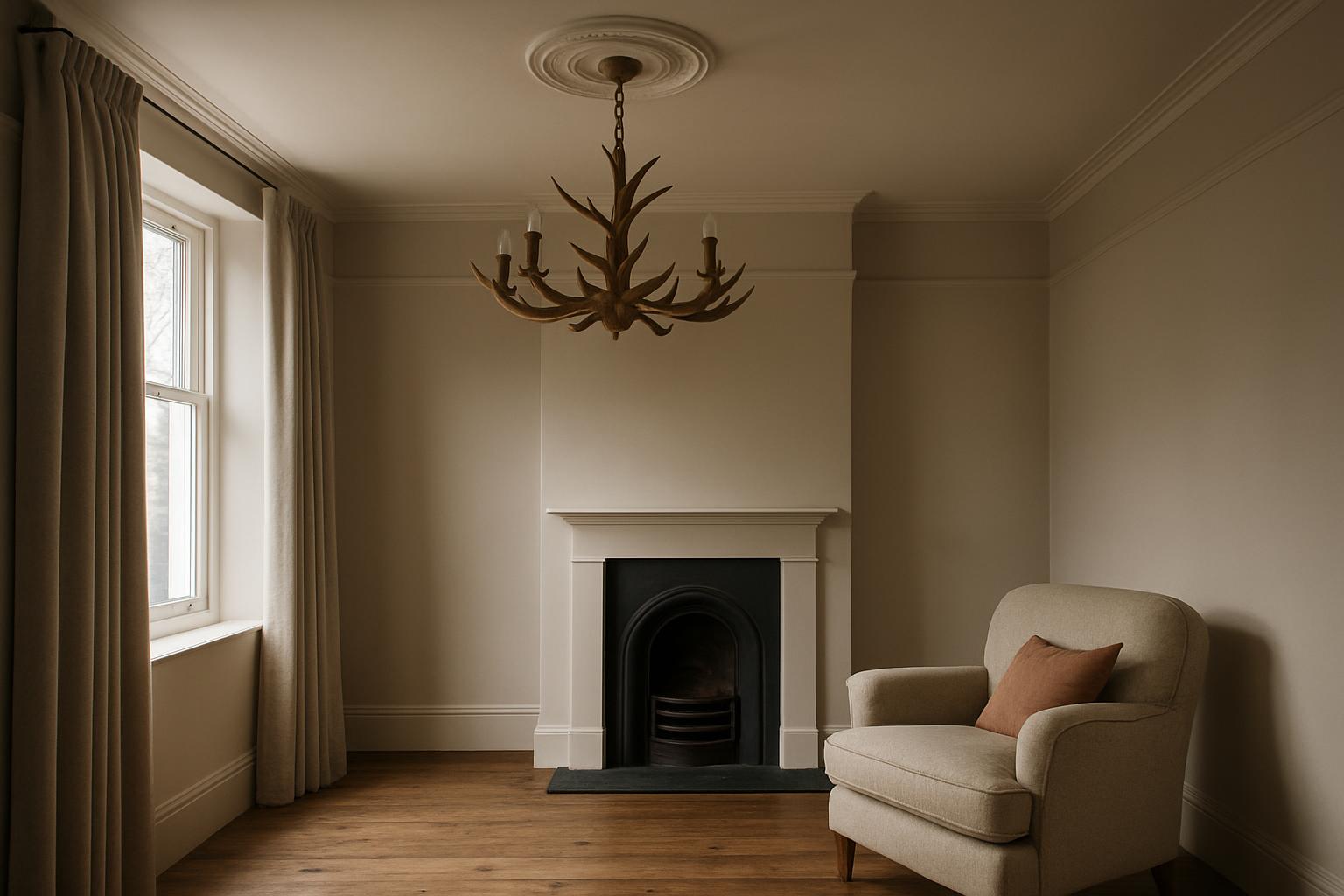
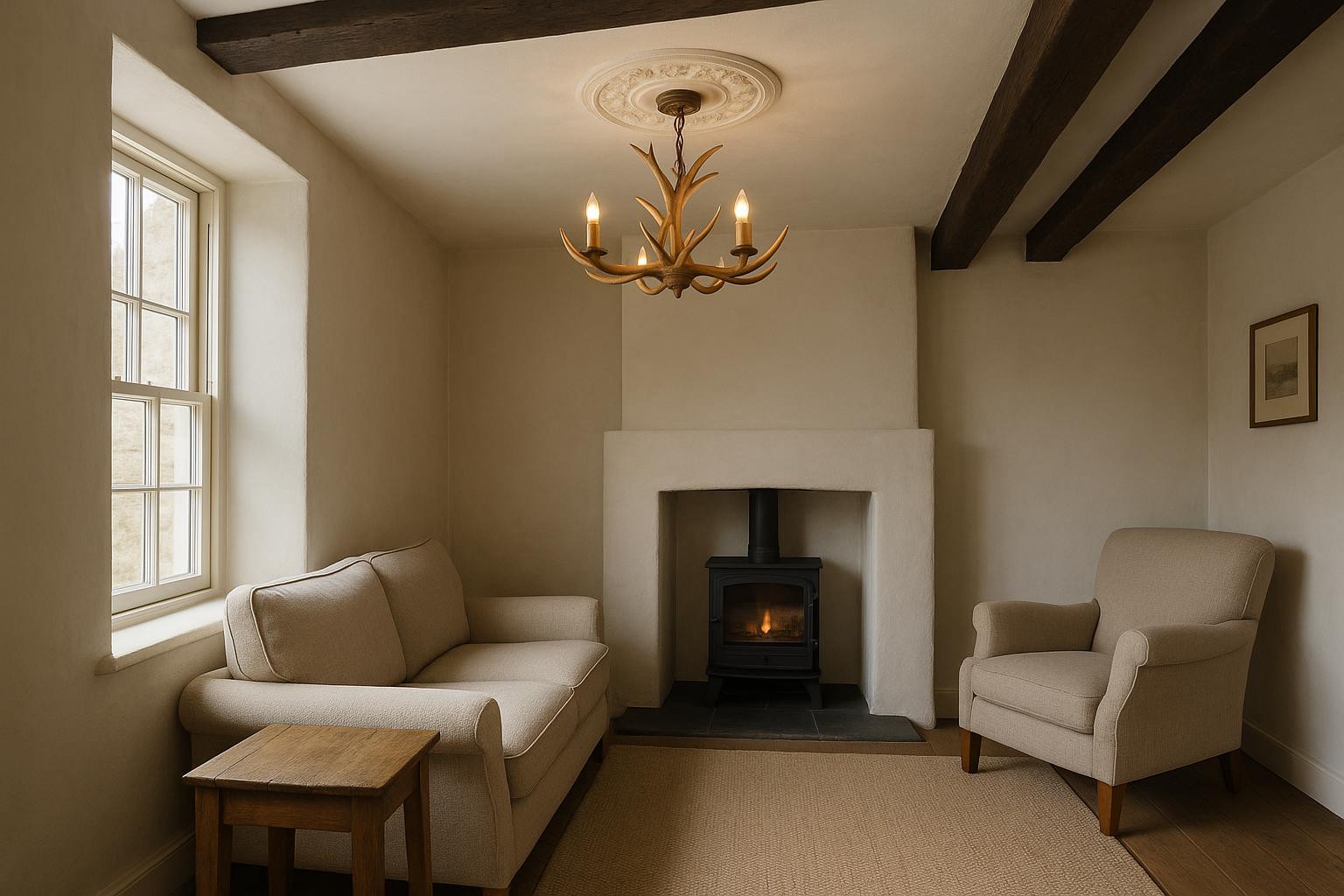
Ceiling roses require a different judgement. A decorative rose can provide an elegant setting for a compact fitting in a farmhouse sitting room, but its diameter and relief may be at odds with a broad branching canopy. It is better to recognise that conflict before purchase than to conceal period plasterwork behind a fitting that was never suited to it.

Vaults and uneven ceilings also affect the suspension. Confirm that the chosen product and fixing method are appropriate for the intended position. In converted rural buildings, the visible timber may not indicate where a fitting can safely be supported. Ask a suitably qualified electrician to assess the fixing point, wiring and ceiling construction before installation.
Reduce the scale in smaller rooms
The lighting thread can continue into the original part of the house without repeating the extension chandelier. A compact semi-close design may bring a related branching outline to a low sitting room while preserving headroom. In a narrow hallway or beneath a low landing, a simpler flush fitting is likely to be more comfortable.
Position can make a small design feel more intentional. Over a coffee table, a fixed kitchen peninsula or a round breakfast table, the fitting belongs to a defined zone and remains outside the main walking line. In the centre of a cramped room, the same piece may simply draw attention to the limited ceiling height.
In the same direction, How to Choose the Perfect Ceiling Light for Your Living Room: A Complete Guide to Style, Size, and Brightness offers useful ideas for choosing home lighting more confidently.
Keep the surrounding decoration disciplined. rustic antler lighting already contributes texture and a recognisable silhouette. Strongly patterned curtains, heavily distressed furniture and several further antler motifs can turn that character into costume. Plain upholstery, painted walls and a few well-chosen timber elements provide a calmer background.
Plan for winter afternoons and everyday tasks
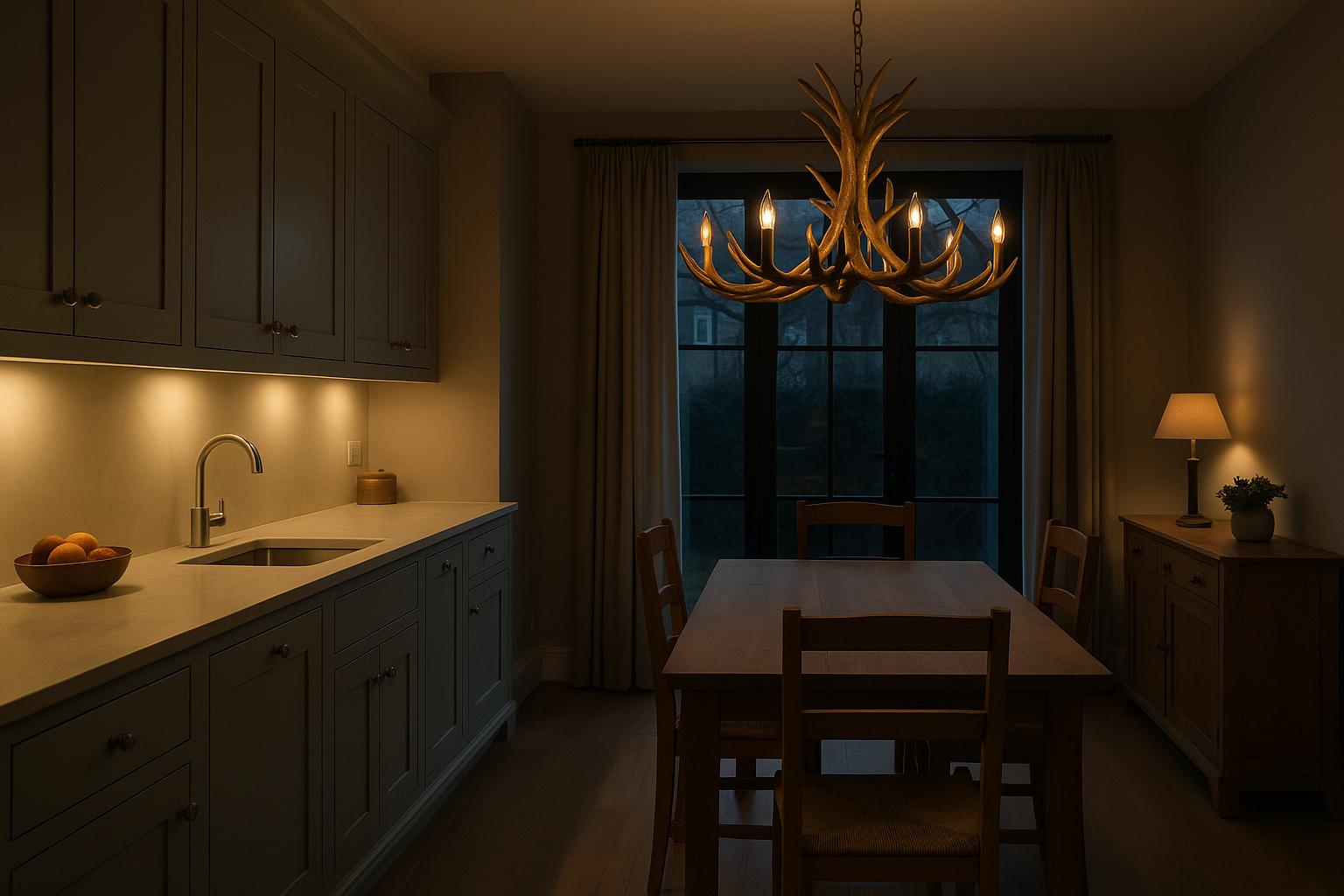
A sculptural ceiling light should not be expected to provide every kind of illumination. This becomes obvious during darker British afternoons, when a kitchen-diner may need bright worktop lighting while the family also wants a softer atmosphere around the table.

Keep practical sources separate where possible. Lighting beneath wall cabinets can serve food preparation without increasing the brightness of the chandelier. A wall light beside an armchair is more useful for reading than additional decorative lamps on the ceiling. A shaded table lamp on a sideboard can soften the far end of an open room and prevent the space beyond the dining table from falling into darkness.
Think about control as part of the layout. Independently operated fittings allow the room to change between cooking, homework, supper and a quiet evening. This is more useful than asking one dramatic piece to be both a bright general light and a subtle source of atmosphere.
Bring finishes into the wider material scheme
Finish determines whether a country style chandelier recedes or becomes a graphic feature. A pale design can sit gently against limewashed or off-white plaster, which may suit a room already dominated by dark beams. A darker fitting has greater presence in a bright glazed addition and can remain legible against the garden view during daylight.
For more consistent lighting throughout the home, the article Pendant Lights: Your Ceiling's Favorite Accessory! may also be helpful.
There is no need to match every metal and timber tone. Instead, give the finish one or two quiet connections elsewhere in the room. A dark fitting might relate to a stove, window frame or slim furniture leg. A lighter version could pick up painted joinery, washed oak or the colour of the ceiling.
Avoid adding objects merely to justify the light. Successful lodge lighting in a British home is often less literal than the name suggests. Stone, linen, wool, aged timber and simple painted surfaces can provide sufficient context without animal trophies or an accumulation of rustic accessories.
Test the shortlist in the room
Before making the final choice, compare dimensions in the actual setting and not just on a product page. Look at the proposed outline from the next room, check its relationship with open doors and consider the view through nearby glazing. Note how the background changes between daylight and evening, especially where branches will overlap beams or dark walls.
Then review the lighting around it. Identify which fitting will help at the worktop, beside a chair or near a chimney breast. If those jobs are already covered, the feature light can be chosen for proportion, character and the quality of its silhouette rather than for unrealistic claims on brightness.
For compact fittings and larger interpretations suited to dining rooms and vaulted spaces, browse Lumin Light's collection of antler lights. The strongest choice will belong to a particular ceiling, view and piece of furniture while leaving the rest of the house room to breathe.