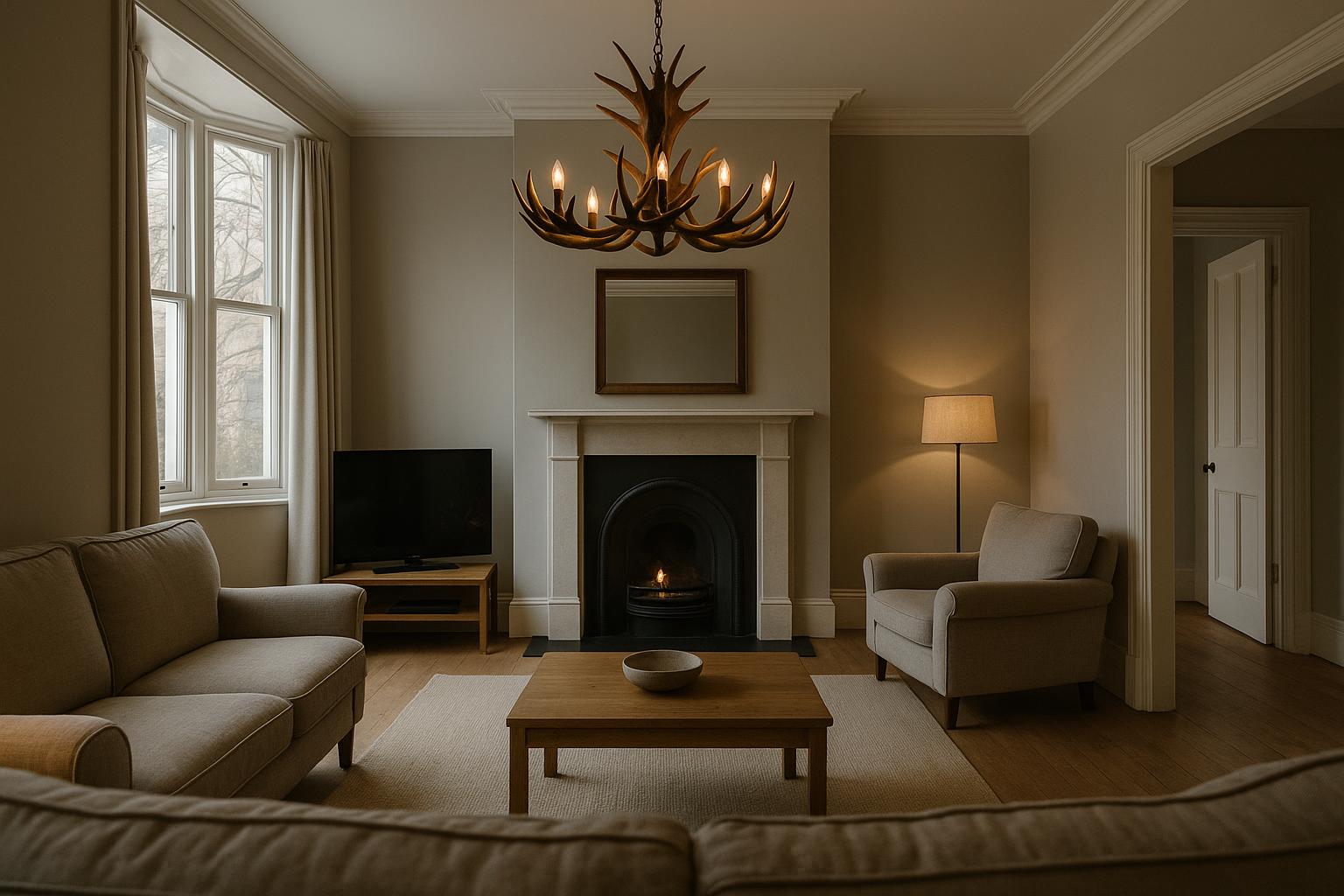
An antler light need not belong to winter. A calm permanent scheme, a few movable elements and well-planned...
- There are no more items in your cart
- Shipping
- Total £0.00
The View from the Table: Getting an Antler Light Right
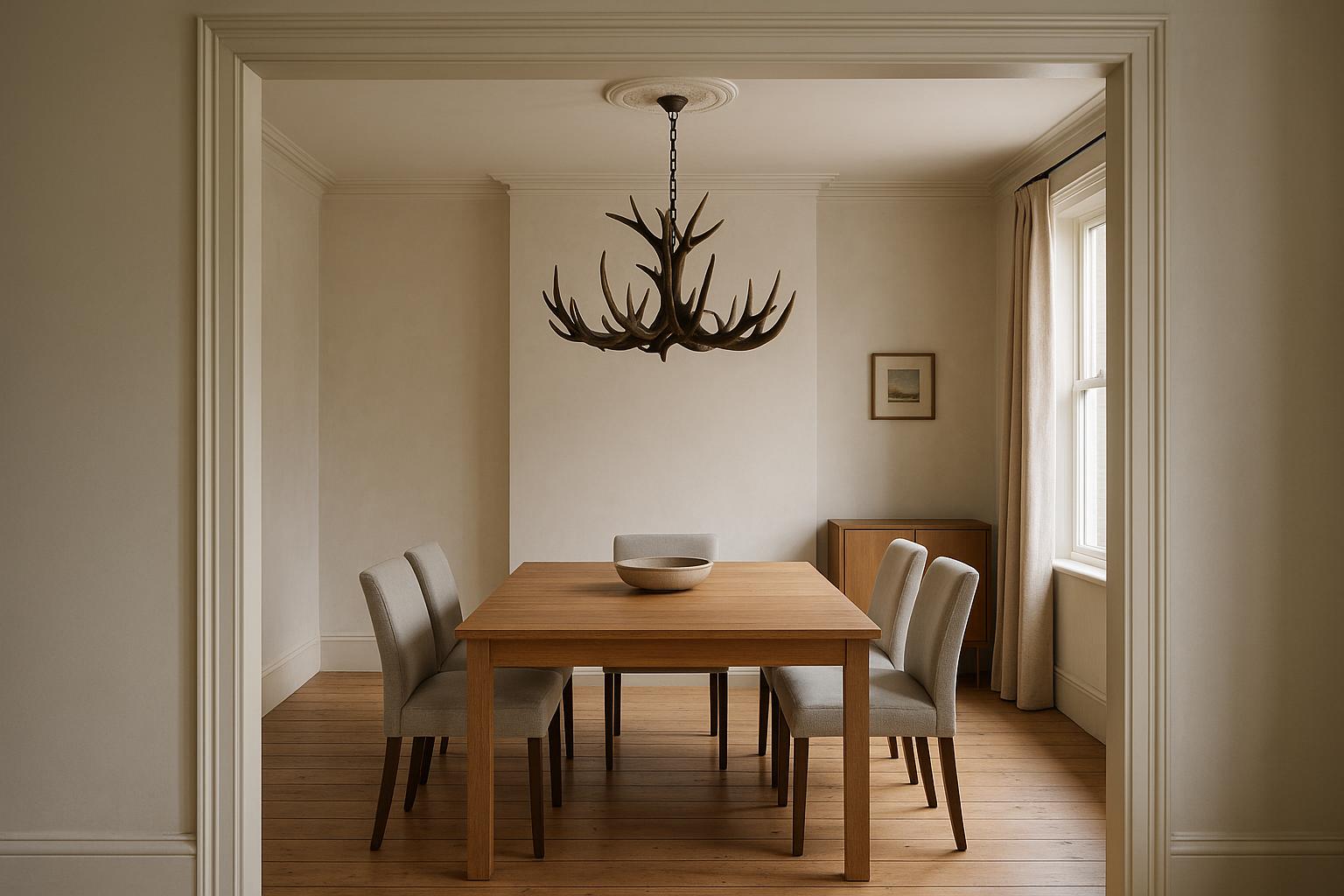
An antler light above a dining table is rarely seen from a neutral position. It is viewed through a doorway, from the kitchen and, most importantly, by people sitting directly beneath or opposite it. That makes the dining table a better starting point than an empty ceiling.
Successful antler lights for dining room settings do more than fill overhead space. Their spread should make sense beside the tabletop, their lower branches should leave conversation unobstructed and their lamps should provide useful light without glaring into diners' eyes. These points matter as much in a compact Victorian terrace as they do in a larger country dining room.
Use the table as the point of reference
Measure the table in its usual position, with the chairs pulled out as they would be during a meal. A product photograph cannot show how a fitting will relate to your furniture, particularly when an irregular branch extends beyond the main body of the design.

Take account of what normally lives on the table too. A formal surface kept largely clear can carry a more intricate fitting without the room feeling busy. A kitchen-diner used for breakfast, homework and working from home may benefit from a cleaner outline. The aim is not necessarily to choose a small light, but to leave enough visual calm around an already hard-working area.
If scale is difficult to judge, mark the proposed maximum width with low-tack tape on the tabletop or suspend a light cardboard outline temporarily from the ceiling. Viewed from the room entrance, this simple mock-up is more informative than considering dimensions in isolation. It also reveals whether the fitting would crowd a nearby dresser, chimney breast or run of kitchen units.
Relate the fitting to the tabletop
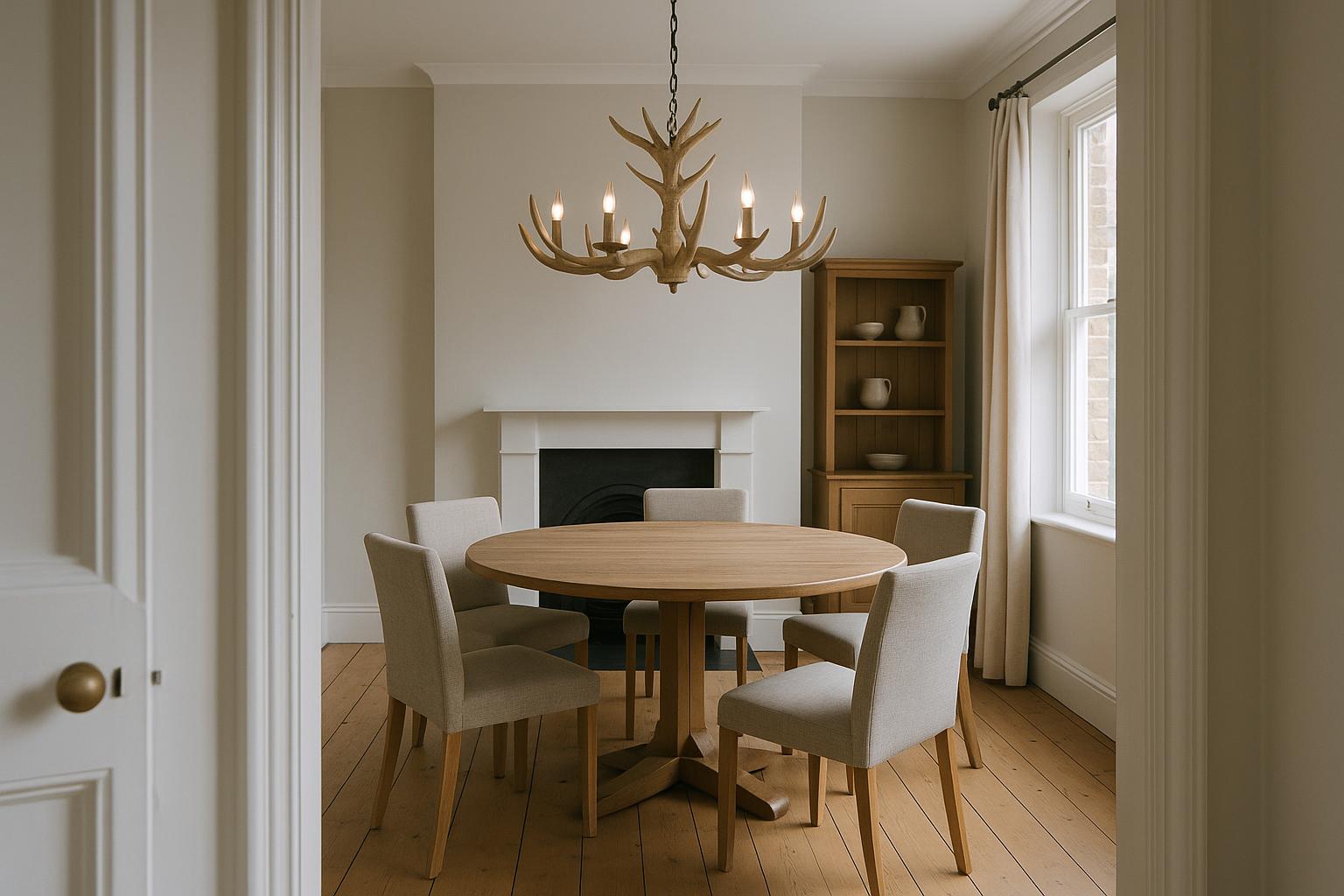
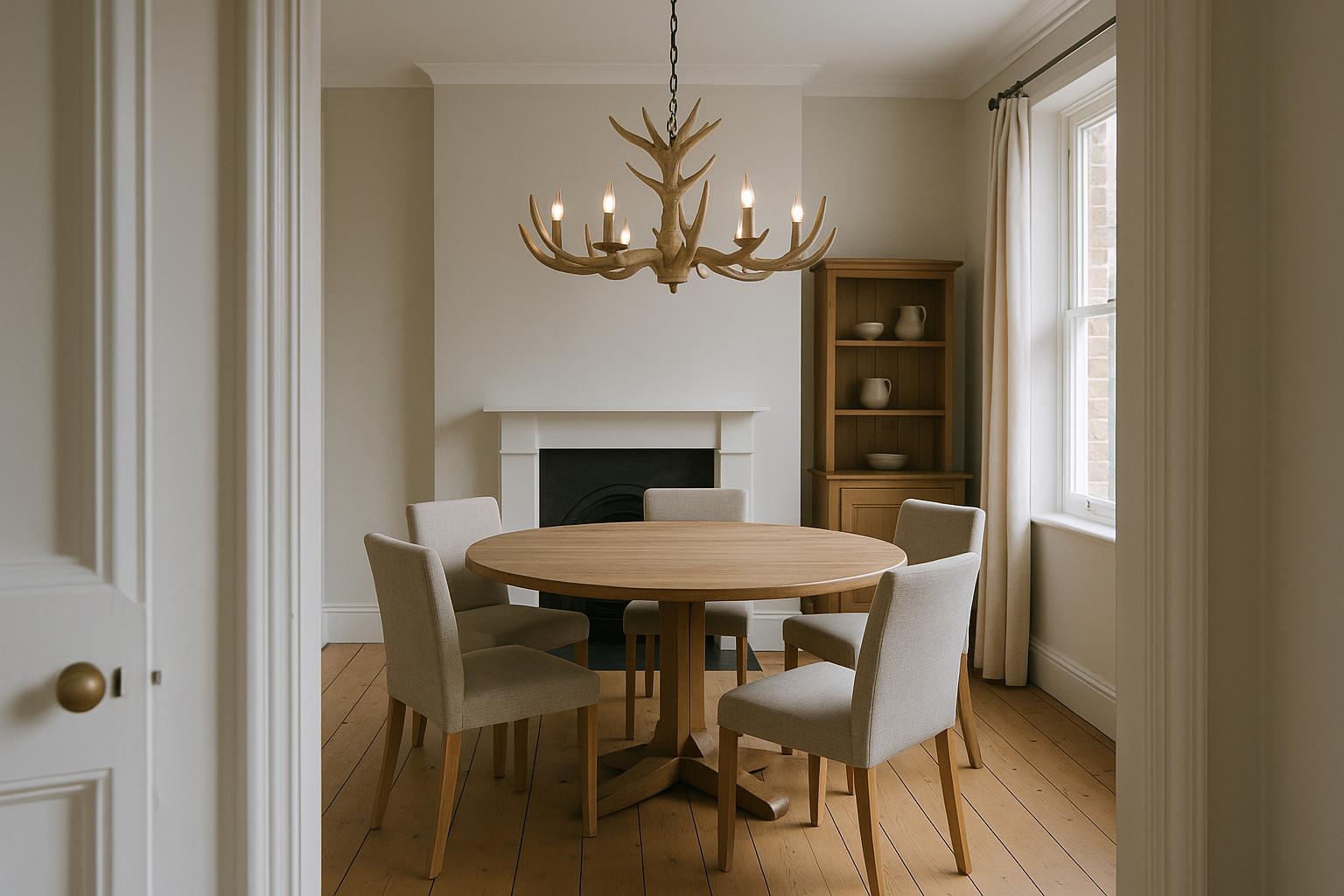
A round or square table usually sits comfortably beneath a fitting with an even radial spread. The shared centre gives the arrangement a settled appearance and avoids placing too much visual weight over one diner. The fitting does not need to repeat the table's outline exactly, but the two forms should look related.
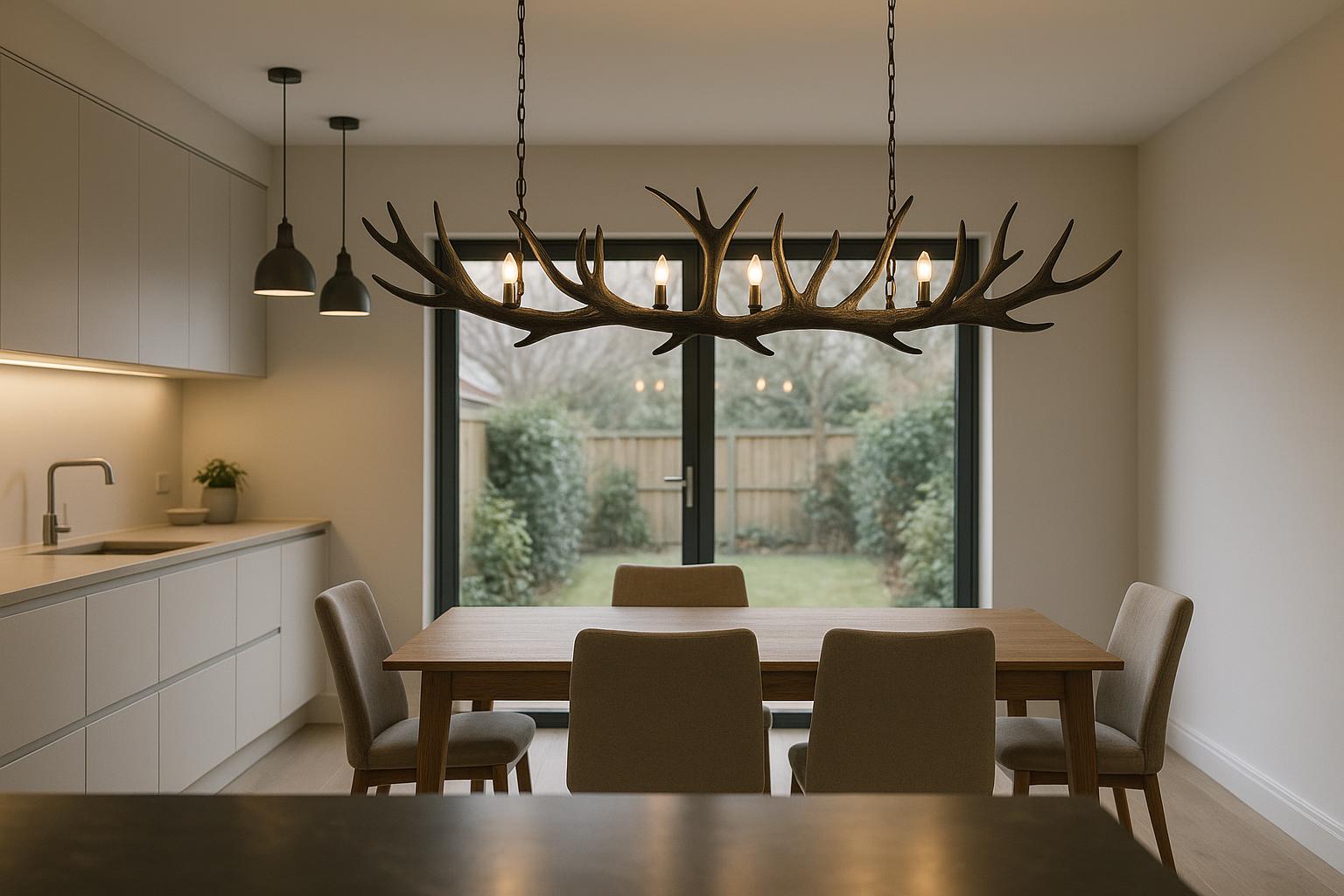
Long rectangular tables call for horizontal presence. A very compact chandelier can appear stranded above the middle, while a design that reaches almost to the table ends may feel cramped. Some clear tabletop at either end lets the furniture retain its own outline. An elongated antler arrangement can achieve this without requiring several separate pendants.
For an extending table, base the decision on the layout used most often. It is usually better for the light to look properly placed on an ordinary evening than perfectly proportioned only when every extension leaf is fitted. Check, however, that guests at the extended ends will not be left beyond the useful pool of light.
To complement this topic, you can also read From Old Cottage to New Barn Room: A Connected Lighting Plan.
Test the view from each chair
The bottom of a dining pendant is often positioned approximately 75 to 90 cm above the tabletop, but that range is only an initial reference. Antler chandeliers have open, uneven silhouettes: a low branch, lamp holder or decorative tip may affect the view even when the centre of the fitting appears to be at a sensible height.
Sit in every chair and look towards the place opposite. Faces should remain clearly visible without anyone needing to lean sideways. Pay particular attention to the seats at the ends of a rectangular table, where the branches may overlap a different part of the view. Taller members of the household should take part in this test rather than relying on a single eye level.
Then approach the table by the normal route through the room. In a cottage with a low doorway or a terrace where the dining area follows a narrow kitchen, the fitting may appear lower from the entrance than it does when viewed from a chair. Make sure its outer branches do not project into the space used for walking around occupied seats.
Account for the ceiling and mounting point
The table centre and the existing electrical point are not always aligned. This is common after a room has been opened up, or when a dining table has been moved away from a chimney breast or bay window. Hanging the light from the old room centre can leave the entire dining arrangement looking misplaced. Ask a suitably qualified electrician what repositioning is practical before settling on a fitting.

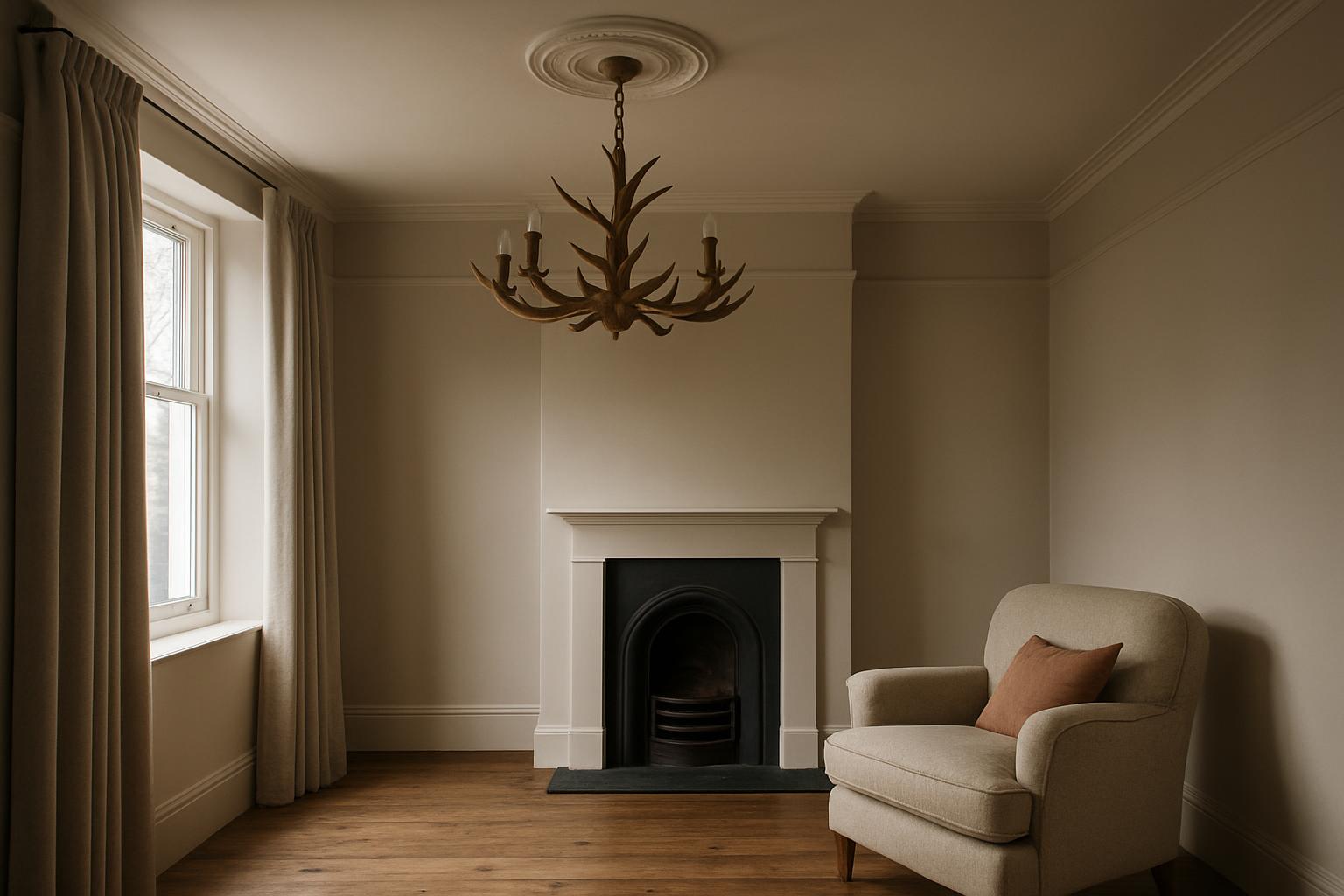
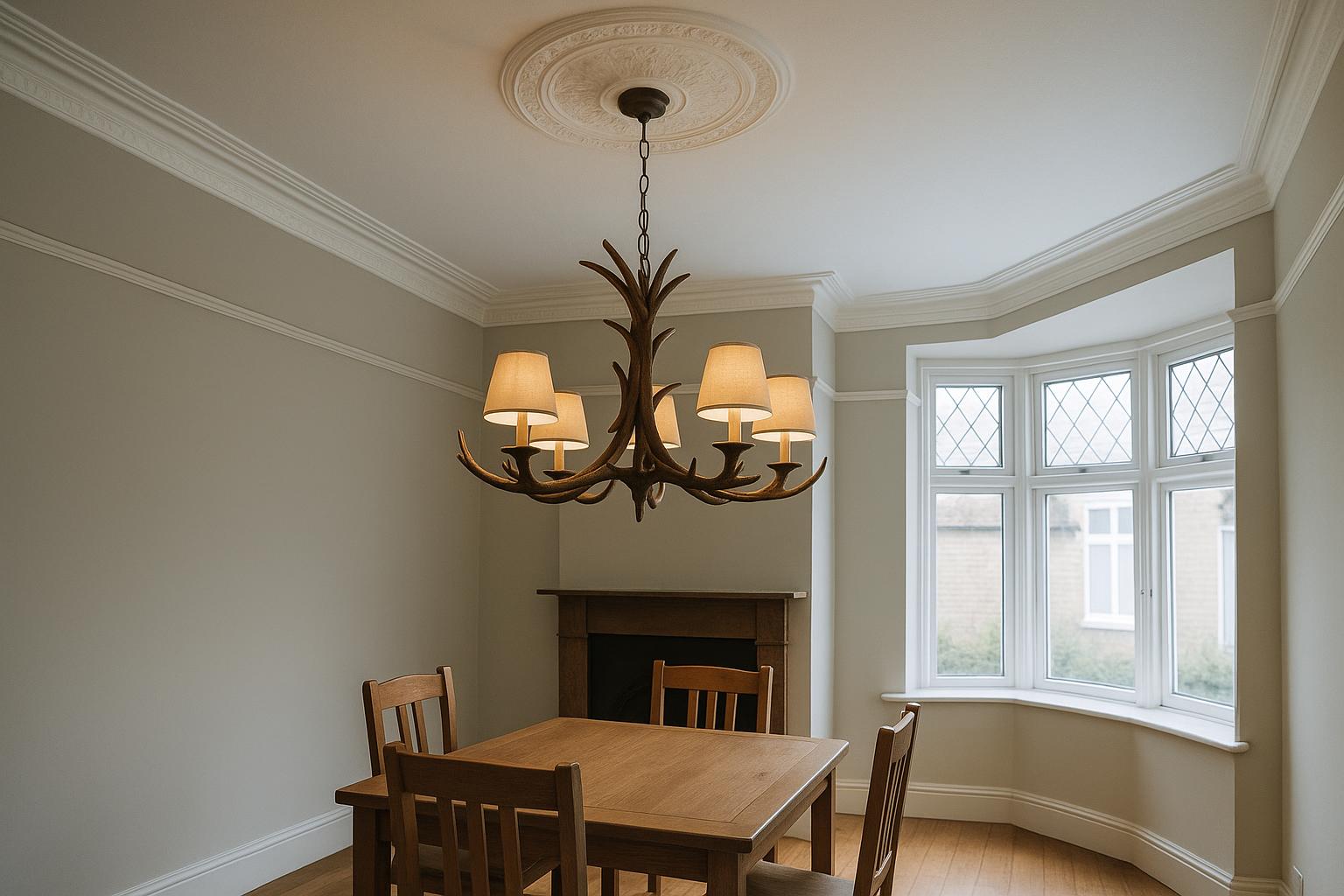
Period plasterwork needs equally careful treatment. A ceiling rose may suit the character of rustic antler lighting, but its diameter, depth and condition can affect the canopy and fixings. The ceiling structure must also be suitable for the fitting's weight. Product installation instructions and an on-site assessment are more reliable than assumptions based on appearance.
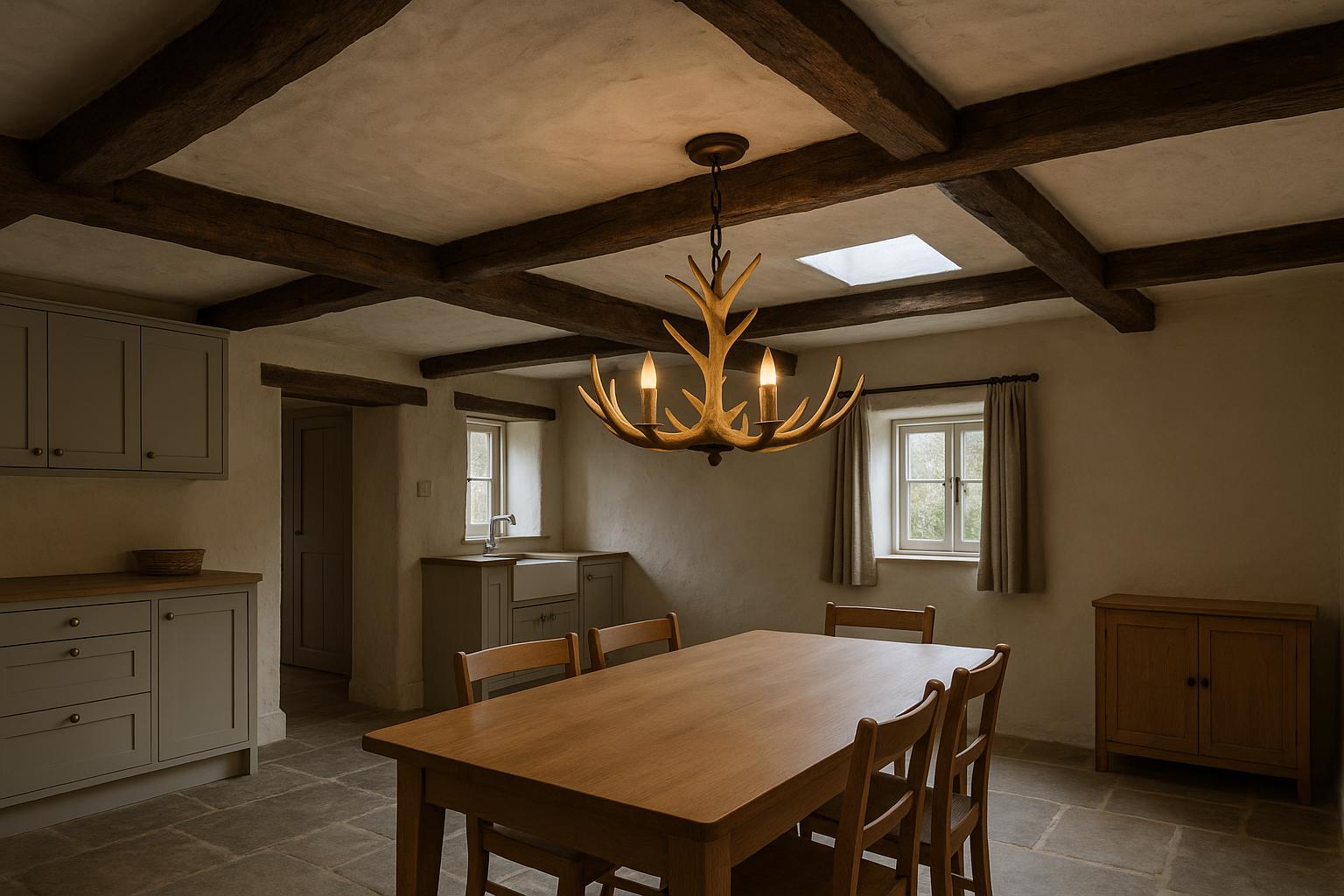
Where beams or limited ceiling height constrain the drop, look for a shallower design with a controlled spread. A low ceiling does not automatically rule out an antler fitting, although a long chain and deep branching structure are unlikely to be comfortable. In rooms with exposed beams, space around the fitting prevents the ceiling from looking congested.
In the same direction, How to Make Antler Lights Work in a British Home offers useful ideas for choosing home lighting more confidently.
Plan light for meals and everyday tasks
Consider the lamps from a seated position, not only the decorative frame. Exposed light sources can be tiring when they fall near eye level, particularly across a reflective tabletop. Check the number and position of the lamps, whether shades or diffusers are included, and which lamp shapes the manufacturer recommends.
A dimmer can make the room more adaptable, provided the fitting, lamps and control are compatible. Brighter light may be wanted for reading, schoolwork or setting the table; a lower level is often more comfortable over dinner. Confirm compatibility before buying rather than treating dimming as an automatic feature.
The ceiling light need not illuminate the whole room by itself. A shaded lamp on a sideboard or a pair of wall lights can soften the contrast around the table. This is especially helpful on dark winter afternoons, when glazing reflects the interior and a single bright chandelier can seem more exposed. Supporting light should be gentle enough to preserve the dining table as the focus.
Choose a finish in the room itself
Antler forms already have a strong outline, so the finish determines whether that outline recedes or stands forward. Pale and weathered tones tend to sit quietly against light plaster and washed timber. Dark brown, charcoal or blackened finishes create more contrast and can hold their own beside panelling, dark furniture or exposed brick.
Review samples or detailed product images beside the room's permanent materials where possible. Daylight from a sash window may make a finish look softer than it will under warm lamps after sunset. Against a dark wall, the opposite problem can occur: the branch structure may lose definition once daylight fades.
For more consistent lighting throughout the home, the article How to Choose the Perfect Ceiling Light for Your Living Room: A Complete Guide to Style, Size, and Brightness may also be helpful.
A country style chandelier does not require a fully rustic scheme. Plain curtains, contemporary dining chairs and simple ceramics often give the fitting enough space to be distinctive. Repeating antlers across cushions, ornaments and wall decoration can turn a considered feature into a theme.
Give an open-plan dining area its own identity
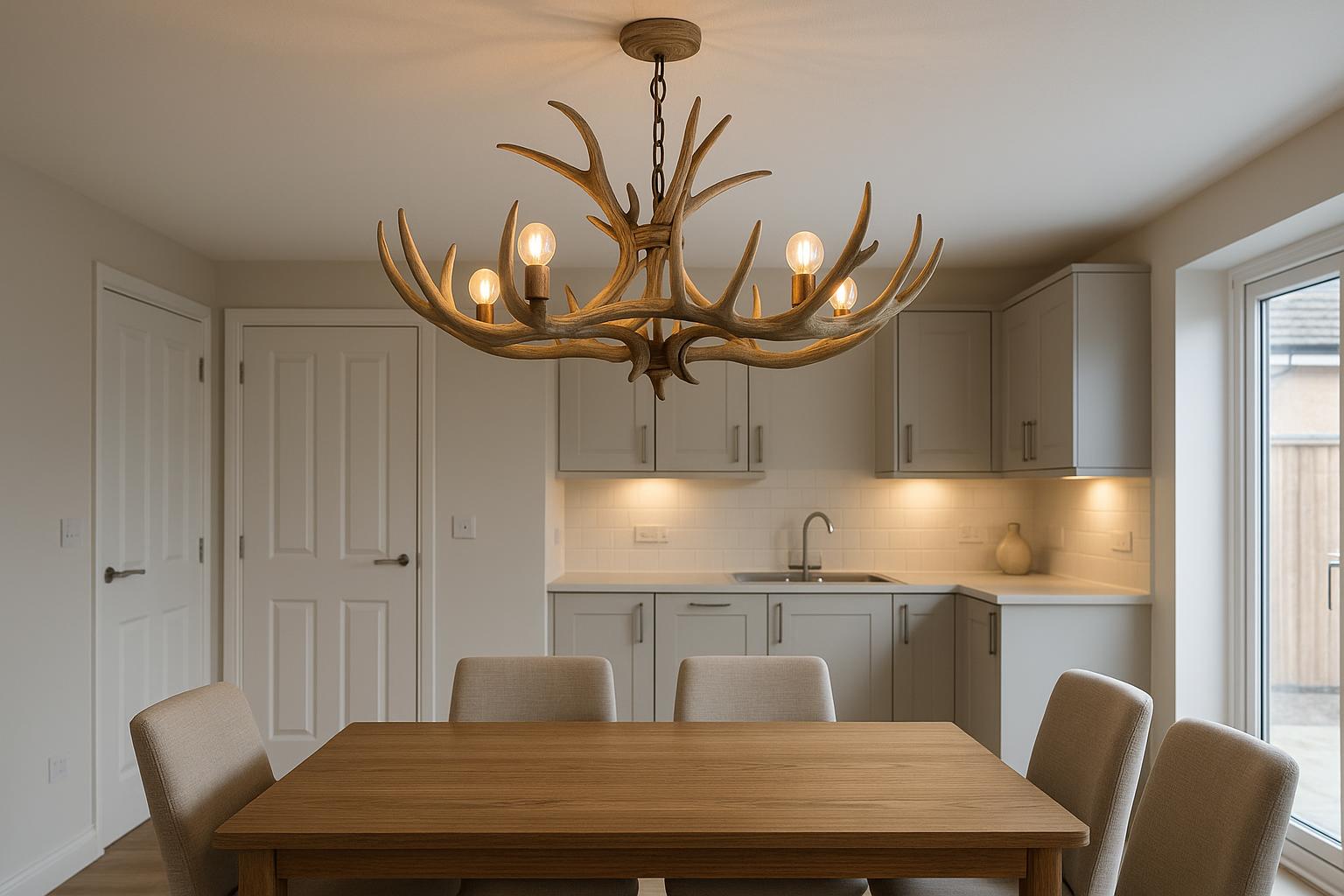
In an extension or kitchen-diner, an antler light can mark the dining zone without a screen or change of flooring. It should have enough presence to anchor the table while allowing a clear view between the kitchen and garden doors. An elongated fitting often suits a long table, but its widest branches should be checked from the kitchen worktop as well as from the dining chairs.
The dining and kitchen lights do not need to match. A shared detail, such as a similar metal tone or warmth of light, is usually enough to connect them. This lets the texture of lodge lighting provide contrast against smooth cabinetry without making the two parts of the room feel unrelated.
Complete the checks before ordering
Record the measurements rather than relying on memory. The most useful final checks are:

- Table length, width and height in its normal configuration.
- Distance from the tabletop to the ceiling.
- Maximum fitting width and overall installed drop.
- Position of the electrical point relative to the table centre.
- Clearance around chairs when they are occupied.
- Lowest branch or lamp position within seated sightlines.
- Ceiling rose, beam and canopy dimensions.
- Lamp type, dimming compatibility and installation requirements.
Once these details work together, the fitting can be expressive without dominating every meal. Lumin Light's collection of antler lights includes different proportions and silhouettes to compare against your measurements. Choose from the chair and the doorway as well as from beneath the ceiling; those are the views that will determine whether the light truly belongs in the room.